_edited%20copy.png)
185 results found with an empty search
- Your Preventive Maintenance Schedule Template Guide
At its core, a preventive maintenance schedule template is just a structured document. It’s your game plan for organizing, tracking, and actually doing the regular upkeep on your equipment. Using one ensures your commercial HVAC and refrigeration systems get serviced proactively, stopping failures before they ever have a chance to happen. Why Proactive Maintenance Is a Game Changer Before we get into building templates and checklists, let's talk about the mindset shift from reactive to proactive maintenance. It’s a big one. For any business that depends on climate control or cold storage—restaurants, grocery stores, you name it—a "run-to-failure" approach is a high-stakes gamble. An unexpected equipment breakdown isn’t just an inconvenience; it can be a financial disaster. Picture a walk-in freezer failing during a Florida heatwave. The immediate fallout includes emergency repair fees, tons of lost product, and a complete halt to business. A proactive strategy, guided by a solid plan, completely flips this scenario. It moves you from a state of constant fire-fighting to one of control and predictability. Reactive vs Preventive Maintenance Impact Let's break down the real-world impact of these two approaches. The difference isn't just about fixing things before they break; it's about fundamentally changing how your business operates and manages risk. Aspect Reactive Maintenance (Run-to-Failure) Preventive Maintenance (Scheduled) Cost High, unpredictable emergency repair fees, overtime labor, and rush shipping for parts. Low, predictable costs budgeted in advance. Downtime Frequent and unplanned, leading to significant business interruption and lost revenue. Minimal and scheduled during off-hours, preventing operational disruption. Asset Lifespan Significantly shortened due to neglect and catastrophic failures. Extended by 20-40% through regular care and early issue detection. Budgeting Nearly impossible. Every failure is a financial surprise. Simple and stable. Maintenance costs are a known operational expense. Safety Increased risk of safety incidents from sudden equipment failures. Reduced risk by identifying and correcting potential hazards early. The table makes it clear: waiting for a breakdown is a losing strategy. A scheduled, preventive approach is an investment in stability and long-term savings. The Cost of Doing Nothing The hard truth is that waiting for something to break is almost always more expensive. Reactive maintenance comes with premium charges for emergency service, overnight parts shipping, and the painful cost of downtime. It's a stressful, expensive cycle that many businesses get trapped in. Industry statistics paint a clear picture. A surprising 21% of facilities still rely on a run-to-failure approach, even though nearly 69% of plants deal with unplanned outages every single month because of it. Moving to a scheduled plan is the only proven way to cut down on these costly surprises. A preventive maintenance plan isn’t an expense; it’s an investment in operational stability. The goal is to spend a little on scheduled upkeep to avoid spending a lot on emergency fixes. Defining Your Maintenance Strategy Getting the terminology right helps build a stronger case for a structured approach. Let’s quickly clarify two key concepts you'll run into: Preventive Maintenance (PM): This is the foundation of your schedule. PM involves routine inspections, cleaning, and parts replacements at set intervals to lower the odds of failure. Think of it like a scheduled oil change for your car—simple, but essential. Predictive Maintenance (PdM): This is a more advanced strategy that uses data and sensor tech to predict when a part might fail. It allows for even more precise fixes right before something breaks. For most businesses, a solid PM plan is the perfect starting point. It gives you the framework to stop preventable issues and offers real-world insights into how regular maintenance prevents costly equipment breakdowns . This guide is all about building that foundational PM schedule—the cornerstone of a reliable and efficient operation. Gathering Your Essential Equipment Data Any preventive maintenance plan is only as good as the information it’s built on. Before you can even think about scheduling tasks, you have to create a detailed inventory of every single piece of HVAC and refrigeration equipment you’re responsible for. This is the foundation of your entire maintenance strategy, so it really pays to be thorough. Think of it like building a detailed dossier for each asset. Just writing down "Rooftop Unit 3" on a spreadsheet isn't going to cut it. You need to dig much deeper to build a profile that will inform every service decision you make down the road. This part of the process can feel a bit tedious, I know. But it's non-negotiable. Skipping this step is like trying to drive across the country without a map—you'll get lost, waste a ton of time, and probably run into some expensive problems. Locating Your Asset Information For most newer equipment, finding this info is pretty straightforward. Manufacturers usually put a data plate or sticker right on an exterior panel. This little metal plate is a goldmine of information and has nearly everything you need to get your inventory started. But for older systems, that plate might be worn down, painted over, or missing altogether. When that happens, you’ll have to do a little detective work. Start by digging through old purchase orders, service invoices from previous contractors, or the original building blueprints. Sometimes, a quick call to the manufacturer with even a partial model number can help you fill in the blanks. The Essential Data Points to Collect Your goal here is to build a master list, probably in a spreadsheet. For every piece of equipment—from the main chiller plant down to that small ice machine in the breakroom—you need to document a few critical details. Here’s what I recommend capturing for each asset: Asset Name and ID: Give it a clear, unique name you'll recognize (e.g., " RTU-01 - East Roof " or " Walk-In-Freezer-Kitchen "). Location: Be specific about where it is (e.g., " Roof, Sector B " or " Basement Mech Room "). Manufacturer and Model Number: This is crucial for ordering parts and pulling up service manuals. Serial Number: You'll need this unique identifier for warranty claims and looking up specific parts. Installation Date: This helps you track the asset's age and start planning for its eventual replacement. Warranty Information: Make a note of the expiration dates for parts and labor. This simple step can save you thousands on a covered repair. Prioritizing your equipment is just as important as listing it. A primary walk-in freezer at a restaurant demands a much more aggressive maintenance schedule than a small AC unit in a back office. Prioritizing Your Assets Once you’ve got your master list, the next step is to rank each piece of equipment by how critical it is to the business. Let's be honest, not all assets are created equal. A simple tier system is a great way to define their importance. For example, a Tier 1 asset might be the main air handler for a server room—if that unit goes down, the entire business is at risk. A Tier 2 asset could be a secondary walk-in cooler, where a failure is a big problem but not a complete catastrophe. And a Tier 3 asset might be something less critical, like an exhaust fan in a storage closet. This ranking will directly influence how often you schedule tasks in your maintenance plan. By understanding which assets are most vital, you can make sure your time and resources are focused where they matter most, protecting the business from the most damaging failures. This data is what transforms a generic checklist into a powerful, customized maintenance plan that actually works. Building Your Custom Maintenance Template Now that you have a detailed inventory of your equipment, it's time to put that information to work. This is where we move from a simple list of assets to a real, actionable maintenance plan. You're going to build the core of your preventive maintenance schedule template—a document that spells out exactly who does what, and when. Forget about finding a perfect, one-size-fits-all template online. A truly effective schedule is something you construct yourself, built to fit the specific needs of your facility and equipment. Think of it less as a checklist and more as a dynamic tool that organizes your entire maintenance workflow, connecting your equipment to the manufacturer's recommendations and your team's responsibilities. Defining Key Template Components So, what goes into a good maintenance template? Let's break down the essential columns that bring clarity and accountability to every task. Asset Details: Start with the basics. List the specific equipment name and its unique ID from your inventory (e.g., " RTU-01 - East Roof "). Task Checklist: Be crystal clear about the work. "Check filter" is too vague. "Inspect and replace MERV 8 filter" leaves no room for guesswork. Frequency: This is the rhythm of your plan. Assign a cadence for each task— Daily, Weekly, Monthly, Quarterly, or Annually . Assigned Technician: Who's on the hook? Note whether it's an in-house team member or your trusted service contractor. Completion Status: You need a simple way to track progress. A checkbox or a field to mark when the task is done, along with the date, is perfect. This simple structure helps you see the entire process at a glance, from the equipment itself to scheduling and review. This flow isn't just a one-time setup; it’s a continuous loop that keeps getting smarter and more efficient. Real World Example: A Rooftop HVAC Unit Let's make this tangible with a common commercial asset: a rooftop HVAC unit (RTU) sitting on top of a retail store. The goal here is to create targeted checklists for different timeframes so you're not over-servicing the unit or, worse, neglecting it. A quick weekly check for this RTU would be mostly visual and take just a few minutes: Clear away any leaves, branches, or trash from around the unit. Do a quick visual scan for any obvious damage to the casing. Listen for any strange sounds, like grinding or intense vibration. The quarterly inspection , on the other hand, is much more hands-on and requires some technical skill: Inspect and tighten all electrical connections. Clean the evaporator and condenser coils. Check refrigerant levels and pressures to ensure they're within spec. Lubricate motors and bearings according to the manufacturer's guide. The real power of a custom preventive maintenance schedule comes from aligning these specific, detailed tasks with a logical frequency. It’s a simple concept, but it drastically reduces the chances of an unexpected breakdown. The data backs this up, too. One major study found that companies prioritizing preventive maintenance experienced 52.7% less unplanned downtime and 78.5% fewer defects compared to those stuck in a reactive "fix it when it breaks" cycle. Customizing Your Template While a basic spreadsheet is a great place to start, don't forget your most important resource: the manufacturer's service manual for each piece of equipment. These manuals are the gold standard for recommended tasks and frequencies. They often include detailed checklists you can lift directly and plug into your template. For a closer look at what a finished checklist can look like, our guide on your preventive maintenance checklist template offers concrete examples you can adapt. The key is to take these foundational ideas and mold them to fit your building’s unique environment and equipment. When you build your template with care, you’re creating a powerful asset that protects your investments and keeps your operations running smoothly. Putting Your Maintenance Plan Into Action A perfectly designed preventive maintenance schedule is a great start, but it only delivers real value when you put it into motion. The transition from a plan on paper to real-world execution is where most maintenance strategies either succeed or fail. It all comes down to clear communication, defined responsibilities, and using the right tools to keep everything on track. The first move is assigning the work. Every single task on your schedule needs a clear owner, whether that's an in-house tech or a trusted external contractor like us. Vague assignments lead to missed tasks, so get specific. Instead of just "maintenance team," assign tasks to the "Lead Technician" or your dedicated HVAC service provider. This initial rollout is also the perfect time for a quick training session. Walk your team through the new schedule and explain the "why" behind each task. Consistent execution is everything, and making sure everyone understands their role from day one prevents confusion and guarantees maintenance is done to the same high standard every time. Creating a Feedback Loop Your technicians are your eyes and ears on the ground. A crucial part of making your plan work is creating a simple but effective way for them to report anything unusual they find during a routine check. A slightly loose belt or a faint, odd noise might not seem like a big deal, but it could be the first warning sign of a much bigger problem. Establish a clear protocol for reporting these observations. It could be as simple as adding a "Notes" section to their checklist or setting up a dedicated communication channel. This feedback is invaluable for a couple of reasons: It allows for immediate action: A small issue can be addressed before it escalates into a full-blown, costly breakdown. It helps refine your schedule: If technicians keep finding the same minor issue on a specific unit, you might need to adjust the maintenance frequency for that piece of equipment. Think of your initial maintenance schedule as a living document. The feedback you get from the field is what allows you to fine-tune your plan, making it smarter and more effective over time. This continuous improvement cycle transforms your static template into a dynamic, responsive tool that truly protects your equipment. Using Simple Digital Tools for Tracking Managing your schedule doesn't have to be complicated. While complex Computerized Maintenance Management Systems (CMMS) are powerful, many businesses can get started with much simpler tools they already use every day. A shared digital calendar, for example, is a fantastic way to automate reminders for your team. You can create recurring events for monthly, quarterly, and annual tasks, making sure nothing falls through the cracks. This also creates a permanent, searchable digital record of all completed maintenance, which is essential for tracking equipment history. As property managers know, understanding why to prioritize routine HVAC maintenance is closely tied to having a reliable record of service. By assigning tasks clearly, training your team, establishing a feedback loop, and using simple digital tools, you can successfully launch your maintenance plan. This practical approach turns your carefully crafted template into a powerful engine for operational reliability and long-term savings. Evolving Your PM Schedule for Peak Efficiency A preventive maintenance schedule shouldn't be a "set it and forget it" document. The real magic happens when you treat it as a dynamic tool—one that adapts to the real-world performance of your HVAC and refrigeration equipment. It needs to be a living system that gets smarter over time, driven by what you see on the ground. Start by digging into your maintenance logs. Are you noticing any patterns? Maybe one specific air handler constantly needs its drain line cleared, or a particular walk-in cooler seems to burn through coolant faster than the others. These recurring issues are red flags. Trends like these often mean a unit needs more frequent check-ups than you originally planned. In some cases, it's a clear sign that the equipment is nearing the end of its life and needs to be budgeted for replacement. Ignoring these signals is just asking for an emergency breakdown down the line. For any business that relies on refrigeration, understanding how regular refrigeration maintenance can prevent major food loss really drives home why this kind of vigilance is so critical. Moving from Preventive to Predictive Once you've got a solid preventive maintenance routine dialed in, the next level is exploring predictive maintenance (PdM) . This approach takes your strategy from routine to incredibly precise. Instead of servicing equipment based on a fixed calendar, PdM uses real-time data to anticipate failures before they happen. How does it work? By installing sensors that monitor key performance indicators, such as: Vibration analysis on motors and compressors Thermal imaging to spot overheating electrical components Oil analysis to check for internal wear and contamination Refrigerant pressure and temperature monitoring By collecting and analyzing this data, you can move from, "We should probably check this in three months," to, "This specific bearing is showing early signs of wear and will likely fail in the next 30 days ." This data-first approach lets you plan repairs with surgical accuracy. You can order parts well in advance and schedule downtime for the most convenient moment, not in the middle of a dinner rush. It helps eliminate unnecessary service calls and drastically cuts the risk of a catastrophic, business-halting failure. The growth in this field is incredible. The global predictive maintenance market was valued at $7.85 billion in 2022 and is projected to skyrocket to $60.13 billion by 2030 , all thanks to new AI and machine learning tools. The goal is to transform your preventive maintenance template from a simple checklist into an intelligent system that optimizes your entire operation, saving you money and keeping your doors open. Common Questions About Preventive Maintenance Even with the best template in hand, you're bound to have questions when you start putting a new maintenance strategy into practice. I've seen it time and time again. Getting ahead of these common sticking points can be the difference between a schedule that actually works and one that just collects dust. Let's walk through some of the most frequent questions I hear from facility managers and business owners. One of the biggest hurdles is often getting your own team on board. If your staff is used to a “run-it-’til-it-breaks” approach, bringing in structured checklists can feel like just another chore. The trick is to frame it as an investment in making their jobs easier , not harder. Explain how a few minutes spent on a weekly check can prevent hours of chaos and stressful emergency calls down the line. When the kitchen crew understands that checking a simple gasket seal today prevents a cooler from dying on a busy Saturday night, they stop being task-doers and become partners in the process. How Often Should I Review My Schedule? Think of your preventive maintenance schedule as a living document, not something you set in stone and forget. It needs to adapt as you learn more about your equipment's quirks and needs. A great place to start is a formal review every six months . This is your chance to pull out the maintenance logs and see what they're telling you. Ask yourself a few simple but powerful questions: Are we seeing the same issue pop up with a specific unit? Have certain tasks been consistently missed or pushed back? Why? Did we install any new equipment that needs to be added to the rotation? Is that one old freezer costing us more in frequent repairs than it's worth? The answers will help you fine-tune your schedule. You might adjust the frequency of some tasks or add new checks based on the real-world performance of your equipment. This is how you keep the plan sharp and effective. DIY vs. Calling in the Pros Another big question is what your in-house team can handle versus what needs a certified technician. It’s a great question, and getting the balance right is key. A good rule of thumb is to let your team manage the frequent, non-technical jobs. Your staff can absolutely handle daily or weekly visual inspections, swapping out air filters, and basic cleaning. But anything involving electrical components, refrigerant, or complex mechanical parts should always be left to a certified professional . This approach keeps your team involved and gives them ownership without creating safety risks or causing damage that leads to even costlier repairs. If you want a better sense of what goes into those more technical jobs, our guide to common appliance parts and service offers some valuable perspective. Striking this balance ensures your equipment gets the expert attention it needs while empowering your team to be the first line of defense. At Putnam Mechanical LLC , we build preventive maintenance plans that protect businesses from the headache and cost of unexpected downtime. If you're ready to shift from reactive fixes to a proactive strategy, contact us today for a free estimate .
- Why Property Managers Should Prioritize Routine HVAC Maintenance
Managing a property means juggling many responsibilities—one of the most important is making sure tenants stay comfortable year-round. A reliable HVAC system plays a big role in that. When it fails, you get complaints, high repair bills, and possible damage to your reputation. That’s why preventative HVAC maintenance for property managers is such a smart investment. At Putnam Mechanical, we help property managers across Sarasota take the stress out of HVAC care with maintenance programs designed to keep systems running efficiently and reliably. Avoiding Emergency Repairs Emergency HVAC breakdowns are stressful and expensive to deal with. Emergency calls often come with higher costs and can take longer to resolve, especially during peak seasons. With preventative HVAC maintenance for property managers, you can stop problems before they start. Our maintenance plans include regular inspections, cleaning, and tuning of all HVAC components . We catch issues early, before they lead to system failure, and help you avoid disruption to tenants. Boosting System Efficiency and Lifespan Routine care doesn’t just prevent problems. It helps systems run better and last longer. When filters are clean, parts are lubricated, and coils are checked regularly, HVAC systems use less energy and deliver better results. Preventative HVAC maintenance for property managers also reduces strain on your units, which extends their lifespan and delays costly replacements. Our team at Putnam Mechanical has helped countless property owners in Sarasota reduce their energy bills and extend equipment life with consistent maintenance. Improving Tenant Satisfaction Happy tenants are more likely to stay, renew leases, and recommend your property. One of the fastest ways to earn their trust is to provide reliable heating and cooling. If tenants constantly deal with uncomfortable temperatures or inconsistent airflow, they’ll quickly become frustrated. Preventative HVAC maintenance for property managers ensures systems are ready to perform in every season. Whether it's the heat of summer or a chilly winter morning, your tenants will appreciate the comfort, and you’ll enjoy fewer complaints. Smart Planning for Busy Property Managers We know property managers are busy, and keeping track of HVAC systems for multiple buildings isn’t easy. That’s why Putnam Mechanical offers maintenance plans that work around your schedule. We’ll handle the planning, service, and reporting, so you don’t have to worry. With preventative HVAC maintenance for property managers , you gain a reliable partner who understands your needs and takes action before problems grow. You’ll get peace of mind knowing your properties are in good hands. Our Sarasota team is trained to work efficiently across all types of buildings—residential, commercial, and mixed-use. We provide documentation for every service visit, so you always have records for budgeting, insurance, or tenant communication. Get Started Now Don’t wait for your HVAC system to fail before giving it the attention it needs. Choose Putnam Mechanical for expert preventative HVAC maintenance for property managers. We’re here to help you protect your properties, keep your tenants happy, and save money in the long run. Get started now or call Putnam Mechanical at (941) 444-9244. We proudly serve property managers in Sarasota and the surrounding areas.
- Your Preventive Maintenance Checklist Template
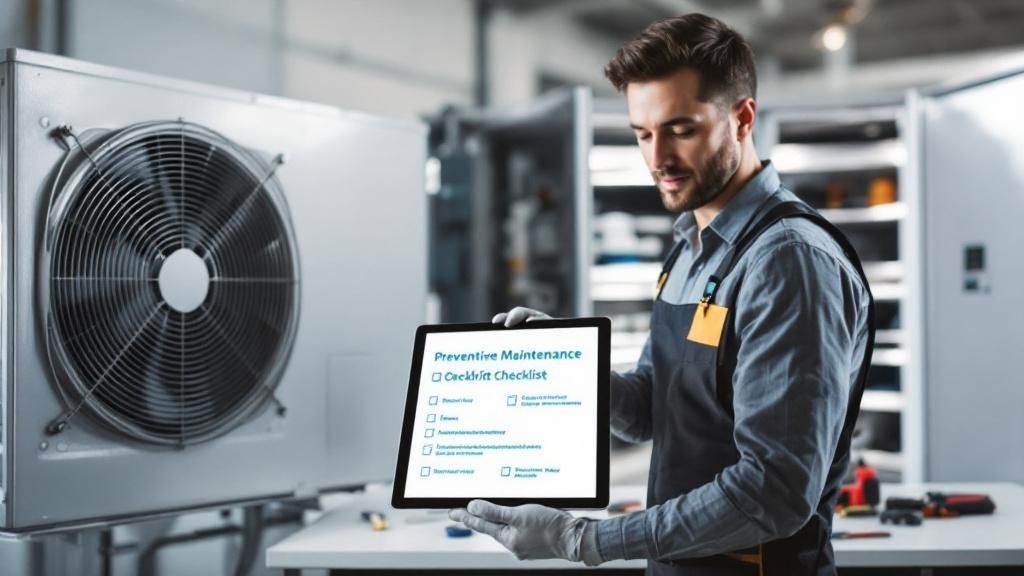
A good preventive maintenance checklist template is the foundation of any smart facility management plan. It’s what moves you from frantically putting out fires to having predictable control over your HVAC and refrigeration systems. This isn't just about ticking off boxes on a list; it's a strategic shift away from the expensive "fix-it-when-it-breaks" chaos. Why Proactive Maintenance Wins Every Time Waiting for equipment to fail before you do anything is a risky and expensive gamble. Picture this: it’s a Friday dinner rush at a busy restaurant, and the walk-in freezer suddenly dies. The immediate fallout is obvious—emergency repair bills, spoiled food, and lost sales. But the real damage often runs deeper, hitting your reputation, frustrating customers, and even risking health code violations. That entire nightmare could have been dodged with a simple, scheduled check-up. A technician armed with a solid preventive maintenance checklist would have caught the early warning signs, like a worn-out door seal or an evaporator coil starting to ice over, long before the system gave out. This is what proactive maintenance is all about: staying in control instead of reacting to chaos. The Tangible Benefits of a Strategic Approach The numbers tell a powerful story. Poor maintenance habits can cut a company's production capacity by up to 20% . On the flip side, a well-structured preventive maintenance program doesn't just prevent these losses—it delivers an impressive return, often averaging an ROI of 545% by cutting downtime and making assets last longer. A proactive strategy delivers real value in several key ways: Extended Asset Lifespan: Regular, documented care keeps small issues from snowballing. A motor that’s properly lubricated or a condenser coil that’s kept clean doesn’t have to work nearly as hard. This reduces wear and tear, pushing back those costly replacement dates. Improved Workplace Safety: Equipment that isn’t working right is a serious hazard. Proactive checks spot dangers like frayed wiring on an HVAC unit or a refrigerant leak before they can cause an accident, creating a safer space for everyone. Predictable Operational Uptime: Instead of guessing when a critical system might fail, preventive maintenance lets you schedule downtime on your own terms. This kind of predictability is gold for businesses where climate control is absolutely essential. The goal of a preventive maintenance checklist isn't just to service equipment. It's to build reliability into your operations, turning maintenance from a cost center into a strategic investment that protects your business. Let’s put the two approaches side-by-side to see the real-world impact. Reactive vs. Preventive Maintenance Impact Metric Reactive Maintenance (Break-Fix) Preventive Maintenance (Proactive) Cost High emergency repair fees, overtime labor, and rush shipping for parts. Predictable, budgeted costs for scheduled service. Downtime Unplanned and often occurs during peak business hours, causing major disruption. Scheduled during off-hours, minimizing impact on operations. Asset Lifespan Significantly shortened due to unchecked wear and tear. Extended by addressing minor issues before they cause major failures. Safety Higher risk of equipment-related accidents and failures. Lower risk due to regular safety checks and identification of potential hazards. Operational Control Constant "firefighting" and reacting to emergencies. Full control over maintenance schedules and operational stability. As you can see, the proactive approach isn't just about saving money on repairs; it’s about creating a more stable, efficient, and safer operation overall. Shifting from a Task List to a Competitive Edge Ultimately, a preventive maintenance checklist is more than just a piece of paper—it’s the tool that helps shift your company culture. It gives your team ownership over the health of your equipment and provides leadership with the data they need to make smart decisions. For a closer look at this, our guide on how regular maintenance prevents costly equipment breakdowns offers even more insight. By catching small problems early, you’re not just fixing a machine. You’re protecting your revenue, your brand, and building a more resilient business from the ground up. Gathering Your Essential Equipment Intelligence A powerful preventive maintenance checklist isn’t built on guesswork. It’s built on solid data. Before you even think about opening a spreadsheet or a piece of software, you need to become an equipment detective. This groundwork is what turns a generic template into a custom-fit tool that actually understands the history and needs of your specific assets. It all starts with a complete and accurate inventory. You can't plan for consistent or cost-effective maintenance if you don't know exactly what you're servicing. The goal here is to create a master list of every single HVAC and refrigeration unit under your care. Conduct a Thorough Equipment Audit First things first: walk the facility. You need to physically identify every piece of equipment. Don't rely on old records or what you think is out there. Things change. For each asset, you need to capture the critical details that will directly shape your checklist. Get a simple spreadsheet going or use your maintenance management system to log the following for each unit: Asset Identifier: Give it a unique name or number (e.g., RTU-01 for Rooftop Unit 1). Make and Model: The specific manufacturer and model number. Serial Number: Absolutely essential for ordering the right parts and checking on warranty status. Location: Be specific. "Roof" isn't enough. Try "Roof, North Wing, above kitchen." In-Service Date: The date the equipment was installed and put to work. This detailed inventory becomes the backbone of your entire maintenance program. It’s the difference between a vague understanding of your assets and a precise, actionable database. Dig into Manufacturer Manuals Manufacturer’s manuals are probably the most underrated resource in our field. They get tossed in a drawer after installation, but they're a goldmine of information. These documents give you the baseline for what tasks need to be done and when, making sure you stay compliant with safety, warranty, and performance standards. Pull the manual for each of your high-priority assets and find the recommended service intervals. You're looking for specific tasks related to: Lubrication: What type of grease or oil, and how often? Filter Replacements: The exact size and recommended change frequency. Calibrations: Any sensor checks or adjustments needed. Inspections: Specific components to check, like belts, coils, and electrical connections. Think of the manufacturer's guide as your starting point, not the final word. It tells you the ideal maintenance schedule for a brand-new unit operating in a perfect environment. Your job is to blend this with what's happening in the real world. For instance, the manual for a rooftop AC unit might say to clean the condenser coils annually. But if that unit sits near a dusty construction site or right next to a greasy kitchen exhaust vent, you’ll learn fast that a quarterly cleaning is the only way to prevent breakdowns and efficiency loss. Analyze Past Maintenance Records Your own history is your best teacher. Old work orders, repair invoices, and technician notes tell the unique story of each piece of equipment. This is where you uncover the recurring problems and common failure points that a generic template would miss every single time. Comb through the last 12-24 months of your maintenance logs. As you go, look for patterns. Are you seeing repeated refrigerant leak repairs on a specific walk-in cooler? Do you find yourself constantly replacing the same belt on a particular air handler? These trends are pure gold. If a certain cooler has a history of its evaporator coil icing up every summer, you now know to add a more frequent coil inspection and cleaning task to its checklist from May through September. This is how you shift from reactive repairs to truly predictive maintenance, stopping problems before they ever start. Building Your Master Checklist Template Now that you have a clear picture of every piece of equipment, it’s time to build a preventive maintenance checklist template that your technicians will actually use. A great template is more than just a list of tasks; it’s designed for clarity in the field, making it easy for your team to do their job right every single time. This master document will be the foundation you’ll later customize for specific assets. The goal here is to create something comprehensive yet scannable. Technicians are always on the move, often working in tight, noisy spaces. If a checklist is confusing or cluttered, it’s going to get pencil-whipped or ignored. We’re building a tool that sets them up for success. This flow chart breaks down the essential parts of a PM checklist that truly works. As you can see, it moves logically from identifying the asset to the specific tasks and, finally, to the sign-off—which is crucial for accountability. Structuring Tasks by Frequency The smartest way to organize your checklist is by how often a task needs to be done. Grouping tasks into daily, weekly, monthly, quarterly, and annual sections makes scheduling a breeze and ensures those less-frequent but critical jobs don’t fall through the cracks. It’s all about doing the right check at the right time. A daily check might just be a quick visual, while an annual task is a deep-dive service. Here’s how that looks in practice: Daily Tasks: These are the quick, observational checks. For a walk-in cooler, this could be as simple as "Verify temperature display is in range" or "Listen for unusual noises." Weekly Tasks: A little more hands-on. Think "Inspect door seals for tears and a tight close" on a refrigeration unit. A tiny gap can lead to huge energy waste and compressor strain. Monthly Tasks: This is where you get into routine cleaning and inspections. For any HVAC unit, "Clean or replace air filters" is the classic monthly to-do. Quarterly & Annual Tasks: These are the big jobs. An annual task for an HVAC system would be "Clean condenser and evaporator coils," which directly impacts efficiency and how long the unit will last. Designing for Clarity and Accountability Beyond the schedule, the layout of your preventive maintenance checklist template is what makes it work. Every single line item needs to be a clear, direct action, with an obvious way to log the result. This is where generic, downloaded templates usually fail—they're just too vague. You have to get rid of instructions like "Check unit." It means nothing. Instead, be direct and specific. Vague Instruction Clear, Actionable Task Check Belts Inspect fan belt for cracks and proper tension. Clean Unit Wipe down interior surfaces and clear debris from drain pan. Check Refrigerant Inspect refrigerant lines for signs of leaks or frost buildup. This level of detail leaves no room for error. It’s even more critical for specialized equipment like ice makers. For a deeper look at that, check out our guide on commercial ice machine maintenance tips for reliable performance to see how specific tasks prevent the most common headaches. Creating Essential Documentation Fields Finally, every checklist needs to capture the results and confirm who did the work. This is what turns a simple to-do list into a valuable service record. Without it, you can't track equipment history, spot recurring problems, or hold anyone accountable. Your template needs these three columns for every single task: Pass/Fail/NA: A simple way for the tech to mark the status. "NA" (Not Applicable) is important, since you'll use this template across slightly different models. Technician Notes: This might be the most valuable field on the whole sheet. It’s where a technician can add crucial context, like "Condenser coil has heavy grease buildup from nearby fryer" or "Fan motor has a slight whine, recommend monitoring." Completion & Sign-Off: A spot at the very bottom for the technician's name, signature, and the date. This simple step creates ownership and gives you a clear record of who did what, and when. When you build your master template with this structure, you create a powerful tool that you can scale for your entire operation, ensuring nothing ever gets missed. Tailoring Your Template for Key Assets A generic, one-size-fits-all preventive maintenance checklist template is a recipe for missed details. While a master template gives you a solid foundation, the real power comes from customizing it for specific assets and their unique working conditions. This is how you turn a good checklist into a tool that saves equipment from breaking down. Think of it this way: a massive rooftop air handling unit (AHU) at an office park has completely different needs than a walk-in freezer in a bustling restaurant kitchen. Using the same checklist for both is a surefire way to overlook critical tasks that prevent failure. Customizing for Different Asset Types Let's walk through a real-world scenario. You've got your master template with general tasks like "Inspect electrical connections" and "Clean or replace filters." Now, we need to adapt it for two very different assets: that big AHU and the restaurant's walk-in freezer. For the rooftop AHU, you’d add tasks specific to its mechanics—things that just wouldn't apply to the freezer. AHU-Specific Tasks to Add: Inspect and tighten fan belts: Belts stretch and crack over time, which hurts airflow and strains the motor. It's a classic failure point in large air handlers. Lubricate blower motor and fan bearings: Without proper lubrication, you’re asking for friction and overheating in these high-speed parts. Check damper and actuator operation: You need to make sure the dampers controlling airflow are opening and closing correctly for proper ventilation. Verify condensate drain pan and line are clear: A clogged drain line on an AHU can cause serious water damage to the roof and the building below. For the walk-in freezer, your focus shifts entirely to refrigeration components and making sure it stays cold. The tasks are completely different. Freezer-Specific Tasks to Add: Verify defrost cycle operation: That freezer has to run a defrost cycle to keep the evaporator coil from icing over. If that cycle fails, the whole system goes down fast. Inspect door seals and gaskets for a tight seal: Even a tiny gap lets warm air in, forcing the compressor to run nonstop and burn out way too soon. Check evaporator and condenser fan motors: These fans are essential for heat exchange. A bad fan can cause the entire system to overheat in no time. Test temperature alarms and monitors: You have to confirm the system will actually alert you if the temperature rises, protecting thousands of dollars in inventory. By making these specific tweaks, you’ve created two highly effective checklists from one master template. Each one now speaks the language of the equipment it's designed to protect. Adapting to the Operating Environment Beyond the type of machine, the environment it lives in plays a huge role. A unit in a harsh environment needs more attention than one in a clean, quiet room. A kitchen, for instance, is notoriously tough on equipment. The air is thick with grease, steam, and high heat. Any HVAC or refrigeration unit in that setting will get clogged coils and strained components much faster. The manufacturer's recommended maintenance schedule is a baseline for ideal conditions. Your real-world operating environment should dictate the final frequency of your checks. For example, a condenser unit’s manual might suggest cleaning the coils once a year. But if that unit sits near a kitchen's exhaust fan, it will be coated in grease in a few months. Your customized checklist should specify a quarterly coil cleaning to keep it running efficiently. Likewise, a unit in a dusty warehouse will need its filters changed monthly, not quarterly. Understanding what each location demands is key. To dig deeper, you can learn more about how to choose the right cooling system for a busy kitchen in our guide, which gets into how environmental factors impact equipment. This level of detail ensures you’re not just doing maintenance—you’re doing the right maintenance at the right time. Putting Your Checklists into Action A perfectly designed preventive maintenance checklist template is useless if it’s just collecting dust in a binder or sitting on a server. The real value comes when you put it to work—turning that document into a dynamic tool your team uses consistently. Honestly, this is where a lot of maintenance programs fall flat, not because the checklist is bad, but because nobody actually uses it. The first step is training your technicians, but it’s got to be more than just handing them a list. You have to explain the why behind each task. When you connect a simple job like "Inspect door seals" to preventing a catastrophic compressor failure and thousands in lost product, it clicks. Your team starts to feel a sense of ownership. When they understand how their work directly impacts the business's bottom line, they become partners in keeping things running, not just people checking off boxes. From Paper Piles to Digital Power While paper checklists are a start, they have some serious drawbacks. They’re a pain to track, easy to lose, and you can forget about analyzing them for trends over time. The real game-changer is moving from a static paper system to a dynamic digital workflow, usually managed through a Computerized Maintenance Management System (CMMS) . A good CMMS takes your checklist from a simple to-do list and turns it into a powerful operational asset. This kind of software doesn't just store your checklists; it brings them to life. Here’s how going digital elevates your entire program: Automated Scheduling: The system automatically creates work orders based on the schedules you set (like every 90 days or 200 runtime hours), making sure no task gets forgotten. Real-Time Data Capture: Technicians can complete checklists on a tablet or phone right in the field. They can add notes and even snap photos of a worn belt or a frosty coil. This gives you undeniable proof of work and incredibly valuable visual context. Instant Reporting: With a few clicks, you can see your team's compliance rate, spot recurring issues on a specific piece of equipment, and track maintenance costs. That’s the kind of data you need to make smart decisions. This transition to a digital workflow is where a maintenance program really grows up. It stops being just another operational expense and becomes a source of valuable business intelligence that helps you predict failures before they happen. The whole industry is shifting toward data-driven maintenance. The global predictive maintenance market was valued at around $7.85 billion in 2022 and is expected to rocket to $60.13 billion by 2030 . That massive growth is all thanks to technology that uses data to forecast equipment failures with stunning accuracy, which minimizes downtime and makes everything safer. Driving Adoption and Ensuring Consistency Rolling out a CMMS is more than a software update; it's a culture shift. To get your team on board, you need to show them how it makes their lives easier. Digital tools get rid of tedious paperwork, give them instant access to service histories, and make communication a breeze. Frame it as a tool that helps them, not just one that watches them. Think about it: when a technician is servicing a walk-in freezer, a digital checklist on a tablet is way more efficient than a grease-stained clipboard. They can quickly look up past notes, log current readings, and flag an issue for follow-up in seconds. This level of detail is crucial for critical assets. For more specifics, our guide on how often you should service your walk-in freezer lays out intervals you can program right into your CMMS for automated reminders. My advice? Start small. Pilot the digital checklist with a few key pieces of equipment or a single team. Work out the kinks, get their feedback, and show off the success. Once other technicians see how much smoother the process is, they'll be eager to jump in. This gradual, supportive rollout is the secret to turning your well-crafted checklist into a consistently executed, data-rich maintenance program that actually works. Your Preventive Maintenance Questions Answered Even with a solid plan, questions always pop up when you're creating and rolling out a preventive maintenance checklist template . Getting clear, straightforward answers can be the difference between a program that actually works and one that just gets ignored. Let's dig into some of the most common questions we hear from managers and technicians. How Often Should I Update My Checklist? It's best to think of your checklist as a living document, not something you carve in stone and forget about. A full, comprehensive review once a year is a good baseline. This gives you a high-level look at what’s working and what’s not. But the real magic happens when you make updates in real-time as things change on the ground. You should be revising your checklist the moment you: Install a new piece of equipment: Every new asset comes with its own specific maintenance needs. Decommission an old unit: Get it off the list. This keeps checklists clean, relevant, and less frustrating for your team. Notice a recurring failure: If the same part keeps breaking down, your current checklist isn't doing its job. It's time to add more detailed inspection points for that specific component to catch the issue earlier. Some of the best insights will come directly from your technicians in the field. Make a habit of getting their feedback. They're the ones using these lists day in and day out, and they'll know immediately which tasks are redundant and what critical checks are missing. What Is the Biggest Mistake When Creating a Checklist? The most common mistake, by a long shot, is being too generic. It’s tempting to grab a one-size-fits-all template from the internet and call it a day, but that’s a shortcut to failure. Think about it: the checklist for an HVAC unit in a spotless office building needs to be completely different from one for the exact same model running in a dusty factory. That lack of specific detail leads to overlooked tasks and the very equipment failures you’re trying to prevent. The second biggest mistake is a close cousin to the first—not bringing your technicians into the creation process from the very beginning. They’re the ones who know the equipment’s quirks and what really happens on a service call. A checklist built without input from the people who will use it is destined to fail. It lacks the real-world context that makes a maintenance plan effective. Can I Just Use a Spreadsheet for My Checklists? Absolutely. Starting with a spreadsheet is a fantastic first step and is infinitely better than having no documented system at all. It helps you get organized, assign tasks, and track basic completion—the foundation of any good program. But as your operation grows, you'll start to feel the limitations pretty quickly. Spreadsheets can’t automate your scheduling or send out reminders when a task is due. They're also not very mobile-friendly for technicians out on a job, and trying to analyze historical data to spot trends becomes a painful, manual process. So, yes, use a spreadsheet to build your foundation and prove the concept. But keep your eye on the long-term goal of moving to a dedicated CMMS (Computerized Maintenance Management System) to unlock real efficiency and data-driven insights. How Do I Get Technicians to Follow the Checklist? Getting your team to consistently use the checklists is often the toughest part of the puzzle. It all boils down to three things: training, accountability, and empowerment . First, you have to train your team on the "why" behind each task, not just the "what." When they understand how their work directly impacts equipment reliability, safety, and even employee well-being, they're more likely to buy in. A well-maintained HVAC system, for example, has a direct and measurable impact on the work environment. You can learn more about how HVAC maintenance impacts employee comfort and productivity in our detailed guide. Second, build in simple accountability. This is where digital systems really help, with features like automatic time stamps and digital signatures. Finally, empower your team by creating a clear feedback loop. If they feel heard and see their practical suggestions actually being added to the checklists, they’ll take real ownership of the entire process. A well-crafted and consistently used preventive maintenance program is the best way to protect your commercial HVAC and refrigeration investments. At Putnam Mechanical LLC , we specialize in creating and executing maintenance plans that prevent costly emergencies and keep your business running smoothly. Ready to build a reliable maintenance strategy? Contact us today for a free consultation!
- A Guide to Commercial Equipment Services
When your business relies on heavy-duty equipment, you can't afford to just cross your fingers and hope it doesn't break down. Commercial equipment services are about more than just having a number to call when something goes wrong; they're about creating a strategic partnership to keep your most critical assets running smoothly and for as long as possible. It’s a fundamental shift in thinking. Instead of scrambling to fix a broken machine (the reactive approach), you get ahead of problems with a proactive plan that keeps everything in peak condition. This isn't just a nice-to-have—it's a direct investment in your operational stability and your bottom line. Understanding the Core of Equipment Services Think of your equipment service provider less like an emergency mechanic and more like a wellness coach for your machinery. Just like a personal trainer builds a program to prevent injuries and boost performance, a service provider develops a strategy to keep your equipment humming along without a hitch. This proactive mindset is non-negotiable for any business that depends on its machinery to make money, serve customers, or keep its environment safe. From a restaurant kitchen's walk-in freezer to a factory's conveyor belt, a single failure can set off a disastrous chain reaction. We're talking lost revenue, spoiled inventory, missed deadlines, and a damaged reputation. Shifting from Reaction to Prevention The real goal here is to break the expensive cycle of unexpected breakdowns. When you're stuck in a reactive mode, downtime is a given. Repairs are always a frantic, high-pressure affair, which almost always means you're paying more for emergency labor and rushed parts. Proactive service flips the script by catching potential failures before they ever happen. This isn't a niche concept; it's a massive global industry. The market for commercial and industrial equipment repair was valued at around $187 billion , which shows just how critical this work is for keeping businesses productive. This industry covers everything from routine tune-ups to emergency fixes for HVAC systems, refrigeration units, and manufacturing machines. You can dig into more data on this vital market at Kentley Insights . The true value of professional equipment services isn't just fixing what's broken; it's creating an operational environment where failures are rare, predictable, and manageable. What This Means for Your Business When you partner with a dedicated service provider, you're bringing on a team that's just as invested in your success as you are. This relationship gives you a serious edge, directly impacting your financial health and day-to-day efficiency. Here’s a look at the core components that make up a strong service program: Core Components of Equipment Service Programs A quick overview of the primary service types that form the foundation of a comprehensive equipment management strategy. Service Component Primary Goal Business Impact Preventive Maintenance Stop problems before they start through regular check-ups, cleaning, and adjustments. Dramatically reduces unexpected downtime and extends the life of your equipment. Predictive Analysis Use data and technology to forecast when a part or machine is likely to fail. Allows for scheduled, non-emergency repairs, saving money and avoiding chaos. Emergency Repair Provide fast, expert response when an unexpected breakdown does occur. Minimizes the impact of failures on revenue, inventory, and customer experience. Asset Management Track the entire lifecycle of your equipment to make smart decisions about repairs vs. replacements. Maximizes the return on your initial investment and helps plan for future capital expenses. By having these services in place, you get a clear, practical advantage in several key areas. Minimized Downtime: Scheduled maintenance and smart analysis catch small issues before they snowball into catastrophic failures, keeping your business online. Extended Asset Lifespan: Proper care, calibration, and cleaning help your expensive equipment go the distance, getting you the most bang for your buck. Improved Safety and Compliance: Regular inspections ensure your machinery meets all the necessary safety regulations, protecting your team and your business from liability. Predictable Budgeting: A solid maintenance plan turns surprise repair bills into a fixed, manageable operational expense. No more guesswork. Think about a restaurant that invests in routine care for its cooling systems. It’s not just about avoiding a meltdown during a dinner rush; it’s about preventing food spoilage and keeping customers comfortable. For more on this, check out our guide on how to keep your commercial refrigerator running at peak performance . Ultimately, professional equipment services aren't a cost center. They're an investment in stability, predictability, and peace of mind. The Four Pillars of Equipment Service Great commercial equipment services are built on four key pillars. Each one supports your equipment at a different point in its lifecycle, and together they create a solid strategy to prevent failures, fix problems fast, and make sure everything runs right from day one. Think of it like building a house. If you skimp on one of the foundational pillars, the whole structure becomes shaky. In your business, that stability means smooth operations, happy customers, and a healthier bottom line. Pillar 1: Preventive And Predictive Maintenance The first and most important pillar is all about being proactive. This isn't about fixing broken things; it's about stopping them from breaking in the first place. This approach is really split into two smart strategies. Preventive Maintenance: This is your equipment's regular check-up. It includes scheduled inspections, cleaning, lubrication, and small adjustments based on the manufacturer's guidelines and how much you use it. It's just like getting an oil change for your car—a simple, predictable step that prevents a massive engine failure later on. Predictive Maintenance (PdM): This is a bit more high-tech. It uses technology to guess when a part might fail before it actually does. Technicians use tools like vibration analysis, thermal imaging, and sensor data to pick up on tiny signs of wear and tear. This lets them swap out a failing component during a planned downtime, not in the middle of a busy workday. This proactive mindset is what separates businesses that are thriving from those constantly putting out fires. A restaurant that services its walk-in freezer before the summer rush is the one that avoids a disastrous failure on a holiday weekend, saving thousands in lost inventory. Pillar 2: Corrective And Emergency Repairs No matter how great your maintenance plan is, things can still go wrong. That’s where the second pillar comes in: fast, effective repairs. The goal here is simple—get you back up and running with as little downtime as possible. Corrective repairs handle issues found during routine checks that aren't quite emergencies yet. For instance, a technician might spot a worn-out belt on an HVAC unit and schedule it for replacement next week. It’s a planned fix that stops a bigger, more disruptive problem from happening. Emergency repairs , on the other hand, are the all-hands-on-deck moments. This is when your kitchen's exhaust hood gives out mid-service or the AC dies on the hottest day of the year. A dependable service partner has technicians ready to go 24/7 to handle these crises. You can learn more about what our commercial AC repair services include and how we tackle these urgent calls. A great service partner really shows their worth in a crisis. Their ability to quickly figure out the problem, find the right parts, and make a solid repair under pressure is what shields your business from the true cost of downtime. The infographic below shows just how much a strong maintenance and repair plan can do for your business. As you can see, being proactive directly leads to big savings, fewer interruptions, and a longer, more productive life for your equipment. Pillar 3: Professional Installation And Commissioning The third pillar is all about starting off on the right foot. A proper installation is absolutely critical for the long-term health and performance of your equipment. A sloppy setup can cause all sorts of chronic problems, from poor efficiency to early breakdowns—and it can even void your warranty. Commissioning is just a technical term for the final quality check. It’s the process where technicians test and confirm that the new equipment is installed perfectly and running exactly as it should. It’s the final step that ensures a smooth handover to your team. For example, installing a new commercial oven is way more than just plugging it in. A professional will make sure it’s properly ventilated, calibrated for precise temperatures, and safely hooked up to your gas or electrical systems. That's what sets it up for years of reliable service. Pillar 4: Calibration And Compliance Services Finally, the fourth pillar keeps everything precise and up to code. Many industries, like healthcare and food service, have to follow strict rules about equipment accuracy and safety. Calibration services make sure your machines give accurate readings and work within tight tolerances. For a commercial scale, a lab centrifuge, or a temperature-controlled fridge, being accurate isn't just a suggestion—it's essential. Compliance services help you stay on the right side of industry regulations, like health codes and safety standards. A good service provider keeps up with these rules and ensures your equipment will pass any inspection, protecting your business from fines or legal trouble. This pillar gives you peace of mind, knowing your operations are not just running well, but are also safe and legal. How Different Industries Depend on Equipment Services While every business needs reliable equipment, what that looks like can change dramatically from one industry to the next. A minor hiccup in one type of business can be a full-blown catastrophe in another. This is why a one-size-fits-all approach to commercial equipment services just doesn't cut it. For any company, equipment is an investment. But for places like restaurants, hospitals, and factories, it’s the heart of the entire operation. Let's dig into how these sectors rely on expert services not just to stay open, but to actually succeed. Food and Beverage: The Industry of Absolute Uptime In a restaurant or commercial kitchen, equipment failure isn't just a bump in the road—it’s a direct threat to your bottom line, your reputation, and even public safety. Imagine a walk-in freezer failing overnight. You're looking at thousands of dollars in spoiled food. Or picture a commercial oven giving out during the dinner rush, leaving you with lost sales and angry customers who might not come back. In this world, uptime is everything. The spotlight is always on refrigeration and cooking equipment, where steady performance is directly linked to food safety rules and keeping customers happy. The market reflects this urgency; the global commercial refrigeration sector hit USD 44.44 billion and is projected to climb to nearly USD 80 billion by 2034. The U.S. alone accounts for $9.77 billion of that. For these businesses, essential services look like this: Rapid Emergency Response: Having a team on call 24/7 is crucial for fixing a broken cooler or a failing AC unit before it causes chaos. Routine Preventive Checks: This means regular coil cleanings, thermostat calibrations, and seal inspections to stop breakdowns before they start. Compliance Verification: Making sure every piece of equipment is up to snuff with strict health department standards. Proper upkeep isn't just about dodging repair bills. It’s about ensuring the food you serve is safe and high-quality. If you want to learn more, check out our guide on what you need to know about commercial HVAC and refrigeration maintenance . Manufacturing: Where Every Second Counts Momentum is king on the factory floor. The whole operation is like a complex machine, with each piece of equipment playing its part in a long chain of events. When one link in that chain breaks, the entire production line can grind to a halt, creating a bottleneck that costs a fortune. In manufacturing, downtime is measured in lost products, blown deadlines, and massive financial hits. Just one hour of a key assembly line being down can cost a company tens of thousands of dollars. So, equipment service here is less about simple repairs and more about keeping the whole production process flowing smoothly. For manufacturers, equipment maintenance is not a cost center—it is a production strategy. Predictive analytics and proactive repairs are the tools that protect the factory's most valuable asset: time. Service priorities in this sector are all about being predictable and efficient. Predictive Maintenance (PdM): This involves using sensors and data to guess when a part might fail before it actually breaks. Scheduled Shutdowns: Smartly planning maintenance during off-hours to avoid disrupting production. Precision Calibration: Making sure every machine is running at its exact specifications to keep product quality high. Comparing Industry-Specific Service Needs It's clear that what's "critical" for a restaurant is different from what a factory or hospital needs. Each sector's business goals drive its maintenance priorities. This table breaks down the core focus for each. Industry Sector Top Priority Service Key Business Driver Food & Beverage Emergency Refrigeration & HVAC Repair Preventing inventory loss and ensuring food safety Manufacturing Predictive Maintenance & Calibration Maximizing production uptime and minimizing defects Healthcare Compliance & Precision Maintenance Guaranteeing patient safety and diagnostic accuracy Ultimately, understanding these unique drivers is what separates a generic repair service from a true maintenance partner that helps a business thrive. Healthcare: The Zero-Fail Environment Nowhere are the stakes higher than in healthcare. Here, equipment services aren't just about business—they're about patient safety. A failing diagnostic machine, a faulty life-support system, or an uncalibrated surgical tool can have life-or-death results. There is zero room for error. The focus is squarely on precision, unwavering reliability, and meeting tough medical regulations. Equipment like MRI machines, ventilators, and sterilizers has to be perfectly maintained and calibrated to be both safe and effective for patient care. Technicians working in this field need special training to handle sensitive medical gear. Their work allows doctors and nurses to make accurate diagnoses and provide life-saving treatments with confidence, making equipment service a core part of the patient care ecosystem. The Future Is Equipment as a Service The old way of buying commercial equipment is pretty simple: you cut a huge check, and the machine is yours. But that straightforward approach has some serious downsides. It ties up a ton of cash and puts all the pressure of maintenance, repairs, and eventual replacement right on your shoulders. Now, a new model is flipping that idea on its head, treating high-performance machinery less like a one-time purchase and more like a subscription you’d have for software. This is the whole idea behind Equipment as a Service (EaaS) . Instead of buying a state-of-the-art manufacturing robot or a high-capacity commercial oven, imagine paying a predictable, recurring fee to use it. This isn't just a simple lease, either—it’s a complete service package. That fee covers the equipment itself, plus all the preventive maintenance, performance monitoring, and emergency repairs needed to keep it running without a hitch. Think of it like subscribing to Netflix instead of buying a massive DVD collection. You get access to everything you need without the massive initial investment, and you never have to worry about the discs getting scratched or becoming obsolete. Shifting from Capital to Operational Expenses One of the biggest wins with EaaS is how it completely changes your company's financial picture. It moves the cost of equipment from a huge Capital Expense (CapEx) to a manageable Operating Expense (OpEx). CapEx (Capital Expense): This is that big, one-time purchase that sits on your balance sheet as an asset. It often requires jumping through hoops for budget approval and can hamstring your ability to invest in other parts of the business. OpEx (Operating Expense): This is a regular, predictable cost paid out of your operational budget. It makes financial planning way easier and frees up your capital for other things, like marketing or hiring. For small and medium-sized businesses, this shift is a total game-changer. It gets rid of the massive upfront investment, giving them access to the same top-tier technology that larger corporations have been using for years. A startup restaurant can get a premium refrigeration system without draining its funding, letting it compete on a more level playing field from day one. This isn't some niche concept, either—it's exploding. The global Equipment as a Service market was valued at USD 1.51 billion in 2023 and is on track to hit nearly USD 27.8 billion by 2030. That kind of growth shows just how fast businesses are catching on to this smarter approach. You can discover more insights about this market trend and its impact at Grand View Research. A True Partnership in Performance Maybe the most powerful part of the EaaS model is how it aligns your goals with your service provider’s. In the traditional setup, a provider often makes their money when your equipment breaks down. With EaaS, the exact opposite is true. Under an Equipment as a Service agreement, the provider only succeeds when your equipment is running perfectly. Your uptime is their business model. This creates a real partnership. The provider is now deeply motivated to handle preventive maintenance perfectly, use the best parts, and jump on issues immediately, because any downtime for you directly hits their bottom line. They have a vested interest in keeping your machinery in peak condition, making sure you get the performance and reliability you’re paying for. This shared goal builds a stronger, more collaborative relationship and fundamentally changes how businesses look at their most critical assets. How to Choose the Right Service Provider Picking the right partner for your commercial equipment services is one of the most important calls you’ll make for your business. It’s about much more than just finding the cheapest quote. A low-cost provider who is slow to show up or doesn’t have the right skills will end up costing you a fortune in downtime and lost business. Think of it like hiring a key team member. You're not just filling a slot; you're bringing on a partner you can trust with your most critical assets. You need someone who is reliable, skilled, and understands what makes your business tick. Evaluate Technical Expertise and Certifications First things first, you have to confirm the provider's team actually has the right skills for your equipment. Your machinery is complex and expensive, and you can’t afford to let someone learn on the job. Don't be shy about asking for the specifics on their team’s training and qualifications. Look for technicians certified to work on your specific brands and types of equipment. Certifications from groups like NATE (North American Technician Excellence) or CFESA (Commercial Food Equipment Service Association) are a great sign that they’re committed to high standards and ongoing training. A team with the right training is far more likely to get the diagnosis right the first time, make repairs that last, and keep your equipment running the way it was designed to. That expertise saves you from repeat service calls and keeps everything running safely and efficiently. Scrutinize Response Times and Availability When a critical piece of equipment goes down, every single minute of downtime is money out the window. Your service provider's ability to respond fast isn't a bonus—it's a must-have. A cheap contract means nothing if their tech can’t get to you for 48 hours while your operation is at a complete standstill. Get clear on their emergency service policies before you sign anything. A true partner should offer 24/7/365 availability for those urgent, middle-of-the-night breakdowns. A provider's true value is often revealed during a crisis. Guaranteed emergency response times are your insurance policy against prolonged operational disasters. Ask them directly about how they operate. Do they have enough technicians to handle their current clients without long waits? What's their average response time for both regular and emergency calls in your neighborhood? The answers will tell you everything you need to know about how well they can support you when it counts. Confirm Service Area and Local Presence A provider’s geographic coverage is another simple but crucial factor. If you have more than one location, you need a partner who can service all of them without a drop in quality. Juggling different vendors for different sites is a logistical nightmare that leads to inconsistent service. Having a local presence is a huge advantage, too. Technicians who are already in your area can get to you much faster during an emergency. Plus, local pros often have a better feel for regional issues, like how the Florida climate impacts HVAC and refrigeration systems. For a deeper dive on this, check out our post on why local HVAC contractors often beat national chains , especially for restaurant needs. Demystify the Service Level Agreement The Service Level Agreement (SLA) is the most important document in this entire relationship. It's the contract that spells out exactly what the provider is promising your business. A vague or poorly written SLA leaves you exposed, so you have to review it with a fine-tooth comb. A solid SLA should clearly define a few key things. Here’s what to look for: Guaranteed Response Times: The contract must state, in writing, how quickly a technician will be on-site for different issues (e.g., within 2 hours for emergencies, 24 hours for standard calls). Uptime Guarantees: For your most critical equipment, some providers will guarantee a certain amount of operational uptime, like 99.9% , and offer credits if they don't hit that mark. Clear Scope of Work: The document needs to detail exactly what’s covered, including labor, parts, and the types of service calls included in your plan. Penalty Clauses: A strong SLA will include penalties or remedies if the provider fails to deliver on their promises. Don’t sign anything until every single detail is crystal clear. A transparent and thorough SLA is the bedrock of a healthy, long-term partnership built on trust and accountability. Taking an Active Role in Equipment Health While hiring a skilled service provider is the most important step in any maintenance strategy, your own in-house team plays a huge supporting role. What your staff does every day can make or break the lifespan and performance of your equipment, creating a powerful partnership with your service technicians. When you build a culture of care internally, your employees become your first line of defense against surprise breakdowns. It shifts maintenance from something that just happens to your equipment into a shared responsibility. Simple, consistent habits empower your team to spot small issues before they spiral, giving technicians the valuable information they need to work more efficiently. This team approach is how you truly maximize the return on your machinery. Empowering Your Team with Daily Checklists One of the best ways to get your team involved is with a simple daily operator checklist. This isn’t meant to replace a technician’s expert work, but it makes sure basic care and proper operation are handled every single day. Think of it like a pilot’s pre-flight check for your machinery. These checklists should be straightforward and customized for each piece of equipment. They build a routine that helps operators get to know their machines inside and out, making it much easier for them to notice when something sounds, feels, or looks a little off. A good checklist should include things like: Visual Inspection: Looking for any leaks, loose parts, or obvious signs of wear and tear. Basic Cleaning: Wiping down surfaces and clearing debris from vents or filters. Operational Checks: Confirming temperature readings, pressure gauges, or indicator lights are all in the normal range. Fluid Levels: Verifying oil or coolant levels where it makes sense. A daily checklist is more than just a task—it’s a communication tool. It creates a running history of the machine's condition, giving technicians priceless context when they come in for a repair or scheduled maintenance. Creating a Clear Reporting and Logging Process When an employee does notice something wrong, they need a crystal-clear process for reporting it. A "see something, say something" policy only works if your staff knows exactly who to tell and how. Any delay in reporting can turn a simple fix into a catastrophic breakdown. You can learn more about how regular maintenance prevents costly equipment breakdowns in our detailed guide. Along with a reporting system, keeping a dedicated logbook for each major piece of equipment is a game-changer. This log should track every maintenance visit, repair, reported issue, and part replacement. Over time, that logbook tells a story, helping technicians spot recurring problems and make smarter, more informed service decisions. When you take these steps, you and your service provider can work hand-in-hand to keep your equipment running reliably for years to come. Common Questions About Commercial Equipment Services Even with the best intentions, figuring out the details of commercial equipment services can bring up a few good questions. Getting clear on the small stuff helps you make smart, confident decisions that protect your equipment and your bottom line. Let's walk through some of the most common things business owners ask when it's time to manage their machinery. Answering these questions upfront makes sure you and your service partner are on the same page from day one. It's the final piece of the puzzle for building a maintenance program you can actually rely on. How Often Should Preventive Maintenance Be Scheduled? There's no magic number here. The right maintenance schedule is a careful balance, not a generic, one-size-fits-all calendar invite. If a provider suggests the exact same plan for every client, they probably aren't paying attention to what your business actually needs. Instead, a real pro will help you build a custom schedule by looking at three key things: Manufacturer's Recommendations: Every machine comes with a user manual for a reason. The people who built it know what it needs, and that’s always the best place to start. Equipment Usage: Think about it—a walk-in freezer at a packed 24-hour diner is going to need a lot more love than one at a small café that closes at 3 p.m. Operating Environment: A machine in a hot, greasy kitchen or a dusty workshop is under a lot more stress than equipment sitting in a climate-controlled office. A great service partner works with you to figure all this out. The goal is to create a maintenance plan that keeps everything running smoothly without you paying for visits you don't need. Is an In-House Technician Better Than Outsourcing? For the vast majority of businesses, outsourcing your equipment service is hands-down the smarter move, both financially and operationally. Hiring an in-house technician means taking on a full-time salary, benefits, insurance, and the constant costs of specialized training and tools. This really only makes sense for massive companies with tons of identical equipment. Outsourcing gives you access to a whole team of specialists for a fraction of that cost. When you partner with a service provider, you're not just getting one person; you're getting a deep bench of certified experts who have seen it all. Outsourcing provides a critical advantage: access to a diverse skillset on demand. You get the right expert for the right job—whether it’s refrigeration, HVAC, or cooking equipment—without the burden of a full-time payroll. This setup ensures you always have a qualified professional ready to handle any problem, from simple tune-ups to complex emergency repairs. It gives you flexibility and a much better return on your investment. What Should I Look For in a Service Level Agreement? A Service Level Agreement (SLA) is the contract that outlines your entire relationship with a service provider, so the details here are incredibly important. A solid SLA protects your business by setting clear, measurable expectations. If you see vague terms or missing information, that’s a major red flag. A good SLA should spell out: Guaranteed Response Times: It needs to state exactly how quickly a technician will be on-site for different issues—for example, within two hours for an emergency. Uptime Percentages: For your most important equipment, the agreement might even guarantee a specific operational uptime, like 99.5% . Scope of Coverage: It should clearly list what’s included (parts, labor, travel) and what isn’t, so there are no surprises. Penalty Clauses: The contract has to define what happens if the provider doesn't hold up their end of the bargain, like service credits if they miss a response time. Ready to partner with a team that gives you clear answers and reliable service? The experts at Putnam Mechanical LLC are here to build a maintenance plan that fits your business perfectly. Contact us today to ensure your equipment is in the best hands.
- A Guide to Appliance Repair and Installation
When a critical appliance goes down, the first question is always the same: repair it or replace it? More often than not, professional appliance repair and installation is the smartest move you can make. It's not just a quick fix; it's a way to extend the life of your valuable equipment and ensure it runs safely and efficiently from the start. The Real Value of Professional Appliance Services It’s best to think of a skilled appliance technician less as a simple repair person and more as a specialist for your essential equipment. In a world full of complex, smart, and interconnected appliances, professional service is a proactive strategy. It’s about ensuring safety, boosting efficiency, and achieving long-term savings. When something breaks, the gut reaction is often to start shopping for a new model. But that knee-jerk response usually overlooks the significant value still left in your existing machine. This shift toward valuing repair over replacement is backed by some serious numbers. The home appliance repair service market was valued at around $18.2 billion in 2023 and is projected to climb to $28.5 billion by 2032 . This growth isn't surprising when you consider rising new appliance prices and a growing awareness of the cost-saving and sustainable benefits of repair. Why Expert Service Matters Choosing professional appliance repair and installation brings a level of quality that a DIY approach or a general handyman just can't match. It's a genuine investment in reliability and peace of mind. Here are a few key advantages: Safety Assurance: A pro knows how to handle electrical wiring, gas lines, and water connections safely. This is critical for preventing fires, leaks, or electrical shocks, especially during a new installation. Diagnostic Accuracy: Technicians come armed with specialized tools and years of experience to pinpoint the real cause of a problem. That means you're not wasting money on the wrong parts or unnecessary replacements. Efficiency and Longevity: A proper repair or installation ensures your appliance operates at peak efficiency, which helps lower your utility bills. It also extends the equipment’s lifespan, maximizing the return on your initial investment. A professional service call isn’t just about fixing what’s broken today. It’s about spotting potential future issues, making sure the appliance is calibrated correctly, and confirming it meets all safety standards for your business. A Proactive Approach to Asset Management At the end of the day, when you start viewing your appliances as long-term assets, the entire equation changes. A commercial kitchen, for instance, depends on every single piece of equipment to function without a hitch. As our guide on commercial appliance repairs for your business explains, downtime is a direct hit to your revenue. In that light, professional service isn't an expense—it's a crucial part of managing your assets. By choosing an expert repair, you’re preserving the value of a high-quality machine. By opting for professional installation, you’re setting that machine up for a long and productive life. This guide will walk you through the specific processes that make professional service the best choice for protecting your investments. What a Professional Appliance Installation Involves There’s nothing quite like the excitement of unboxing a new appliance, but the real magic happens during installation. A perfect, professional setup is the foundation for your appliance's performance, efficiency, and lifespan. It’s so much more than just plugging something in—it's a detailed process that guarantees safety and protects your investment from the very start. Think of it like building a house. You wouldn't dream of skipping the foundation, right? It supports the entire structure. In the same way, professional appliance repair and installation technicians build a solid base for your new equipment, heading off future problems that often crop up from DIY mistakes. This whole process is a multi-stage affair, covering everything from checking out the site to running final tests. Every detail has to be just right. The Pre-Installation Assessment Before the new appliance even shows up, a technician needs to perform a crucial pre-installation check. This is all about foresight—spotting and solving potential issues before they turn into major headaches. It’s a proactive step that makes sure installation day goes off without a hitch. This assessment usually includes: Space Verification: Technicians get out the tape measure and confirm the exact dimensions of the designated space, making sure the new unit will slide in perfectly. They also check for proper clearance for ventilation, which is essential for appliances like refrigerators and dryers to avoid overheating. Utility Hookup Confirmation: They'll verify that your electrical outlets, water lines, and gas connections are correctly placed and up to code. For example, a new gas range needs a properly installed and leak-free gas line—a non-negotiable for safety. Path and Access Planning: The technician will also map out the best route to bring the new appliance in and haul the old one out. This means measuring doorways, hallways, and stairwells to prevent any dings or scratches to your property. This initial once-over really sets the stage for a smooth, professional installation. The Core Installation Process With all the prep work done, the main installation can begin. This is where a technician's expertise really comes into play, as every step is handled with precision, following manufacturer specs and local building codes. A botched installation can do more than just void your warranty; it can create serious safety hazards. One study found that improper installation is a leading cause of appliance failure within the first year . A professional makes sure every connection is secure, every component is level, and every safety protocol is followed, which directly contributes to the machine’s long-term health. Take installing a smart refrigerator with an ice maker, for instance. It involves more than just plugging it in. A technician has to carefully connect the water line, ensuring there are no kinks or potential leaks that could lead to water damage down the road. This process is especially critical for businesses; you can learn more by checking out what restaurants should expect when **replacing outdated refrigeration units** . This visual breaks down the key steps a pro follows to ensure a perfect installation every single time. It really highlights how meticulous tasks, like leveling, are critical for top performance. This prevents annoying vibrations in dishwashers and makes sure refrigerator doors seal tight to keep the cold in. To give you a clearer picture, here’s a quick rundown of what a professional installation looks like for different types of appliances. Installation Checklist for Major Appliances Appliance Type Pre-Installation Checks Key Installation Steps Post-Installation Testing Refrigerator Measure space for unit & ventilation. Confirm water line & electrical access. Level unit, connect water line (if applicable), plug in, secure anti-tip brackets. Check temperature settings, test ice maker & water dispenser, ensure doors seal. Dishwasher Verify plumbing & electrical connections. Check cabinet opening dimensions. Secure unit to countertop, connect water supply & drain lines, wire electrical. Run a full cycle to check for leaks, proper draining, and heating functions. Oven/Range Confirm gas line or electrical outlet compatibility. Check ventilation/hood space. Connect to power/gas, install anti-tip device, level the appliance. Test all burners, oven functions (bake, broil), and temperature accuracy. Washer/Dryer Check water hookups, drain, and dryer vent path. Confirm electrical outlet type. Connect hot/cold water hoses, attach drain, connect dryer vent, level both units. Run a test wash cycle. Run a timed dry cycle to check for proper heat and tumbling. This table shows just how much goes into a proper installation—it's a detailed process that leaves nothing to chance. Post-Installation Commissioning and Testing The job isn’t done just because the appliance is in place. The final, and maybe most important, stage is commissioning. This means running a whole battery of tests to confirm everything is working exactly as it's supposed to. A technician will: Run a Full Test Cycle: For a dishwasher, they'll run a complete wash and dry cycle to check for leaks, drainage, and heating. For an oven, they'll test the bake, broil, and convection settings to make sure temperatures are accurate. Calibrate Settings: They will fine-tune thermostats and other settings to ensure they are spot-on right out of the box. Provide a Customer Walkthrough: A great technician will take a few minutes to walk you through the basic operations, cool features, and maintenance tips for your new appliance, helping you get the most out of it. This final check guarantees that your new equipment is not only installed safely but is also running at its best from the moment you start using it. The Art of Diagnosing a Broken Appliance When a commercial appliance grinds to a halt, figuring out why is part science, part detective work. A seasoned technician doesn't just start swapping out parts and hoping for the best. They follow a methodical process that turns a confusing set of symptoms into a clear-cut diagnosis. This systematic approach is the bedrock of effective appliance repair and installation , making sure you get the right fix the first time. Think of it like a detective showing up at a crime scene. They don't jump to conclusions. Instead, they gather evidence, analyze the clues, and start ruling out suspects one by one. An appliance technician does the exact same thing. The first clues are the symptoms you report—a fridge that won't cool, a dryer making a racket, or an oven flashing a weird error code. Each one is a vital piece of evidence. The tech’s job is to put those clues together to uncover the real culprit. The Systematic Diagnostic Approach A professional diagnosis isn't a shot in the dark; it's a structured investigation. It starts with the big picture and slowly narrows the focus until the single faulty part is cornered. This prevents you from wasting time and money on parts you never needed in the first place. This process breaks down into three key stages: Observation and Information Gathering: The technician listens to your side of the story and then sees the appliance's behavior for themselves. They'll ask pointed questions, like when the problem started or if it comes and goes. Isolating the System: Appliances are made of many interconnected systems. The tech will first figure out which system is failing. Is it the cooling system in the freezer, the heating system in the dryer, or the control board in the dishwasher? Component-Level Testing: Once they've zeroed in on the right system, they pull out specialized tools like multimeters. They test individual components—motors, sensors, heating elements—until they find the one that's failed. For example, a refrigerator that isn’t cooling could have a bad compressor, a faulty evaporator fan, a clogged condenser coil, or even just a thermostat issue. A pro methodically tests each one, crossing off possibilities until the single point of failure is confirmed. This expertise is especially crucial in a commercial kitchen, where a fast, accurate fix is everything. You can find more insights in our complete **emergency commercial refrigeration repair guide** . Common Failure Points and How They are Found Over time, technicians start to see the same problems again and again. They learn to spot patterns and common failure points for different types of appliances, which helps them zero in on the most likely suspects right away. Just think about how complex modern refrigerators are. The refrigerator repair service industry is projected to hit around $15 billion by 2025 , and a lot of that growth is because smart technology adds new layers of potential problems. Technicians are trained to navigate these intricate systems, which is why more and more people are relying on the experts. Here’s a quick look at how a technician might tackle two common appliance issues: A Dryer That Won't Heat: The first thing they'll probably check is the heating element , the coil that glows red-hot to create heat. They'll use a multimeter to test its continuity. If that’s fine, they’ll move to the thermal fuse , a safety part that blows if the dryer gets too hot. Other potential culprits include the high-limit or cycling thermostats. A Dishwasher That Won't Drain: A clog is the usual suspect here. The technician will check the filter and drain hose for any blockages. If everything is clear, they’ll inspect the drain pump . Their job is to see if the pump motor is getting power and if anything is jamming or damaging its impeller. The real value of a professional diagnosis is efficiency and accuracy. A technician can often identify and confirm a problem in under an hour—a process that could take a novice days of frustrating trial and error. This methodical art of diagnostics is what separates a true professional from a hobbyist. It ensures the repair is based on facts, not guesswork, giving you a reliable solution that gets your appliance back to work. How to Choose the Right Appliance Technician Finding a trustworthy and skilled professional for your appliance repair and installation can feel like a real shot in the dark. But the technician you choose doesn't just impact the quality of the repair—it affects the safety and lifespan of your expensive equipment. A bad hire can easily turn a small glitch into a major, costly disaster. Doing a little homework upfront is a small investment that pays off big in quality work and peace of mind. You wouldn't let an amateur work on your building's electrical system, and the same thinking applies here. These are complex machines tied into your business's gas, water, and power lines. The right technician brings both technical know-how and professionalism to the job, ensuring everything is handled correctly and safely from the start. Verify Credentials and Experience The first step is always to check a technician's qualifications. This goes way beyond a nice-looking truck or a friendly voice on the phone. You need to see solid proof that they know what they’re doing. Start with these non-negotiables: Licensing and Insurance: Make sure the company is licensed to work in your state and carries both liability insurance and workers' compensation. This protects you from accidental property damage and covers the technician if they get hurt on the job. Certifications: Look for technicians with certifications from respected industry organizations. Even better, ask if they have factory-certified training for your specific appliance brand, like Sub-Zero or Viking. This specialized knowledge is a game-changer. Years of Experience: While new companies can be great, there's no substitute for hands-on experience. A seasoned pro has probably seen—and fixed—your exact problem dozens of times, which means faster diagnostics and more reliable solutions. These credentials are your first line of defense against shoddy work. Ask the Right Questions Before You Hire Once you've narrowed down your options, it's time to dig a little deeper. A few simple questions can tell you a lot about a company's standards and how they treat their customers. A true professional will be happy to answer them. A transparent technician will welcome your questions as an opportunity to demonstrate their expertise and build trust. If a company is evasive or dismissive, consider it a major red flag and move on. Have these questions ready when you call: Do you have experience with my specific appliance model and brand? General knowledge often isn't enough for today's high-tech commercial appliances. What is your diagnostic fee or service call charge? Get a clear understanding of their pricing. Some companies will waive this fee if you decide to go ahead with the repair. Do you offer a warranty on parts and labor? A good company stands behind its work. A warranty of 90 days to one year is pretty standard. What is your estimated timeframe for the repair? Find out their availability and how long it usually takes to get parts if they need to be ordered. Getting this info upfront helps you compare your options and avoid any nasty surprises down the road. These same principles apply when hiring contractors for other critical systems, too. For a deeper dive, check out our guide on how to choose the right HVAC system for your business . Reading Quotes and Avoiding Hidden Fees When it's time to fix a commercial appliance, the temptation to grab a toolbox and tackle it yourself can be strong, especially when you're trying to manage costs. However, what seems like a quick fix can often lead to bigger headaches. It's crucial to weigh the DIY route against calling in a professional. Comparing DIY vs Professional Appliance Services Factor DIY Approach Professional Service Safety Risks High risk of electrical shock, gas leaks, or water damage without proper training. Certified technicians follow strict safety protocols to protect you and your property. Diagnosis Often guesswork, which can lead to misdiagnosing the problem and buying the wrong parts. Experts use specialized diagnostic tools to pinpoint the exact issue quickly and accurately. Tools & Parts Requires purchasing specialized tools and sourcing the correct, often hard-to-find, parts. Professionals arrive with all necessary tools and have access to high-quality, warrantied parts. Time & Effort Can turn into a time-consuming project, pulling you away from running your business. A professional handles the entire process efficiently, minimizing equipment downtime. Warranty No warranty on your own work. If the fix fails, you're back at square one. Reputable companies offer warranties on both parts and labor, guaranteeing their work. Long-Term Cost A cheap initial fix can lead to costlier damage or even a full replacement down the line. Although it costs more upfront, a proper repair prevents future issues and extends appliance life. While a DIY fix might seem like a way to save a few dollars, the risks often outweigh the rewards. For complex commercial equipment, calling a professional is almost always the smarter, safer, and more cost-effective choice in the long run. Finally, always insist on a detailed, written quote. Never move forward with work based on a verbal estimate alone. A professional quote should break down all the costs so there are no misunderstandings later. Make sure the quote clearly lists: The price for all necessary parts. The hourly labor rate and the estimated time for the job. Any diagnostic or trip charges. Applicable taxes. This level of detail shows you exactly what you’re paying for. Be cautious of quotes that seem way too low—it could be a sign of inexperience or a setup for hidden fees later. Choosing the right technician is about finding the best value, not just the cheapest price. Simple Maintenance to Extend Your Appliance's Life The best way to handle appliance repair and installation is to avoid the repair part in the first place. Think of proactive care as your secret weapon against the surprise breakdowns and frantic emergency calls that always seem to happen at the worst times. By putting in a little time now, you can save a fortune down the road, boost your equipment's performance, and add years to its life. It's just like getting regular oil changes for your car. You wouldn’t drive 50,000 miles without one and then act surprised when the engine gives out. Your appliances are no different—they’re hardworking machines that need a little TLC to keep running reliably. This isn’t about you needing to become a certified technician overnight. It’s simply about tackling the small, easy stuff now so it doesn't have a chance to snowball into a complete system failure later. Your Essential Maintenance Checklist To make it simple, we've broken down the key tasks by how often you should do them. Working these quick routines into your schedule will keep your appliances humming along in peak condition. And remember, a well-maintained appliance uses less energy, which means lower utility bills for you. Monthly Tasks These checks take just a few minutes but are absolutely critical for heading off the most common (and annoying) issues. Clean Dishwasher Filters: Food scraps and grime love to collect in the filter at the bottom of your dishwasher. A quick rinse under the faucet keeps it from clogging, gets rid of funky smells, and helps your dishes come out sparkling clean. Inspect Refrigerator Seals: Give the rubber door gaskets a quick wipe-down with a damp cloth. A clean seal creates a tight closure, which stops cold air from escaping and prevents your compressor from working overtime. Regular maintenance isn’t just about dodging breakdowns. It's a direct investment in your equipment. Studies show that consistent upkeep can extend an appliance's life by several years, making sure you get the most out of your purchase. Quarterly Tasks Set a calendar reminder to knock out these tasks every three months. They deal with the kind of wear and tear that can turn into a real problem if you ignore it. Clean Refrigerator Coils: Dust, dirt, and pet hair build up on the condenser coils, making it harder for the fridge to release heat. A quick once-over with a vacuum or brush can improve its efficiency by as much as 30% . Descale Coffee Makers and Kettles: Mineral deposits from tap water can build up inside your machines, messing with performance and taste. Running a descaling solution (or just a vinegar-water mix) through the cycle keeps everything flowing smoothly. Check Washer Hoses: Take a look at the hot and cold water supply hoses for any cracking, bulging, or leaks. A burst hose can cause a world of water damage, so replacing a worn-out one is a cheap and vital precaution. Understanding [how regular maintenance prevents costly equipment breakdowns](https://www.pmechanicalfl.com/post/how-regular-maintenance-prevents-costly-equipment-breakdowns) is the first step to making proactive care a habit. Annual Maintenance Deep Dive Once a year, it pays to spend a little extra time on a more thorough clean and inspection. Dryer Vent Cleaning: Lint buildup in a dryer vent is a major fire hazard. Disconnect the vent from the back of the dryer and use a long brush to clear out all the trapped lint from the entire duct. Oven Calibration Check: Grab an oven thermometer and see if your oven's temperature is accurate. If it’s off by more than 15-20 degrees, it might be time for a professional recalibration to make sure your food is cooking correctly. Turning these simple tasks into habits transforms appliance ownership from a reactive headache into a smart, manageable strategy. You’ll get better performance, smaller energy bills, and the peace of mind that comes from knowing your equipment is in great shape. Answers to Your Top Appliance Service Questions When it comes to appliance repair and installation , we get a lot of questions. Whether you’re running a busy commercial kitchen or managing a facility, you need straight answers to make smart decisions that protect your bottom line. Let’s clear up a few of the most common things people ask. The first big question is usually about whether to fix a trusty old machine or just buy a new one. It often boils down to cost, but there’s a little more to it than just the price tag. When Should I Repair an Appliance Instead of Replacing It? A good rule of thumb we often use is the “50% rule.” If your appliance is over halfway through its expected lifespan and a repair is going to cost more than 50% of what a brand-new one would , replacement is usually the smarter financial move. But that’s just a guideline, not a hard-and-fast rule. You’ll also want to think about: The Quality of Your Appliance: High-end, commercial-grade equipment is built to last. These machines are often worth repairing because they can easily outperform newer, less durable models. The Environmental Side: Fixing an appliance keeps it out of the landfill. It’s a much more sustainable choice than just tossing it. Custom Setups: If you have a custom-fitted unit that’s perfectly integrated into your space, a repair can save you from the headache and expense of major modifications. A good technician can give you an honest assessment of your appliance’s health, laying out the pros and cons so you can make the right call. How Long Does a Typical Repair or Installation Take? Time is money, especially when a broken appliance brings your business to a halt. The time it takes for a service call really depends on how complex the job is. A straightforward installation, like a dishwasher or washing machine, usually takes about 1-2 hours . For something more involved, like a built-in oven or a refrigerator that needs a new water line run, you’re looking at closer to 3-4 hours . When it comes to repairs, the initial diagnostic visit typically takes about an hour. If the technician has the right part in their truck, they can often get the fix done on the spot. If a specific component has to be ordered, we’ll schedule a second visit, which might add a few days to the timeline. What Kind of Warranty Do You Offer on Your Work? Any professional appliance service company worth its salt will stand behind its work. A solid warranty isn’t just a piece of paper—it’s a sign of quality and gives you peace of mind. A trustworthy company will always offer a warranty on repairs that covers both the new parts and the labor, usually for a period of 90 days to one year . For new installations, the warranty typically covers the labor to make sure everything is set up and running just as it should be from day one. Always ask to see the warranty terms in writing before you agree to any work. It’s the best way to protect your investment if the same problem pops up again. For expert appliance repair and installation in West Florida, trust the certified technicians at Putnam Mechanical LLC . We offer transparent pricing and reliable service to keep your commercial operations running smoothly. Contact us today for a consultation .
- How Restaurants Can Benefit From Combined Refrigeration and HVAC Support
Running a successful restaurant takes more than just great food. Behind the scenes, your equipment needs to work smoothly every day. That includes both refrigeration and air conditioning systems. When these two systems are well-maintained and working together, your restaurant stays cool, your food stays fresh, and your customers stay happy. That’s why expert help with commercial refrigeration and air conditioning is so valuable. At Putnam Mechanical, we offer support for both systems under one roof. Our combined approach makes it easier for restaurants in Sarasota to stay efficient and prevent costly breakdowns. Benefits of Combining Services When you use one team for both commercial refrigeration and air conditioning, you streamline your maintenance, reduce downtime, and get faster results. Our technicians know how these systems interact and can spot issues that affect both. For example, if your air conditioning system isn’t working well, it might increase the strain on your refrigeration equipment and vice versa. With combined commercial refrigeration and air conditioning support, we make sure both systems are balanced and working properly together. Fewer Service Calls, More Peace of Mind Instead of calling two different companies for help, you can trust Putnam Mechanical to handle both your cooling and refrigeration needs. That means fewer service appointments and a team that understands the bigger picture of how your equipment works together. Restaurants that rely on our combined commercial refrigeration and air conditioning services enjoy fewer emergencies and more time focusing on what matters, and that is serving their customers. Saving Energy and Reducing Costs Energy efficiency is one of the biggest advantages of maintaining both systems together. When your HVAC system and refrigeration units are running efficiently, you save on energy bills and avoid overuse that leads to breakdowns. Our team provides routine maintenance, system upgrades, and repairs to keep your equipment running at its best. Commercial refrigeration and air conditioning service from Putnam Mechanical means better airflow, accurate temperatures, and systems that don’t have to work overtime. One Plan, One Team, One Goal Every restaurant is different, and we take the time to learn your specific needs. Whether you run a small café or a large commercial kitchen, we design a maintenance plan that covers all your commercial refrigeration and air conditioning equipment. By working with one trusted provider, you get consistent service, better communication, and faster solutions. We help you stay compliant with health standards, avoid spoiled products, and maintain a comfortable dining environment year-round. Our Sarasota clients trust us because we show up when they need us, do the job right, and help them plan ahead. That’s the power of combined commercial refrigeration and air conditioning support. Schedule Your Service Today If you’re ready to make your restaurant more efficient and less stressful, Putnam Mechanical is here to help. We offer expert commercial refrigeration and air conditioning services tailored to the unique needs of your business. Let us take care of your equipment, so you can take care of your customers. Schedule your service today or call Putnam Mechanical at (941) 444-9244. We proudly serve restaurants in Sarasota and surrounding areas.
- Commercial Appliance Repairs for Your Business
Professional commercial appliance repairs are essential for keeping your business running smoothly , turning a potential disaster like a broken freezer into just another Tuesday. This isn't just about fixing a machine that's on the fritz; it's a smart investment to prevent downtime, save inventory, and keep your doors open. Why Smart Appliance Repair Is a Business Superpower In any business, your appliances are the silent workhorses. From the walk-in cooler at a restaurant to the heavy-duty washing machines in a hotel, these pieces of equipment are the engine that drives your operation. When one goes down, it’s more than an inconvenience—it can bring everything to a grinding halt. Think of an expert repair service as your business's pit crew. When a race car has a problem, the crew jumps in with precision and speed to get it back on the track in seconds. That’s exactly how professional appliance repair works—providing fast, skilled service to get you back in the game with minimal disruption. Shifting from Reactive to Proactive Waiting for something to break before you call for help is a surefire way to run into trouble. This reactive approach almost always leads to bigger repair bills, lost sales, and a hit to your reputation. A much smarter strategy is to get ahead of problems. This guide will help you do just that by showing you how to: Diagnose Early Warning Signs: Learn to spot the small clues that signal a breakdown is on the horizon. Understand Critical Repair Needs: Know which issues need an immediate professional call to avoid making things worse. Choose a Reliable Service Partner: Get the criteria you need to find a repair team that’s truly invested in your success. The numbers show just how vital these services are. The global appliance repair market, which includes commercial equipment, was valued at around $18.2 billion in 2023 and is expected to hit $28.5 billion by 2032 . This growth makes one thing clear: smart businesses are choosing to repair their valuable equipment instead of footing the bill for expensive replacements. You can dig deeper into this growing market on dataintelo.com. When you start seeing commercial appliance repairs as a strategic investment instead of a surprise expense, you protect your bottom line and keep the heart of your business beating strong. This guide gives you the know-how to stay in control of your equipment’s health, turning potential emergencies into manageable, planned-for tasks. Catching Problems Before They Cost You Your commercial appliances rarely just quit on you out of the blue. Long before a total breakdown, they start sending out little distress signals. Learning to pick up on these whispers of trouble is the difference between a simple, scheduled repair and a full-blown, business-halting emergency. Think of it as learning the unique language of your kitchen equipment. That strange new hum from the walk-in freezer isn’t just background noise; it’s a clear message that the compressor is working way too hard. Ignoring it is like ignoring the check engine light in your car—you know the problem is only going to get bigger and more expensive. Decoding Your Appliance’s Distress Signals The trick is to notice any change from the norm. New sounds, odd smells, or a dip in performance are all red flags that need a closer look. Catching these signs early means you can arrange for commercial appliance repairs on your own schedule, not in the middle of a chaotic dinner rush. This chart breaks down where failures most often occur in commercial equipment, giving you a better idea of what to keep an eye on. As you can see, problems with refrigeration, heating elements, and electrical systems are behind nearly all commercial appliance failures. That makes them the most critical areas to monitor. Let's dig into the specific symptoms you should never ignore for your most vital pieces of equipment. Knowing what to look for helps you act fast and stop minor issues from snowballing into disasters that crush your bottom line. To make it easier, here's a quick-reference table to help you spot common appliance issues before they lead to major breakdowns and costly downtime. Early Warning Signs in Commercial Appliances Appliance Category Symptom to Watch For What It Could Mean Your Next Step Refrigeration The motor never stops running Bad door seals, low refrigerant, or a failing compressor. Check door gaskets for gaps and call a technician to test the system. Cooking Food is cooking unevenly A faulty thermostat, burnt-out heating element, or broken convection fan. Rotate pans as a temporary fix and schedule a repair. Dishwashing Dishes are still dirty Clogged spray arms, a weak wash pump, or a heater issue. Clean the spray arms first. If that doesn't work, it's time for a service call. All Appliances Strange electrical or burning smells Frayed wiring or an overheating motor. Shut the appliance off immediately and call for an emergency repair. This table is a starting point, but let’s get more specific. Common Early Warning Signs by Appliance Spotting problems early is a skill that saves you a ton of money and stress. Here are specific signs to watch for in your most-used appliances: Commercial Refrigeration (Walk-Ins, Coolers, Freezers) Constant Running: If the motor never seems to kick off, it's struggling to hold temperature. This could be anything from a refrigerant leak to a failing compressor or bad door seals. You can learn more about commercial HVAC and refrigeration maintenance in our detailed guide. Ice Buildup: A thick layer of frost on the evaporator coils means you’ve got a problem with the defrost cycle or airflow. Water Leaks: Puddles inside or outside the unit usually point to a clogged drain line, which can cause much bigger headaches if left alone. Commercial Ovens and Ranges Uneven Cooking: If one side of the oven runs hotter than the other, you're likely dealing with a bad thermostat, a failing heating element, or a dead convection fan. Pilot Light Won't Stay Lit: For any gas appliance, this is a serious issue. It could be a faulty thermocouple or a problem with the gas valve, and it needs immediate professional attention. Strange Smells: The smell of gas is an absolute emergency. But an unusual "electrical" smell is just as serious, often signaling wiring problems that are a major fire hazard. Commercial Dishwashers Dishes Aren't Clean: If your dishes are coming out with grime still on them, you might have clogged spray arms, a weak wash pump, or a heating element that isn't getting the water hot enough. Leaking Doors: A worn-out door gasket is usually an easy fix. But if you ignore it, you’re asking for water damage and dangerously slippery floors. Long or Incomplete Cycles: When a dishwasher gets stuck mid-cycle or takes forever to finish, it often points to a problem with the timer or the main control board. Empowering your staff to be your first line of defense is one of the smartest moves you can make. When they know it's okay to report even minor issues, you create a powerful, proactive monitoring system. This simple shift in culture can prevent up to 70% of catastrophic equipment failures. Catching these signs early turns appliance management from a major source of stress into a controlled, predictable part of running your business. Solving Your Commercial Refrigeration Headaches If you’re in the food service, grocery, or hospitality industry, you know that your commercial refrigeration is the heart of your operation. It's the silent workhorse that protects thousands of dollars in inventory, day in and day out. When it goes down, it’s not just an inconvenience—it's a catastrophe that can trigger huge financial losses and throw your entire workflow into chaos. Think of the refrigerant in your system like the water held back by a dam. As long as it circulates properly, it provides incredible cooling power. But even a tiny crack can lead to a flood. In the same way, a small refrigerant leak or a single failing part can quickly cascade into a total system failure, leaving your inventory to spoil. This isn’t a job for a general handyman. Commercial-grade cooling systems have unique pressures and complexities that demand a specialist’s touch. The Most Common Refrigeration Failures From walk-in freezers to prep coolers, a few common culprits are behind most emergency calls. Knowing what they are helps you understand what's at stake when you call for professional commercial appliance repairs . Compressor Failure: The compressor is basically the engine of your refrigeration system. When it fails from overheating or electrical problems, the whole unit stops cooling. This is easily one of the most serious and expensive repairs. Refrigerant Leaks: Just like our dam analogy, low refrigerant is a critical issue. It makes the system work overtime, spiking your energy bills and eventually burning out the compressor if a certified tech doesn't fix it. Faulty Defrost Cycles: Commercial freezers use automatic defrost cycles to keep ice from building up on the evaporator coils. If that cycle fails, ice can choke off the airflow, and the unit will stop cooling effectively. Clogged Condenser Coils: The coils outside your refrigerated space can get clogged with grease, dust, and other gunk. This blockage stops the system from getting rid of heat, forcing it to run nonstop until it eventually breaks down. These issues are a big reason why the commercial refrigerator repair market is growing. The global market is expected to hit around $15 billion by 2025 , with a projected growth rate of 6% annually through 2033 . This shows that more and more businesses are choosing to repair these vital systems instead of dealing with the high cost of a full replacement. A failing walk-in freezer isn't just a maintenance problem; it's a direct threat to your revenue. The cost of a fast, expert repair is a tiny fraction of what you'd lose from spoiled inventory and unhappy customers. Why You Need a Refrigeration Specialist Fixing a commercial cooler is a completely different ballgame than tinkering with a home fridge. These systems are bigger, run under much higher pressures, and have to meet strict health and safety codes. A specialist brings crucial expertise that a generalist just doesn't have. For example, they know the exact refrigerant levels needed for different units and have the federally required certifications to handle those materials safely. They can also diagnose tricky electrical issues inside control boards and defrost timers. For any business facing a sudden breakdown, having an expert on call is non-negotiable. If you're in a crisis right now, our emergency commercial refrigeration repair guide has immediate steps you can take while you wait for help to arrive. At the end of the day, investing in specialized commercial appliance repairs for your refrigeration equipment is the only way to keep your cold-side assets reliable, efficient, and ready to protect your bottom line. Building Your Maintenance Playbook For any business, getting out of a reactive, fire-fighting mode with your equipment is the secret to long-term success. Too often, owners wait until an appliance has completely failed before calling for commercial appliance repairs . That approach always leads to emergency costs, lost revenue, and a ton of unnecessary stress. A much smarter strategy is to put a solid preventive maintenance program in place. Think of it as an insurance policy for your daily operations. You don't buy insurance hoping for a fire; you buy it for the peace of mind that you're covered if something goes wrong. A maintenance plan is the exact same idea—it’s your shield against the chaos and cost of unexpected downtime. By investing a small, predictable amount in regular upkeep, you avoid the huge, unpredictable bills that come with emergency failures. This proactive approach pays off in more ways than one. It also extends the life of your expensive equipment, makes it more energy-efficient, and gives you stable operational costs you can actually budget for. The Core Components of an Effective Plan A real maintenance playbook is more than just a quick wipedown here and there. It's a structured schedule of specific tasks designed to keep every part of your appliances in peak condition. A professional technician will build a plan around your specific equipment, but it will almost always include these fundamental checks. Your maintenance checklist should hit these key areas: Routine Coil Cleaning: Dirty condenser and evaporator coils on your refrigeration units force the compressor to work way too hard. This burns more energy and leads to premature failure. Regular cleaning is one of the single most impactful things you can do. Gasket Inspections and Lubrication: Worn or cracked door gaskets on refrigerators, freezers, and ovens are like leaving a window open. Conditioned air escapes, wasting energy and making the unit struggle to hold its temperature. Thermostat and Control Calibration: If a thermostat is off, you risk spoiled food, inconsistent cooking, and wasted electricity. Regular checks make sure your equipment is running at the precise temperature it needs to. An effective preventive maintenance schedule is your best defense against operational disruption. It transforms equipment management from a source of anxiety into a controlled, predictable aspect of your business strategy. Building Your Actionable Checklist To make this practical, your maintenance plan should be broken down into simple, repeatable actions. While a certified technician needs to handle the more technical stuff, there are tasks your team can manage in-house between professional visits. This creates a powerful, two-pronged approach to keeping your equipment healthy. Here’s a sample checklist you can adapt for your own operations: Daily In-House Checks: * Wipe down all appliance surfaces and seals. * Listen for any weird noises like grinding, clanking, or excessive humming. * Glance at temperature displays on refrigeration to ensure they are within the safe zone. Weekly In-House Checks: * Give refrigerator and oven gaskets a thorough cleaning. * Clear away any debris from around refrigeration units to maintain good airflow. * Check and clean drain lines in coolers and ice machines to prevent clogs. Quarterly Professional Service: * Technician performs a full system diagnostic. This means checking refrigerant levels, inspecting electrical connections, and testing all safety controls. * Deep cleaning of critical components. A pro will safely clean condenser coils, fan blades, and burners that you can't easily reach. * Lubrication and calibration. All moving parts get lubricated, and thermostats and pressure switches are calibrated for pinpoint accuracy. This structured approach doesn't just fix problems—it stops them from ever happening. You can explore how [regular maintenance prevents costly equipment breakdowns](https://www.pmechanicalfl.com/post/how-regular-maintenance-prevents-costly-equipment-breakdowns) in more detail to see the direct financial impact. By catching small issues like a frayed wire or a minor refrigerant leak early on, you prevent them from snowballing into catastrophic failures that could shut you down for days. This playbook is your roadmap to reliability. Choosing the Right Repair Partner Finding a company for commercial appliance repairs isn’t like making a single phone call. It’s about building a partnership. When a critical piece of equipment fails, you don't have time to start Googling and vetting companies; you need a trusted ally on speed dial. This isn’t just about finding someone who can fix a machine. It's about finding a team that becomes an extension of your own, dedicated to keeping your operations running smoothly. The selection process should be thoughtful and happen long before you’re in the middle of a crisis. Credentials and Expertise Are Non-Negotiable First things first: you need to verify their qualifications. Commercial appliances are complex beasts, built to handle far more stress than the ones in your home. A technician without specialized training can easily misdiagnose a problem, use the wrong parts, or even create a safety hazard. When you’re vetting a company, look for hard proof of their expertise. This means factory training and certifications from major brands like True, Traulsen, or Vulcan. These credentials show that technicians have been trained to work on the exact equipment you own. With 37,217 businesses offering commercial appliance repair in the U.S. this year, you have plenty of options. That number proves how vital these services are, so take the time to pick a certified, established pro. You can see more data on the industry’s resilience over at ibisworld.com. Verifying Insurance and Licensing Proper insurance is an absolute must-have, no exceptions. Any reputable repair company will carry both general liability and workers' compensation insurance. General liability protects your business from any property damage that might happen during a repair, while workers' comp covers their technicians if they get hurt on your property. Never hesitate to ask for a certificate of insurance before allowing a technician to begin work. A professional company will provide this documentation without a second thought. It's a clear sign they’re committed to protecting both their team and your business. Asking for proof of insurance is a simple, effective way to filter out the less professional operations. It’s a critical step in protecting your business from liability. Evaluating Responsiveness and Availability When your walk-in freezer gives up at 8 PM on a Friday, Monday morning isn't an option. What really separates the best commercial appliance repairs services from the rest is their guaranteed emergency response time. You need a partner who offers true 24/7/365 availability for your most critical equipment. Get straight to the point and ask them about their service level agreements (SLAs). What is your guaranteed response time for an emergency call? (Look for a 2-4 hour window.) Do you charge extra for after-hours, weekend, or holiday service? Are your technicians located close enough to reach my business quickly? A company’s answers will tell you everything you need to know about how they handle real emergencies. This same line of thinking applies to other crucial business systems, too. For instance, our guide on how to choose the right HVAC system for your business covers similar criteria for finding a reliable partner. Demanding Transparent Pricing Finally, a trustworthy partner is always transparent about their pricing. Hidden fees, vague estimates, and surprise charges on the final invoice are all major red flags. A professional company should provide a clear, detailed quote before they even think about starting the work. That quote should break down the costs for labor, parts, and any diagnostic fees. Look for companies that offer flat-rate pricing for common repairs—it gives you predictability and helps you manage your budget. An honest, upfront approach to billing is a strong sign of a company’s integrity and commitment to building a lasting relationship. Your Commercial Appliance Repair Questions Answered When a crucial piece of equipment goes down, it can feel like your entire business grinds to a halt. As a business owner, you’ve got pressing questions about costs, repair timelines, and how to make the smartest financial move. Let’s cut through the noise and get you some clear, straightforward answers. Think of this as your quick guide for making good decisions when you're under pressure. Getting a handle on these key points now will save you a ton of time, money, and stress down the road. What Is a Realistic Cost for a Repair Call? It's the first question on everyone's mind: "How much is this going to set me back?" The honest answer is, it varies. The cost of a commercial appliance repair depends entirely on the machine, how complex the problem is, and what parts are needed. There’s no simple, flat-rate answer. You can, however, expect a couple of standard charges. Most companies will charge an initial diagnostic fee to send a technician out to pinpoint the problem. This typically runs between $100 and $200 and covers their time, expertise, and travel. From there, the total cost can be anything from a few hundred dollars for a simple fix—like swapping out a bad thermostat or a worn door gasket—to well over a thousand for something major, like replacing the compressor in a walk-in freezer. The most important thing you can do is always insist on a detailed, itemized quote before you give the green light for any work. A trustworthy partner will break down all the costs for labor and parts so you know exactly what you’re paying for. Should I Repair or Replace My Older Appliance? This is a big one. Deciding whether to patch up an old workhorse or invest in a brand-new unit is a critical financial call. A great rule of thumb to help guide you is the "50% rule." It’s a simple but surprisingly effective way to look at the problem. Here’s how it works: if the cost of the repair is more than 50% of the price of a new, comparable appliance , it’s probably time to replace it. Sinking a huge chunk of cash into an aging machine that could just break down again next month is rarely a good investment. But money isn't the only thing to think about. You also need to weigh: Age of the Appliance: How long has it been running? If it’s getting close to the end of its expected lifespan, a replacement might just be inevitable. Frequency of Repairs: Is this a one-off issue, or are you seeing the repair tech more than your family? Constant service calls add up fast. Energy Efficiency: New appliances are almost always more energy-efficient. The money you save on your monthly utility bills could help offset the upfront cost of a new unit. Properly maintaining older gear is crucial, and you can learn more about how to keep your commercial refrigerator running at peak performance to extend its life as long as possible. How Fast Should a Technician Respond to an Emergency? When a mission-critical appliance like your walk-in freezer or main oven goes down, every single minute of downtime is costing you money and customers. In these high-stakes scenarios, how quickly your repair company responds is everything. For a true emergency, a reputable service partner should be on-site within 2-4 hours . This ensures a technician arrives quickly to stop the bleeding, protect your inventory, and get you back up and running. For less critical problems, like a leaky ice machine or an oven that’s just not heating evenly, same-day or next-business-day service is the industry standard. The key is to ask about a potential partner's emergency response times before you ever have to make that frantic call. Can I Do Any Commercial Appliance Repairs Myself? Trying to save a few bucks with a DIY fix is tempting, but it’s usually a bad idea. While some very basic maintenance is fine to handle yourself, almost all repairs should be left to certified professionals. This isn't just about skill—it's about safety. Tasks You Can Handle In-House: Regularly cleaning out lint filters and grease traps. Wiping down door gaskets and checking for a tight seal. Clearing leaves and debris from around outdoor condenser units. Trying to tackle anything more complicated is just plain risky. Commercial appliances run on high voltages and often involve pressurized refrigerants or natural gas lines. One wrong move could void your warranty, cause even more expensive damage, or create a serious fire or electrical hazard for your team. When in doubt, always err on the side of caution. For anything beyond basic cleaning, calling in a pro is the smartest and safest bet for your business. When your business can't afford downtime, you need a reliable partner on speed dial. Putnam Mechanical LLC offers expert commercial appliance repairs with same-day emergency service to keep your operations running smoothly. For transparent pricing and certified technicians you can trust, contact us today at pmechanicalfl.com .
- Commercial Appliance Parts and Service Guide
When you're running a business in hospitality or food service, your commercial appliances are the heart of the operation. From replacement parts like motors and compressors to professional services like installation and maintenance, keeping this equipment running isn't just a chore—it’s what keeps your doors open. A proactive approach is everything. Why Proactive Appliance Service Is Your Best Investment Think of your business as a high-performance race car. The walk-in freezer, industrial oven, and ice machine? They're your engine, tires, and fuel system. If even one small part fails, you're pulled out of the race, losing customers and revenue with every passing minute. This is exactly why a smart strategy for commercial appliance parts and service isn't just another expense. It's a foundational investment in the stability and success of your entire operation. This guide goes beyond the simple break-fix cycle. We’re digging into a complete system for managing your equipment, covering everything from sourcing the right parts to building a maintenance schedule that works. The goal here is simple: to help you build a resilient business that sidesteps unexpected failures and runs at peak efficiency. Before we dive deeper, let's look at the core strategies we'll be covering. Think of these as the pillars holding up a well-managed commercial kitchen. Key Pillars of Commercial Appliance Management Strategy Pillar Primary Goal Business Impact Component Sourcing Access high-quality, OEM-spec parts quickly. Reduces downtime and ensures reliable, long-lasting repairs. Proactive Maintenance Identify and fix issues before they cause a failure. Prevents costly emergency calls and extends equipment lifespan. Expert Installation Ensure new equipment is set up for optimal performance. Maximizes efficiency, lowers energy bills, and prevents early breakdowns. Emergency Response Get back online fast when unexpected failures occur. Minimizes revenue loss and protects inventory from spoilage. By mastering these four areas, you shift from reacting to problems to actively preventing them, which is where the real savings and peace of mind are found. The True Cost of Equipment Failure When a critical appliance breaks down, the repair bill is often the smallest part of the problem. The real costs stack up fast and can sting your business long after the equipment is back up and running. These hidden costs often include: Lost Revenue: Every hour your kitchen is down is an hour you're not making money. Simple as that. Spoiled Inventory: A dead walk-in freezer can mean thousands of dollars in food tossed in the trash. You can learn more right here about how regular refrigeration maintenance can prevent major food loss . Damaged Reputation: Unhappy customers don't just leave; they tell others. Negative reviews from a single bad night can deter new business for months. Decreased Staff Morale: Nothing burns out a good team faster than the stress and chaos of constantly failing equipment. A proactive service strategy is the only reliable way to get a handle on these variables. When you catch problems before they become emergencies, you turn an unpredictable liability into a manageable, budgeted part of your operations. A Growing Industry Demands Reliability The need for dependable equipment is only getting more intense. The global commercial kitchen appliances market is currently valued at around USD 98.56 billion and is expected to climb to USD 133.02 billion , growing at a rate of about 6.18% annually . This growth, fueled largely by the hospitality sector, means more competition and higher customer expectations. Your equipment can't afford to fail. Partnering with a certified provider like Putnam Mechanical ensures your business is ready to meet this demand without missing a beat. Choosing Between OEM and Aftermarket Parts When a critical piece of your commercial equipment goes down, you’ve got a big decision to make. Do you go with an Original Equipment Manufacturer ( OEM ) part or an aftermarket one? It can feel like a tricky choice, but knowing the real-world trade-offs is the key to protecting your business from more downtime. Think of it like getting a part for a high-performance car. The OEM part comes straight from the factory—it’s guaranteed to fit perfectly and perform exactly as it should. An aftermarket part is made by someone else; it might look the same and cost less, but you’re rolling the dice on quality. This single choice affects your equipment's reliability, safety, and your bottom line. Making the right call on commercial appliance parts and service is what keeps your operation running like a well-oiled machine. The Case for OEM Parts OEM parts are the real deal—they're the exact same components your appliance was built with in the first place. You’re essentially getting a factory-certified duplicate of what you’re replacing. For most situations, choosing OEM is the safest and most reliable move. There are some powerful reasons to stick with OEM : Guaranteed Compatibility: These parts are engineered for your exact model. There’s no guesswork. This perfect fit ensures your equipment runs just like the manufacturer designed it to. Superior Quality and Durability: OEM parts are built from the same tough materials and go through the same strict testing as the originals. That almost always means they last longer. Warranty Protection: This one is huge. Using OEM parts is often required to keep your manufacturer's warranty intact. Slap in an aftermarket part, and you could void your coverage, leaving you on the hook for any future repair costs. So, what’s the catch? It’s the price. OEM parts almost always cost more upfront. But what you’re really buying is peace of mind and predictable performance, which can save you a ton of money down the road by avoiding early failures and repeat service calls. When to Consider Aftermarket Parts Aftermarket parts are made by third-party companies, not the original manufacturer. Their biggest selling point is the lower price tag, which can be pretty appealing when you’re watching your budget. These parts are basically reverse-engineered to fit and work like their OEM cousins. While they're often seen as the riskier option, there are times when a high-quality aftermarket part makes sense. For something non-critical—think a shelf, a knob, or a handle—an aftermarket part can save you money with very little risk to how the appliance actually functions. The problem is, the aftermarket world is a bit like the Wild West. The quality can swing wildly from excellent to downright dangerous. The core challenge with aftermarket parts is inconsistency. While some may perform just as well as OEM, others can fail quickly, cause damage to other components, or even pose a safety hazard. This is why partnering with a trusted service provider is so crucial. Navigating the Risks of Aftermarket Components The potential savings from aftermarket parts come with some serious risks that every business owner needs to think about. Making the wrong choice can create a much bigger, more expensive headache than the one you started with. Here’s a breakdown of what can go wrong: Imperfect Fit: A part that’s off by just a millimeter can cause vibrations, stress, and wear out other components in the system way too fast. Inferior Materials: To keep their prices low, some aftermarket makers cut corners with cheaper materials that just can’t handle the heat of a commercial kitchen. Voided Warranties: As we mentioned, installing a non- OEM part can kill your manufacturer's warranty on the spot. No Guarantee: Unlike OEM parts, a lot of aftermarket components have a limited warranty or none at all. If it fails, you’re out of luck. When it comes to the guts of your machine—like a compressor, a control board, or a heating element—the risk of using an aftermarket part just isn’t worth the savings. A failure there doesn't just mean another repair; it means serious downtime, lost sales, and a potentially massive repair bill. A professional commercial appliance parts and service provider like Putnam Mechanical can help you make the right call, ensuring you get a reliable fix without taking a gamble. Understanding Your Commercial Appliance Service Options Trying to figure out commercial appliance parts and service can feel overwhelming, but it really just comes down to four types of support. Each one has a specific job in keeping your business running smoothly, from the day a new machine arrives to the moment an old one quits without warning. Think of these services as different tools in your operational toolbox. You wouldn't use a hammer for a screw, and you need the right service for the right situation. Getting this right protects your equipment, keeps everyone safe, and lets you focus on your business. Professional Installation: Your First Line of Defense Proper installation is so much more than just plugging something in. It's a specialized process that sets your equipment up for years of solid performance. A professional technician makes sure everything is calibrated correctly, hooked up to utilities safely, and follows all local codes. This first step is non-negotiable for a few big reasons: Warranty Protection: Most manufacturers will void a warranty if a certified pro doesn't handle the installation. Safety and Compliance: Messing up gas lines or electrical connections isn't just a mistake; it's a serious hazard. Professionals make sure it's all done by the book. Optimal Performance: A machine that's set up correctly from the start runs more efficiently, which means lower energy bills from day one. Trying to save a few bucks by skipping a professional install is a gamble that almost never pays off. You're just asking for early breakdowns, wasted energy, and potential trouble with insurance if something goes wrong. Diagnostic Repair: Getting You Back Online When a piece of equipment goes down, you need more than a temporary patch—you need to know exactly what went wrong. Expert repair starts with a thorough diagnostic, where a technician hunts down the root cause of the problem, not just the obvious symptom. This means testing components, checking for electrical faults, and getting a feel for the machine's history. A good service provider will walk you through the issue, explain your repair options (like choosing between OEM and aftermarket parts), and give you a clear quote before starting any work. This way, you know the problem is actually being solved for good. Preventive Maintenance: A Strategic Investment Preventive maintenance is your best weapon against surprise equipment failures. It’s like a regular check-up for your appliances, involving scheduled inspections, cleanings, and tune-ups designed to catch little problems before they turn into huge, expensive headaches. This proactive approach to commercial appliance parts and service turns your maintenance from a reactive, unpredictable cost into a planned, budgeted investment. A smart maintenance plan keeps your gear running at its best, helps it last longer, and dramatically cuts down the risk of unexpected downtime. This image really drives home the financial and operational wins of investing in preventive care instead of just waiting for something to break. The numbers don't lie. A small annual investment in proactive care can slash reactive repair costs by 75% and cut operational downtime by a similar amount. This strategy is even more important with today's equipment. More businesses are using energy-efficient and smart, IoT-enabled appliances, which can reduce maintenance costs by up to 30% . These systems can often flag issues themselves, making preventive service even more effective. To see how this works for specific systems, take a look at our guide on **commercial HVAC and refrigeration maintenance** . Comparing Commercial Appliance Service Types To make it even clearer, let's break down how these four services stack up against each other. Each has a distinct role, and understanding the differences helps you make smarter decisions for your business's bottom line and daily operations. Service Type When It's Needed Primary Benefit Cost Impact Installation When you get new equipment. Ensures safety, warranty, and peak performance from the start. A one-time upfront investment that prevents future costs. Diagnostic Repair When a machine breaks down or performs poorly. Identifies the root cause for a lasting fix, not a patch. A reactive cost, but a correct diagnosis prevents repeat issues. Preventive Maintenance On a regular, scheduled basis. Avoids major breakdowns and extends equipment life. A predictable, planned expense that lowers overall repair costs. Emergency Response During an unexpected, critical failure. Minimizes downtime and prevents inventory loss. The highest cost, used as a safety net for urgent situations. As you can see, investing in installation and preventive maintenance is a proactive strategy that directly reduces the need for costly reactive repairs and emergencies. 24/7 Emergency Response: Your Safety Net Even with the best maintenance plan, emergencies happen. A walk-in freezer can die on a holiday weekend or a commercial oven can go out right in the middle of a dinner rush. These situations demand immediate action, and that’s where 24/7 emergency response is a lifesaver. An emergency service isn't just about showing up fast; it's about having a trusted partner who gets the urgency and has the team and parts to fix the problem right away. A reliable emergency provider is your business's safety net. They work to minimize the damage and get you back up and running as fast as humanly possible. That quick response can be the difference between a small hiccup and a huge financial loss from spoiled products and angry customers. How to Select the Right Service Partner Picking a partner for your commercial appliance parts and service needs is one of the biggest decisions you'll make for your business. This isn't just about finding the cheapest hourly rate. It’s about finding a team that acts like an extension of your own, protecting your investment and keeping your operation humming. Think of it like hiring a key employee. You need someone with the right skills, a proven track record, and a genuine understanding of what you do. A general handyman might fix a leaky faucet at home, but they’re out of their depth trying to diagnose a complex issue in a commercial-grade refrigerator or your building's HVAC system. Look for Specialized Expertise and Certifications Your first filter should always be specialization. Commercial equipment is a different beast entirely from its residential cousins. It’s built to run hard, all day, every day. A technician needs to get the unique electrical, plumbing, and ventilation demands of a commercial space. Look for providers whose technicians hold industry-recognized certifications. These aren't just pieces of paper; they're proof that a tech has gone through serious training and testing. It’s your assurance that they're up to speed on the latest tech and safety standards. Evaluate Their Experience with Your Equipment Not all commercial appliances are built the same. A technician who’s a wizard with pizza ovens might not know the first thing about your high-capacity ice machine. When you’re checking out potential partners, ask them directly about their hands-on experience with the exact brands and models you rely on. A provider who already knows your equipment will find problems faster, get the right parts more efficiently, and make repairs that actually last. They know the common quirks and failure points of your specific gear, which cuts down on guesswork and costly downtime. The real value of an experienced service partner isn't just fixing what's broken. It's their ability to see what might break next, turning reactive repairs into proactive solutions that save you money and headaches down the road. This proactive approach is becoming more and more critical. The global market for appliance parts is projected to hit an incredible USD 255.1 billion . That growth is fueled by a smart shift toward repairing instead of replacing, which puts skilled service providers right at the center of the modern economy. Assess Their Parts Inventory and Availability A great technician is only as good as the parts they can get their hands on. When your equipment is down, every minute counts. You can’t afford to wait days for a critical component to ship from across the country. A top-notch service partner will have a well-stocked inventory of common OEM parts for the brands they service. Ask them straight up about their parts strategy: Do they keep common failure parts on their service trucks? Do they have solid relationships with local suppliers for quick access? What’s the typical turnaround for ordering a specialized part? Their answers will tell you everything you need to know about how prepared they are to handle an emergency. The faster they get the part, the faster you’re back in business. Demand Clear Communication and Transparency Finally, a true service partner is an open book. That means upfront pricing with no hidden fees, clear explanations of the work that’s needed, and consistent updates from start to finish. Look for a company that uses modern tools to track jobs and scheduling so you’re always in the loop. This is what separates the best from the rest. Choosing a local provider often makes a huge difference in communication and response times, too. For restaurants in particular, there's a good reason why local HVAC contractors often beat national chains . When you have a direct line to a team that knows your business and your equipment, you have a powerful ally in your corner. Calculating the Real Cost of Equipment Downtime When a critical piece of your kitchen equipment goes down, it’s natural to focus on the immediate repair bill. But that number? It’s just the tip of the iceberg. The real cost of that downtime goes way beyond the invoice your technician hands you, quietly draining your profits long after they’ve packed up their tools. To really get why proactive commercial appliance parts and service is so crucial, you have to look past that surface-level expense and start calculating the hidden costs. Think of it as an operational blind spot—what you can’t see is often what hurts your business the most. A Story of a Holiday Weekend Disaster Picture this. You run a popular restaurant, it’s a packed holiday weekend, and every table is booked. Right in the middle of the Saturday dinner rush, your walk-in freezer gives out. The temperature inside starts creeping up, and that familiar sense of panic sets in. This isn't just an inconvenience; it's a full-blown financial crisis unfolding in real-time. That repair bill is only the beginning of your problems. The true cost of this single failure is a cascade of losses that can cripple your business for weeks. Breaking Down the True Cost of Downtime Let's do the math on the real damage from that busted freezer. The initial repair might set you back a few hundred dollars, but the domino effect is far, far more expensive. Here’s a simple way to see the full picture: Lost Sales: With a key appliance out of commission, your kitchen grinds to a halt. You're forced to turn away hungry customers, cancel reservations, and close your doors early. That’s thousands of dollars in revenue vanishing in an instant. Spoiled Inventory: A walk-in freezer holds a huge chunk of your inventory. If it fails, you could lose everything from prime cuts of steak to expensive seafood. This loss alone can easily make the cost of the repair look tiny. Idle Staff Wages: Your team is on the clock and ready to work, but with the kitchen at a standstill, you're paying them to wait. Those wages become a direct, unproductive expense eating right into your margins. Reputational Damage: This is the cost that really stings, and it lasts the longest. Angry online reviews from canceled reservations and a reputation for being unreliable can scare off new customers for months to come. When you start quantifying these hidden expenses, the argument for investing in quality service becomes undeniable. That’s why so many businesses are putting a bigger focus on solid maintenance. In fact, the electrical appliances market, which includes commercial equipment, is projected to nearly double to USD 1,346.07 billion , showing just how much demand there is for reliable machinery. When you add up lost sales, spoiled goods, paid-out wages, and long-term reputational harm, a single equipment failure can cost a business 5 to 10 times the price of the actual repair. This perspective completely changes how you should look at maintenance. It’s no longer just another expense; it’s a strategic investment in uptime and profitability. A proactive plan for commercial appliance parts and service isn't about avoiding repair bills—it's about preventing a catastrophic financial event. For instance, understanding how ice machine efficiency can impact your bottom line is a perfect example of this principle in action. Partnering with a provider like Putnam Mechanical LLC means you have a team dedicated to preventing these disasters before they happen, keeping your business profitable and protected. Frequently Asked Questions About Appliance Service When you're running a business, questions about commercial appliance parts and service come up all the time. You need clear, no-nonsense answers to protect your equipment and your bottom line. Let's tackle some of the most common questions we hear from business owners just like you. When Should I Repair Versus Replace a Commercial Appliance? This is the big one, isn't it? It’s tempting to squeeze every last bit of life out of an old machine, but sometimes, you're just throwing good money after bad. A solid guideline we often use is the 50% rule . If a repair is going to cost you more than half the price of a brand-new, similar unit, it’s usually smarter to replace it. But the price tag isn't the whole story. You also need to think about: Age and History: Is the appliance getting up there in years? If it's near the end of its expected life and you've had to call for repairs more than once lately, a new model gives you reliability you can count on. Energy Efficiency: Let's be honest—appliances from a decade ago are energy hogs compared to today's models. A new unit might cost more upfront, but it can seriously cut down your monthly utility bills. Performance: Is your old unit keeping up? If it’s slow, struggling with demand, or just not doing its job well, a replacement is an investment in your business's productivity. Thinking it through this way helps you make a strategic call that will benefit you for years to come, not just solve today's problem. What Should a Good Service Contract Include? Think of a service contract as your operational insurance policy. But not all of them are created equal. A great contract is all about clarity and security, so you know exactly what you’re getting when you need help. It should leave no room for guesswork. A service contract worth its salt will clearly spell out these key things: Guaranteed Response Times: It should state exactly how fast a technician will be on-site, with different times for regular calls versus true emergencies. Preventive Maintenance Visits: The contract needs to detail how many PM visits are included each year and what, specifically, gets done during those check-ups. Coverage Details: Look for straightforward language about what’s covered. Does it include both labor and parts? Are certain high-wear items excluded? Emergency Provisions: The agreement has to define what counts as an "emergency" and explain the process for getting help after hours or on a weekend. A well-written contract is a sign you're dealing with a professional commercial appliance parts and service provider. It shows they believe in being upfront and accountable, giving you confidence that your business is in good hands. Are Aftermarket Parts a Safe Choice for Commercial Equipment? The OEM (Original Equipment Manufacturer) versus aftermarket parts debate is always a hot topic, mostly because everyone wants to control costs. OEM parts are the gold standard—they’re made for your machine. But high-quality aftermarket parts can be a smart move for less critical components. For something simple like a shelf bracket or a door handle, a reputable aftermarket part can save you money with almost no risk. The appliance will work just fine. However, for the components that are the heart and soul of your machine—like compressors, motors, control boards, or heating elements—sticking with OEM is almost always the best decision. An ill-fitting or poorly made critical part can lead to a catastrophic failure, costing you way more than you saved. Always weigh the potential savings against the risk. A cheap aftermarket part could void your warranty, damage other components, and lead to even more service calls down the road. How Can My Team Help Extend Equipment Lifespan? Your staff is on the front lines every day, and they can be your biggest asset in keeping your equipment running longer. Teaching them a few simple, consistent routines is one of the best ways to avoid emergency calls and unexpected downtime. Focus on making these habits part of their daily workflow: Daily Cleaning Protocols: Grease, dust, and food bits are the enemy. A regular cleaning of filters, coils, and surfaces prevents equipment from overheating and straining. Proper Usage Training: Make sure everyone on the team knows how to operate the equipment the right way to avoid needless wear and tear. Regular Visual Checks: Train staff to spot things like worn gaskets, frayed cords, or strange noises. Catching these little things early can prevent a huge breakdown. Ensuring Clear Airflow: Just remind your team to keep the areas around refrigeration and HVAC units clear. Good airflow is critical for proper ventilation. When your team handles the daily stuff and you have a professional handling the scheduled preventive maintenance, you’ve created a powerful system for equipment care. On a related note, you can learn more about caring for your other systems in our guide on how to get the most out of your heating and cooling system . Ready to team up with a company that gives you straight answers and reliable service for your commercial appliances? Contact Putnam Mechanical LLC today and find out how our expert technicians can keep your business running at its best. Visit us at https://pmechanicalfl.com to schedule a consultation.
- Commercial Ice Machine Troubleshooting Guide
When your commercial ice machine suddenly quits on you, panic can set in fast. But before you pick up the phone for a service call, a few basic checks can often solve the problem right then and there. Things like power, water supply, and proper ventilation are the usual suspects. Running through these initial troubleshooting steps might just get you back up and running without costing you a dime. Your First Diagnostic Checks Before you start tearing into complex components, let's cover the fundamentals. You’d be surprised how many "broken" machines are just suffering from a simple oversight that can be fixed in minutes. This first diagnostic sweep is your best defense against unnecessary downtime and a hefty repair bill. Think of it as a pre-flight checklist. We're going to systematically inspect the three pillars of ice production: power, water, and environment. Ignoring these is one of the most common mistakes I see people make. Confirming Power Supply It might sound obvious, but you have to start here. A machine that won't turn on might not be broken at all. Check the Plug: Is the machine plugged in securely? It’s not uncommon for vibrations from the unit or staff cleaning around it to loosen the plug just enough to cut the power. Inspect the Breaker: Head over to your building's circuit breaker panel. Find the breaker for the ice machine and check if it's been tripped. If it's in that middle or "off" position, flip it completely off, then switch it back on. Test the Outlet: If the breaker looks good, the outlet itself could be the issue. Unplug the ice machine and plug in something you know works, like a phone charger or a small lamp. If that doesn't power up, you've got an electrical problem, not an ice machine problem. A tripped breaker accounts for a shocking number of service calls. This quick five-minute check can save you a world of hurt. Verifying Water Flow It’s a simple equation: no water, no ice. An interruption in the water supply will bring production to a dead stop, even if the machine sounds like it’s running. I've seen it a hundred times in busy kitchens: a staff member is cleaning or moving supplies and accidentally bumps the water shutoff valve, closing it. It’s always the first thing to check because it’s such an easy fix. Find the water line that runs to your machine and trace it back to the shutoff valve. Make sure that handle is turned to the fully open position. If the valve is open but you still think there's a flow problem, the water filter is your next stop. A clogged filter is a classic culprit for restricting water flow, and it's a routine maintenance item that's easy to forget about. Sometimes, the clues are more subtle. The infographic below shows how something as minor-looking as condensation can point to bigger issues inside the machine's environment. As you can see, things like internal condensation or premature melting can be a sign that something is off with the temperature regulation or the refrigeration cycle, which we’ll get into later. To help you run through these first steps quickly, here's a simple checklist to keep handy. Quick Diagnostic Checklist for Common Ice Machine Issues This table breaks down the most common symptoms and gives you a quick action to take before calling for service. It’s a great way to rule out the simple stuff first. Symptom Potential Cause Quick Check or Action Machine won't turn on No power Check if it's plugged in; inspect the circuit breaker; test the outlet. Making noise, but no ice No water supply Ensure the water shutoff valve is fully open. Low ice production Clogged water filter Check and replace the water filter if it's dirty or past its service date. Unit feels hot or shuts off Poor ventilation Ensure at least 6 inches of clearance around all vents; clean any dust from the condenser coils. Ice is thin or incomplete Water supply issue Verify adequate water pressure and check the water filter for blockages. Running through these checks will resolve a surprising number of issues. If you've tried all of them and the machine is still on the fritz, then it's time to dig a little deeper or call in a pro. Solving Water Flow and Filtration Problems If your ice machine is acting up, the first place I always look is the water supply. Think of that water line as the machine’s lifeblood. Any interruption or contamination is going to show up in your ice bin—or lack thereof. It can cause slow production, weirdly shaped cubes, or just a complete shutdown. These issues are incredibly common out in the field. While a lot of people jump to thinking it’s a refrigeration problem—and that accounts for over 40% of service calls—a huge 25% of failures are actually due to simple water supply or filtration blockages. It really drives home how critical clean, flowing water is for these machines. You can dig into more of these commercial ice maker market trends from Cognitive Market Research if you're curious. Ignoring your water quality is just asking for trouble. The minerals in hard water, especially calcium and magnesium, build up over time and create a stubborn deposit we call scale . This stuff is the silent killer of ice machine components. Spotting the Signs of Poor Water Quality You don't need to be a technician to see the warning signs of a water problem. In fact, your ice cubes will usually tell you exactly what’s going on. Cloudy or Opaque Ice: Great ice is crystal clear. If your cubes look milky or white, it’s a dead giveaway that there are too many minerals in your water. It can also mean air is getting trapped because of a slow freeze cycle. Misshapen or Small Cubes: When scale builds up on the evaporator plate, water can't flow evenly across the grid. The result? Small, incomplete, or just plain weird-looking ice. Reduced Ice Production: This one’s simple. A clogged filter or scale-choked line restricts water flow. If the machine doesn't get enough water, it can't make enough ice. If you see any of these symptoms, your first thought should be the water circuit. I once had a restaurant owner who was convinced his machine's compressor was shot because production had dropped by half. I took one look at his setup, and the first thing I checked was the water filter. It hadn't been changed in over a year. A new filter and a few hours later, his machine was back to cranking out ice at full capacity. Diagnosing Clogged Filters and Scale Buildup Your first stop should always be the water filter. It's the easiest thing to check and often the root of the problem. Most commercial filters have pressure gauges on the inlet and outlet sides. If you see a big pressure drop between the two, you’ve found your clog. Time for a new filter. No gauges? No problem. Just check the manufacturer's recommended replacement schedule—it's usually every six months—and stick to it like glue. If the filter looks good, the next culprit on the list is scale buildup inside the machine. This is where you might need to get your hands a little dirty. Evaporator Plate: Take a close look at the grid where the ice actually forms. See a chalky white or yellowish residue? That’s scale. It needs to be cleaned off with a proper, nickel-safe descaling solution. Water Inlet Valve: Scale can jam this valve, preventing it from opening or closing correctly. This can either starve the machine of water or cause it to leak constantly. Water Pump and Tubing: Hard water deposits can choke the entire system, restricting flow and putting a ton of strain on the pump motor. Regular descaling isn't just a suggestion; it’s a must. It’s a core part of any good preventative maintenance plan that keeps your machine running efficiently and helps you avoid much bigger, more expensive problems down the road. It’s the same logic we apply to refrigeration systems—a little care now prevents a crisis later. For more on that, check out our guide on how regular refrigeration maintenance can prevent major food loss . By staying on top of water flow and filtration, you’ll ensure a steady supply of clean ice and get a whole lot more life out of your equipment. Troubleshooting Refrigeration and Temperature Issues Your ice machine is humming along, but the bin stays stubbornly empty. Sound familiar? When this happens, the refrigeration system is almost always the prime suspect. Digging into this part of your ice machine can feel a little intimidating, but you'd be surprised how many common issues are straightforward enough to diagnose on your own. The refrigeration cycle is the heart of your machine—it’s what pulls the heat out of the water to actually create ice. If that process falters, you'll start seeing the symptoms: the machine runs forever, the ice comes out thin and soft, or you get no ice at all. Before you pick up the phone for a service call, a few simple checks can point you in the right direction. The Impact of Ambient Temperature One of the biggest culprits, and one that’s often completely overlooked, is the room itself. Commercial ice machines are surprisingly sensitive to the air temperature around them. A sweltering kitchen or a poorly ventilated storage closet forces the refrigeration system to work way harder than it should. Your machine has a sweet spot it's designed to work in, usually somewhere between 50°F and 100°F . Push it past that upper limit, and you’ll see ice production plummet. In some cases, the unit will just shut down to protect the compressor from burning out. I’ve walked into kitchens where the ice machine was crammed right next to a deep fryer and a convection oven. That machine never stood a chance. Simply moving it or improving the ventilation made an immediate, massive difference in its performance. Start with a quick visual check. Is there enough clearance? You need at least six inches of open space around all the air vents so the machine can breathe—pulling in cool air and pushing out hot air. Inspecting Condenser Coils Think of the condenser coils as your machine's radiator. They’re responsible for releasing all the heat absorbed from the refrigerant. Over time, these coils become magnets for the dust, grease, and general grime floating around a commercial kitchen. When they’re caked in gunk, that debris acts like a blanket, trapping heat inside. This doesn't just send your energy bills through the roof; it puts a ton of strain on the compressor and the whole system. Cleaning the condenser coils is probably the single most effective maintenance task you can do. How to Safely Clean Condenser Coils: Kill the Power: First thing's first. Unplug the ice machine or shut off its circuit breaker. Never work on it while it's live. Find the Coils: They’re usually behind a side or back panel and look a lot like the radiator in a car. Brush Gently: Use a soft-bristled brush to gently wipe away loose dust. Always brush in the same direction as the fins so you don't bend them. Vacuum Up the Rest: A vacuum with a brush attachment works great for getting any stubborn particles left behind. Break Out the Cleaner (If Needed): For serious grease buildup, a can of commercial-grade, non-acidic coil cleaner will do the trick. Just spray it on and follow the product's directions. Making this a regular habit is a cornerstone of reliability. If you want to build a solid upkeep routine, check out these essential commercial ice machine maintenance tips for reliable performance . Other Key Refrigeration Checks While some problems are best left to a certified technician, there are a few other warning signs you can spot yourself. Take a look at the evaporator plate where the ice actually forms. If you see a thick, uneven layer of frost, that could point to an issue with refrigerant levels or the harvest cycle. Another quick check is the air coming from the condenser fan. It should feel warm. If it’s cool, or conversely, scorching hot, you’ve likely got a problem brewing inside. Diagnosing Electrical and Control Panel Failures When your commercial ice machine suddenly goes dark or starts flashing cryptic error codes, it's natural to assume the worst. But before you call for an emergency service, take a breath. Most electrical issues and control panel glitches are more straightforward than they seem. Modern ice machines are getting smarter, with digital screens and touch controls becoming the norm. While these features make them easier to operate day-to-day, they also introduce a new layer of complexity when things go wrong. Knowing your way around these systems is half the battle. If you're curious about the latest tech, you can check out some market insights from Business Research Insights . The most obvious sign of trouble is a completely dead machine. If you've already checked that the outlet has power and the breaker hasn't tripped, then the problem is likely inside the unit—usually with the internal wiring or the main control board. Decoding Control Panel Errors A blinking light or an error code on the display is your machine's way of telling you exactly what's wrong. Don't just ignore it and hope it goes away. These codes are your single best clue for tracking down the source of the problem. Grab the Manual: Every code corresponds to a specific issue, all of which are laid out in the user manual. Common codes will point you toward high-pressure faults, water level sensor errors, or problems with the harvest cycle. Try a Power Cycle: Sometimes, a simple reboot is all it takes to clear a temporary glitch. Just turn the machine off at the breaker, give it a full minute, and then power it back on. Look for Sensor Problems: A frequent culprit is an "ice thickness probe" fault. Take a look at the probe. If it's caked in mineral scale, it can't sense the ice properly, which triggers an error message. If the control panel itself is completely dead, that points to a more serious issue, like a failed power supply board or a disconnected wire inside the machine. Before you start pulling things apart, always do a quick visual check of the control board. Look for any obvious burn marks or damaged components. A quick glance can sometimes save you a whole lot of diagnostic time. Testing Critical Sensors and Components Beyond the obvious error codes, a few key sensors can fail and cause chaos without ever displaying a clear fault. The water level sensor, for instance, is what tells the machine when the water trough is full. If that sensor goes bad, your machine might overflow or not fill with water at all. You can often test these components with a multimeter to check for continuity, but this is where you need to be honest about your own skills. If you're not comfortable working with live electrical components, this is the time to call in a professional. One wrong move can cause more damage or, worse, create a serious safety hazard. Remember, even small electrical inefficiencies can add up on your utility bill. Keeping your machine running smoothly is a big part of managing your operational costs. You can learn more about this by exploring how ice machine efficiency can impact your bottom line . How Your Kitchen’s Environment Affects Your Ice Machine An ice machine’s performance isn't just about what's inside the box. Where you put it plays a huge role in how well it runs and how long it lasts. Factors like the kitchen's ambient heat, the quality of your local water, and even the stability of your power grid can create a cycle of never-ending problems. A machine fighting the heat and humidity in a coastal city has a completely different job than one in a dry, high-altitude town. Thinking about your machine's location isn't just an installation detail—it's one of the first steps in smart troubleshooting. A machine crammed into a hot corner of the kitchen is going to overwork its refrigeration system, leading to burnout and slow ice production. The Impact of Heat and Airflow Every commercial ice machine is built to work within a specific temperature range, usually between 50°F and 100°F . When the air around the unit climbs past that point, its ability to shed heat and make ice plummets. Good airflow is just as important. The machine has to breathe—it pulls in cool air to chill its condenser and pushes hot air out and away. Give It Space: Always leave at least six inches of clear space around all vents. It's a common mistake to see boxes or other equipment stacked right up against the machine, basically suffocating it. Keep It Away From Heat: Placing an ice machine next to a fryer, oven, or high-temp dishwasher is asking for trouble. That constant external heat puts a massive strain on the compressor. A hot, cramped space is one of the top reasons ice machines overheat and shut down. This is where you see how all your kitchen equipment works together as a system. To learn more, check out our post on why regular HVAC service is critical in food service settings and see the bigger picture. Water Quality and Power Stability Your location also determines the kind of water and power you get, and both directly hit your machine. If you're in an area with hard water—full of minerals like calcium and magnesium—you're going to see scale build up much faster. That scale can choke water lines, valves, and other internal parts, forcing you to descale it more often. Your best defense is a maintenance plan that accounts for your location. If you know you have hard water, schedule descaling every quarter instead of twice a year. If your kitchen runs hot, make cleaning the condenser coils a monthly task. This turns reactive troubleshooting into proactive prevention. The stability of the power grid is another big factor that changes from one region to another. Some areas deal with frequent voltage fluctuations. These power surges and sags can fry sensitive electronics like control boards and sensors. For example, in the fast-growing Asia-Pacific market, about 15-20% of service calls are tied to electrical supply problems, often caused by the variable power grids in expanding cities. You can dig into more of these global ice maker market trends from Metastat Insight . When you understand the environment your machine is working in, you can get ahead of problems before they shut you down. Common Questions About Ice Machine Troubleshooting When you're in the middle of a busy service and the ice bin is suddenly empty, you don't have time to dig through a dense technical manual. You need answers, and you need them fast. We get it. That's why we've put together the most common questions we hear from restaurant and facility managers out in the field. Think of this as your go-to guide for those panic-inducing moments. We’ll get straight to the point on the issues that can bring even the best-run kitchens to a halt. Why Did My Ice Machine Suddenly Stop Making Ice? This is, without a doubt, the most urgent call we get. The machine has power, but there’s no ice dropping. Nine times out of ten, the cause is surprisingly simple. Before you do anything else, check the water supply. It sounds obvious, but a staff member could have accidentally knocked the shutoff valve closed during cleaning. Another common culprit is a clogged water filter, which essentially starves the machine of the water it needs to make ice. If the water is flowing fine, your next stop should be the sensors. The ice thickness probe or the water level sensors can easily get coated in mineral scale, especially if you're in an area with hard water. When that gunk builds up, the machine gets a false reading and shuts down the ice-making cycle, thinking its job is done when the bin is still empty. What Do These Strange Noises Mean? Every ice machine has its own rhythm—the familiar whir of the fan, the click of the solenoid, and the gentle crash of ice hitting the bin. But when new, alarming sounds start up, your machine is trying to tell you something is wrong. Loud Grinding or Squealing: This is a red flag. It often points to a major component on its way out, like the water pump motor or the condenser fan. Shut the machine down immediately to prevent a small problem from turning into a catastrophic failure. Constant Clicking: Hear a repetitive click-click-click? That could be a bad relay or a control board that's trying—and failing—to kickstart a cycle. A Loud Thud During Harvest: A gentle drop is normal. A loud, jarring bang often means the ice slab is sticking to the evaporator plate, usually because of scale buildup. Don't ever ignore a new noise. It’s your machine’s earliest warning sign. Catching it early can be the difference between a quick adjustment and a full-blown component replacement. Why Is My Ice Cloudy or Soft? Perfect ice should be crystal clear, hard, and slow to melt. If your cubes are coming out cloudy, mushy, or just don't seem fully frozen, the problem almost always circles back to two things: water quality or the refrigeration cycle. Cloudy ice is a classic sign of impurities and dissolved minerals in your water. Your best defense here is a high-quality water filtration system designed specifically for ice machines. If the ice is soft or "wet," it's likely a refrigeration issue or a problem with the harvest cycle. The machine might be releasing the ice from the evaporator plate too soon, before it has a chance to freeze solid. This can happen when the machine is dirty or needs calibration. It’s the same core principle as your other refrigeration units; consistent upkeep is everything. We dive deeper into this in our guide on how often you should service your walk-in freezer . Dealing with a persistent ice machine headache? The certified technicians at Putnam Mechanical LLC have the experience to diagnose and fix the problem fast. We offer same-day emergency service to get your operations back on track without delay. Contact us today for reliable and transparent commercial refrigeration repair at https://pmechanicalfl.com .
- Commercial Ice Machine Maintenance Tips for Reliable Performance
Proper commercial ice machine maintenance is more than just another item on your to-do list. It's a core part of a smart business strategy, one that directly protects your revenue, keeps customers safe, and makes your operations run smoothly. If you neglect it, you’re looking at inevitable breakdowns, potential health code violations, and utility bills that just keep climbing. Why Ice Machine Maintenance Is a Business Priority It’s easy to think of an ice machine as just another piece of equipment humming away in the background. That is, until it stops humming during a packed dinner rush on a sweltering July evening. Suddenly, that out-of-sight, out-of-mind appliance becomes a critical point of failure. You're forced to send staff on frantic, costly ice runs and serve lukewarm drinks that can do real damage to your reputation. This is exactly why proactive maintenance isn't a chore—it’s an investment in keeping your doors open. A neglected machine doesn't just fail overnight. It degrades slowly, working harder and guzzling more energy every single day. The Hidden Costs of Neglect An inefficient unit can subtly inflate your utility bills month after month, a creeping expense that quietly eats into your profits. Understanding how ice machine efficiency can impact your bottom line is the first step toward treating its upkeep as a financial priority. Beyond the energy waste, the warm, damp environment inside an ice machine is a perfect breeding ground for mold, slime, and bacteria. The real risk isn't just a machine that breaks down; it's the potential for a failed health inspection. A single violation tied to unsanitary ice can have serious consequences for your business's standing in the community. Ignoring regular upkeep introduces some pretty significant financial burdens. In fact, commercial ice machine maintenance is a major operational cost in the hospitality sector. While the market keeps growing, these ongoing expenses create a real challenge for businesses that have to budget for parts, labor, and the lost profit that piles up during downtime. From Chore to Strategy When you start viewing maintenance through a strategic lens, the entire equation changes. Instead of just reacting to emergencies, you start preventing them. Consistent cleaning, filter changes, and system checks deliver tangible benefits that go far beyond just having ice on demand. Protecting Revenue: You eliminate the risk of unexpected downtime and lost sales during your busiest hours. Ensuring Customer Safety: It guarantees clean, sanitary ice that’s free from harmful contaminants. Controlling Operational Costs: This keeps your utility bills in check by ensuring the machine runs at peak efficiency. Extending Equipment Lifespan: Proactive care will significantly prolong the life of your expensive equipment, protecting your investment. Your Essential Cleaning and Sanitizing Protocol A solid cleaning and sanitizing routine is the absolute cornerstone of keeping a commercial ice machine running right. This is way more than just a quick wipe-down; it directly affects your ice quality, the machine's efficiency, and most importantly, your customers' safety. Let’s walk through the right way to deep-clean your machine. First things first, you need to get your supplies in order. You absolutely must use manufacturer-approved solutions to avoid wrecking sensitive components. Trust me, generic cleaners just won't cut it and can cause some seriously expensive damage. Assembling Your Cleaning Toolkit Before you even think about starting, make sure you have everything you need right there with you. Nothing kills momentum and leads to missed steps like having to hunt for supplies mid-clean. Nickel-Safe Scale Remover: This is non-negotiable. Using a standard descaler can eat away at the nickel plating on the evaporator, and that’s a repair bill you don’t want to see. Food-Grade Sanitizer: The solution has to be approved for food contact surfaces. This ensures the ice you serve is safe for people to actually consume. Soft-Bristle Brushes: Grab a few different sizes. You'll need them to get into tight corners and clean small parts like the distribution tube without scratching anything up. Clean Cloths and Protective Gloves: Use lint-free cloths for wiping, and always wear gloves to protect your hands from the cleaning chemicals. Now for the most critical step before you touch a single thing inside that machine: kill the power at the circuit breaker. This completely removes the risk of electrical shock or the machine kicking on while your hands are inside. Disassembly and Component Inspection With the power safely off, you can start taking out the key internal parts. Most modern machines are built so you can remove these components easily without any tools. Gently take out the water curtain, the ice thickness probe, and the water distribution tube. As you pull each part, give it a close look. See a chalky, white buildup? That's mineral scale. Is it more of a pinkish or black slime? That’s likely mold or other organic gunk. Figuring out what kind of buildup you have gives you a better idea of your water quality and how often you really need to be cleaning. This image breaks down the cleaning flow you should follow to maintain your machine's interior properly. Seeing the process visually helps drive home how important a systematic approach is. It makes sure no part gets missed when you move on to sanitizing. Executing the Cleaning Cycle Alright, it’s time to let the machine do some of the hard work. Just follow your manufacturer's guide to start the "Clean" or "Wash" cycle. This automated cycle is designed to circulate the cleaning solution through the entire water system. It dissolves mineral scale from the evaporator plate and other internal pathways you could never reach by hand. Make sure you measure and add the nickel-safe scale remover exactly as the manual says—using too much or too little can either be ineffective or cause damage. Here's the golden rule I always follow: clean first, then sanitize . Cleaning gets rid of the mineral deposits and grime. Sanitizing kills the microorganisms. If you do it out of order, the sanitizer can't do its job on a dirty surface. Once the cleaning cycle is finished, it's time for the sanitizing step. Mix your food-grade sanitizer according to the label's directions. I find a spray bottle works best to apply it to all the parts you took out and the interior surfaces of the food zone. You want to make sure you get complete coverage. Let that solution sit for the recommended contact time, which is usually around 10 minutes . This is what actually kills the bacteria and mold. The final, and arguably most important, step is a thorough rinse. Flush the whole system and all the components with fresh water until you can't smell any chemicals. Any residue left behind will absolutely taint the taste and safety of your ice. Preventive Maintenance You Should Never Skip A deep cleaning cycle is great for tackling slime and scale, but it's the simple mechanical checks that really prevent those sudden, middle-of-a-rush breakdowns. This is like looking under the hood of your car. These inspections are all about the systems that keep your machine breathing, cooling, and pumping out clean ice. Ignoring these checks is asking for trouble. A clogged filter or a dirty coil seems small, but it can quickly snowball into a major component failure. This is where proactive commercial ice machine maintenance shifts from a chore to a smart way to protect your equipment. Keep The Air Flowing Think of the air filters and condenser coils as your machine’s lungs. Just like you can’t run a marathon while struggling for air, your ice machine can't work efficiently if its airflow is choked off. Start with the air filter. It's usually right on the outside of the unit, and its whole job is to catch dust, grease, and whatever else is floating around your kitchen. When that filter gets clogged, the compressor has to work way harder to get rid of heat. This drives up your energy bill and can easily cause the machine to overheat and shut down completely. A dirty air filter is one of the most common—and easily preventable—causes of an emergency service call. Cleaning it monthly with warm, soapy water is a simple ten-minute task that can save you hundreds in repair costs. The condenser coils need love, too. These are the fins that look like a radiator, and they’re responsible for releasing heat. Over time, they get covered in a blanket of grime that acts like insulation, making it nearly impossible for the machine to cool itself. A quick, gentle cleaning with a soft brush every six months is all it takes to keep things running cool. Protect Your Water Quality The water going into your machine is just as critical as the air cooling it. That external water filter isn't just an accessory; it's your first line of defense against internal damage. Even if your local water is considered "good," it’s still full of minerals that will build up as hard scale inside your machine. Your water filter is the only thing stopping those minerals from wrecking delicate parts like the evaporator plate and water pump. Stick to the Schedule: Water filter cartridges don't last forever. Following the replacement schedule—usually every six months—is non-negotiable if you want to protect your investment. Prevent Internal Damage: A spent filter is worthless. It lets scale form, which restricts water flow, creates misshapen ice, and eventually destroys key components. You can learn more about how regular maintenance prevents costly equipment breakdowns in our detailed guide. Guarantee Great Ice: A fresh filter doesn't just protect the machine; it removes sediment and chlorine, which makes your ice taste better and look clearer. Clean, reliable ice is more in demand than ever. The commercial ice machine market hit around USD 1.4 billion in 2024 and is expected to climb to USD 1.86 billion by 2033. This growth is why manufacturers are adding advanced water purification systems, proving just how critical water quality is. You can read more about this growing market and its technological advancements on Business Research Insights . Preventive Maintenance Schedule To keep things simple, here’s a straightforward schedule you can follow. Sticking to this routine is the best way to ensure your ice machine stays reliable and efficient. Task Frequency Importance Clean or Replace Air Filters Monthly High Deep Clean & Sanitize Ice Bin Quarterly High Replace Water Filter Cartridge Every 6 Months Critical Clean Condenser Coils Every 6 Months High Inspect Water Lines & Drains Annually Medium Professional Tune-Up Annually High Following this simple checklist will drastically reduce unexpected failures and keep your machine running like it should for years to come. Troubleshooting Common Ice Machine Problems Even with a perfect maintenance schedule, things can still go wrong. When your ice machine starts acting up, the key is to stay calm and work through the issue methodically. Don't immediately assume the worst and call for a major repair. A few simple checks can often pinpoint the problem and save you the cost of an unnecessary service call. This isn't about pulling out the toolbox and attempting complex repairs; it’s about being the first responder. Knowing the common symptoms and their likely causes empowers you to solve minor issues on your own. At the very least, you can give a technician valuable information to speed up the repair. Think of it as triage for your machine. The Machine Produces No Ice This one is always alarming, but it often has a surprisingly simple fix. Before you panic, let's walk through a few potential culprits that might be interrupting the ice-making cycle. Your first stop should always be the water supply. Is the water inlet valve fully open? It's not uncommon for it to get bumped or turned off by accident. A quick look can solve the problem instantly. If the valve is open, trace the water line to look for any kinks or clogs that could be restricting flow. Next, have a look at the machine’s control panel. Sometimes, a high-limit switch gets tripped due to overheating. This often happens when air filters or condenser coils are dirty, which prevents the machine from cooling itself down properly. Many units have a simple reset button that can get you back up and running after you've addressed the airflow issue. A scenario I see all the time is a machine that sounds like it's running—you can hear the compressor kick on—but no ice ever drops. This almost always points directly to a water supply problem, like a clogged screen on the water inlet valve that’s blocking water from ever reaching the evaporator plate. The Ice Quality Is Poor If your machine is making ice, but it’s thin, hollow, cloudy, or just misshapen, the problem is almost always related to water flow or a dirty component. This is a clear signal that your commercial ice machine maintenance routine needs a little more attention. Poor-quality ice cubes are often caused by one of these issues: A Dirty Evaporator Plate: Mineral scale or slime buildup prevents water from freezing evenly across the plate. This results in weak, incomplete, or hollow cubes. Low Water Flow: A partially clogged water filter or a failing water pump can reduce the amount of water cascading over the evaporator, which leads to thin ice. Incorrect Water Temperature: If the incoming water is too warm, the machine will struggle to freeze it properly during its cycle time, producing slushy or soft ice. If you're dealing with a more serious issue like a complete refrigeration failure, it might be time for professional help. For those urgent situations, our [emergency commercial refrigeration repair guide](https://www.pmechanicalfl.com/post/emergency-commercial-refrigeration-repair-guide) can walk you through what to do while you wait for a technician. The Machine Is Leaking Water A puddle of water around your ice machine is a red flag you can't ignore. The leak could be coming from a few different places. Check the water lines leading into the machine for any loose fittings or cracks. You'll also want to inspect the drain line to make sure it isn't clogged with debris, which would cause water to back up and overflow. Sometimes, a leak can start from inside the ice bin itself if its drain is blocked. A simple cleaning of the bin drain can often resolve this messy problem. Running through these quick diagnostics can help you identify whether you have a simple fix or a situation that requires a professional. Knowing When to Call a Professional Technician Even the most dedicated restaurant owner has limits. While handling routine cleaning and basic troubleshooting is a great way to stay on top of things, some issues just aren't a DIY job. You need specialized tools and the kind of expertise that only comes with experience. Trying to tackle complex repairs without proper training can backfire, fast. You could end up causing even more damage, creating serious safety risks, and you might even void your machine's warranty. Knowing where to draw the line is a crucial part of smart commercial ice machine maintenance . It’s about protecting your equipment, your staff, and your business. Red Flags That Demand a Professional Some problems are clear warnings of a much deeper issue brewing inside your machine. If you spot any of these signs, it's time to stop what you're doing and call a certified technician. Don't hesitate if you see: Signs of a Refrigerant Leak: An oily film building up around the copper lines or a faint hissing sound are dead giveaways. Refrigerant is a hazardous material and legally requires a certified professional to handle it safely. Major Electrical Faults: Is the machine constantly tripping the circuit breaker? Do you smell something like burning plastic? Shut the power off immediately and get a pro on the phone. Electrical work is incredibly dangerous. A Silent Compressor: During the freeze cycle, you should hear the compressor kick on with a low hum. If the machine has power but the compressor is dead silent, you’re likely looking at a failed compressor or another major electrical component failure. Trying to fix these issues yourself is a gamble you can't afford to take. The risk of personal injury or causing irreversible damage to a machine worth thousands of dollars is far too high. Making the Service Call Effective When you do call a technician, being prepared can make the whole repair process go a lot faster—and smoother. Have this information handy before you pick up the phone: Machine Make and Model: You can usually find this on a sticker or plate just inside the front panel. A Clear Description of the Problem: Be specific. Instead of just saying "it's broken," try something like, "It's making a loud grinding noise during the harvest cycle, and the ice is coming out thin and wet." Recent Maintenance History: Let them know the last time it was professionally serviced or when you last ran a full cleaning cycle. Giving them this level of detail helps a technician diagnose the problem more accurately, often letting them bring the right parts on the very first visit. The global commercial ice maker market is on track to hit USD 3.5 billion by 2032, and all this new technology demands specialized maintenance. You can find more details on these ice maker market trends from Metastat Insight . Just like modern HVAC systems, these machines are becoming more complex, highlighting why expert service is so important—a point we cover in our guide on what commercial AC repair services include . Frequently Asked Questions About Ice Machine Care Even with a detailed guide in hand, a few specific questions about keeping your commercial ice machine running always seem to pop up. Getting straight answers is the best way to feel confident managing your equipment. Here are a few of the most common things we hear from business owners just like you. Answering these practical questions helps bridge the gap between knowing what to do and actually doing it, making sure you can handle small issues before they snowball. How Often Does My Machine Need Professional Service? Even if you’re a rockstar with your own cleaning schedule, you absolutely need to get a professional service call on the calendar at least every six months . While your in-house cleaning tackles the daily grime, a certified technician performs a much deeper, more technical check-up. They have the specialized tools to: Check refrigerant levels and pressures—this is critical for cooling efficiency. Clean the tough-to-reach spots, like the condenser coils and internal tubing. Calibrate all the sensors and controls to make sure the machine is running to factory specs. Think of it as a professional tune-up that keeps major, and very expensive, breakdowns from happening. This level of care is just as vital for your other cooling systems; you can learn more about how regular refrigeration maintenance can prevent major food loss in our related article. What Is the Right Type of Ice Machine Cleaner to Use? This is a huge one, and it can’t be stressed enough: always use a nickel-safe scale remover that is specifically made for ice machines. Your machine’s evaporator plate—the part that actually freezes the water—is coated in nickel, and it's surprisingly easy to damage with harsh, acidic cleaners. Using the wrong chemical can permanently etch or corrode that nickel plating. When that happens, you’ll see uneven freezing, poor ice quality, and eventually, a component failure that will cost you thousands to replace. To be safe, always double-check your machine's manual for manufacturer-approved solutions. Never, ever ignore the "Clean" or "Descale" indicator light, even if the machine seems to be chugging along just fine. That light is your machine’s built-in reminder that a cleaning cycle is due. Delaying it allows scale to harden, making it a nightmare to remove and seriously increasing the risk of a shutdown. Can I Just Use Tap Water in My Machine? You can , but it's a terrible idea unless you have a proper filtration system in place. Standard tap water is loaded with dissolved minerals and sediment. As the water freezes into cubes, all those impurities get left behind, forming a hard, chalky buildup called scale. This scale is your machine's worst enemy. It clogs up water lines, coats sensors so they can't read correctly, and insulates the evaporator plate, forcing your machine to work much harder and longer to produce ice. A high-quality water filtration system is honestly one of the best investments you can make. It protects your equipment, makes the ice taste and look better, and drastically cuts down on how often you have to do a heavy descaling. When routine checks aren't enough and you need an expert to step in, the team at Putnam Mechanical LLC is ready to help. We provide reliable commercial ice machine maintenance and repair to keep your business running smoothly. Get a Free Estimate for Your Maintenance Needs
- Emergency Commercial Refrigeration Repair Guide
That moment of panic is all too familiar. The walk-in freezer alarm is screaming, or a display case feels strangely warm to the touch. Your immediate response in these first few minutes is what separates a minor hiccup from a major financial disaster. Having a solid plan for emergency commercial refrigeration repair isn't just about calling a technician—it's about controlling the chaos to protect your inventory and ensure everyone's safety. Your First Moves During a Refrigeration Crisis When a commercial refrigeration unit goes down, the clock starts ticking. The actions you take in that first hour can mean the difference between saving your product and watching it spoil. Instead of panicking, it's time to shift your focus to three key areas: assessing the situation, preserving your inventory, and gathering the right information. First and foremost, think safety. If you smell anything unusual or see smoke, get everyone out of the immediate area. If it’s safe to do so, cut the power at the circuit breaker. Once the scene is secure, start your assessment. Jot down any specific symptoms you notice. Listen closely: Is the compressor making a new clanking sound? Is there a loud, persistent buzzing? Look for error codes: Most modern units have a digital thermostat that will display error codes. Snap a quick photo of it—this is gold for a technician. Check the physical state: Do you see excessive frost building up on the evaporator coils? Is there water pooling on the floor? This simple process helps you move from detecting the problem to getting it resolved with speed and efficiency. The goal is to get your equipment back up and running as quickly as possible to protect your assets. Protecting Your Assets and Preparing for Help With that initial information in hand, your next move is all about protecting your inventory. Keep the unit's doors shut. Don't peek. Every time you open it, you lose precious cold air. A well-sealed walk-in freezer can often hold a safe temperature for several hours even when it's not running, but you can't rely on that alone. You need a backup plan, whether that means moving product to another on-site unit or having a refrigerated truck on standby. A proactive approach is non-negotiable. Waiting for the temperature to climb before you act is a recipe for serious loss. Your job is to stabilize the situation before a technician even walks through the door. While knowing how to respond to an emergency is critical, preventing one in the first place is always the better option. Regular, consistent upkeep is the single most effective way to sidestep these surprise breakdowns. We put together a practical guide on how to keep your commercial refrigerator running at peak performance that’s full of maintenance tips. Neglecting upkeep leads to more than just spoiled food. Malfunctioning refrigeration systems are notorious energy hogs. Dirty coils and worn-out parts force the unit to work overtime, which sends your utility bills soaring. When you have all this information ready, you can give the technician clear, actionable details when you call for that emergency commercial refrigeration repair. Refrigeration Failure Immediate Action Checklist The moment you discover a problem, every action matters. This checklist is designed to guide you through those critical first steps, helping you minimize inventory loss and ensure a safe environment while you wait for professional help. Priority Action Key Objective Critical Details to Note Ensure Scene Safety Prevent injury or further equipment damage. Check for smoke, strange odors, or sparking. If present, evacuate the area and cut power at the breaker if safe. Document Symptoms Provide the technician with vital diagnostic information. Take a photo of any error codes. Record any unusual noises (clanking, buzzing) and their location. Note any leaks. Preserve Inventory Minimize product loss by retaining cold air. Keep all doors and lids securely closed. Avoid opening the unit for any reason. Prepare Backup Storage Create a contingency plan for your temperature-sensitive products. Identify other on-site cold storage. If none, have contact info for a refrigerated truck rental ready. Contact a Technician Get professional help on the way as soon as possible. Provide the unit’s make/model, the error code, and a clear description of the symptoms you've observed. Following these steps methodically turns a chaotic situation into a managed response, setting the stage for a faster and more effective repair. Decoding Common Refrigeration Failure Symptoms Is that reach-in cooler just having an off day, or is its compressor about to give out? Knowing the difference between a minor quirk and a critical symptom can save you thousands in spoiled inventory and emergency repair bills. Catching the early warning signs of trouble is the first, and most important, step. Your equipment almost always tells you something is wrong long before it completely shuts down. You just have to know what you’re looking and listening for. Ignoring these signs is like ignoring the check engine light in your car—the problem rarely goes away on its own and usually gets a lot more expensive. Temperature and Moisture Clues The most obvious red flag is a unit that just isn’t cold enough. If your walk-in freezer is sitting at 15°F instead of its usual 0°F , you have a problem that needs immediate attention. But temperature issues can be a lot more subtle than that. Keep an eye out for inconsistent cooling or moisture where it shouldn't be: Excessive Condensation: Seeing "sweat" on the outside of a unit or around door seals means warm, moist air is getting inside. This is often caused by a worn-out gasket, which forces the unit to work overtime just to keep up. Unusual Frost Buildup: A light dusting of frost is normal. Thick sheets of ice on the evaporator coils or on your products, however, point to a failing defrost system or a major airflow problem. That ice acts like an insulator, preventing the unit from actually cooling anything. A perfect example is finding a puddle on the floor of your walk-in cooler. It's not just a slip hazard; it’s a classic sign of a clogged or frozen drain line. If you don't address it, that small puddle can lead to much bigger, more expensive problems down the road. Providing a technician with specific observations is incredibly valuable. Saying "the freezer has a sheet of ice on the back wall" is far more useful than just saying "it's not working right." This detail helps them diagnose the issue faster, sometimes even before they arrive on-site. Sounds and Smells You Cannot Ignore Your ears and nose are surprisingly powerful diagnostic tools. Commercial refrigeration units have a typical hum and rhythm. Any change from that baseline is worth a closer look. For instance, a compressor that used to cycle on and off every 20 minutes but now runs nonstop is a huge warning sign. This constant cycling means the system is struggling to reach its target temperature, which could signal anything from a refrigerant leak to dirty condenser coils. For more tips on pinpointing issues, our guide on recognizing AC repair signs shares some great insights that apply to refrigeration, too. Listen for these specific sounds: Loud Grinding or Squealing: These noises usually mean the motor bearings in your evaporator or condenser fans are failing. Clicking or Buzzing: A fast, repeated clicking can point to a bad compressor relay that’s trying and failing to start the motor. And never, ever ignore strange odors—especially a burnt smell. This could be an overheating motor or an electrical short, which is both a mechanical failure and a serious fire hazard. By paying attention to these symptoms, you can catch problems early and turn a potential catastrophe into a manageable repair. Choosing the Right Emergency Repair Partner When a walk-in freezer gives out at 9 PM on a Saturday, you don’t have time to sift through online reviews. You need help, and you need it fast. The smartest thing any restaurant or facility manager can do is choose their emergency repair partner before a crisis hits. Having a trusted, vetted company on speed dial is what turns a full-blown disaster into a manageable problem. This isn’t just about finding a company that answers the phone 24/7. It's about finding a team that shows up fast and gets the job done right when your inventory is on the line. The commercial refrigeration repair market is ballooning—it's expected to hit $25.8 billion by 2033 —which means you have more options than ever, but it also means you have to be pickier about who you trust. Beyond 24/7 Availability True emergency service is about a lot more than just being open all hours. When you're vetting a partner for emergency commercial refrigeration repair , you have to dig a little deeper to see what they’re really made of. Start by asking about their guaranteed response time. A vague promise like "we'll get there as soon as we can" just won't cut it. You need a firm commitment. For a real emergency, a 2-4 hour arrival window is a reasonable standard to expect. Next, get into the details about their technicians. Certifications: Are their techs EPA 608 certified? This isn't just a nice-to-have; it's required for legally and safely handling refrigerants. Experience: Have they worked on your specific equipment before? A tech who knows their way around a True reach-in or a complex walk-in system is going to solve your problem much faster. Parts on Hand: Ask about their on-van parts inventory. A well-stocked truck often means the difference between a first-time fix and waiting a day for a part to be ordered. These questions help you separate the true specialists from the general handymen. Evaluating a Potential Partner Once you have a short list, it’s time to think about the business side of things. Look for a company that’s transparent with its pricing. You shouldn’t have to worry about hidden fees or surprise upcharges in the middle of a crisis. A good partner will be upfront about their service call fees and labor rates. Don't underestimate the power of going local. A company that's part of your community knows the area, understands the urgency, and delivers a level of personal service that big national chains just can't match. Finally, ask for references—specifically from other businesses like yours. Talking to another restaurant owner who has been in your shoes and relied on that company for an emergency repair gives you real-world insight that a website just can't provide. Doing this homework now ensures that when you make that urgent call, you're dialing a proven partner, not just taking a gamble. For a deeper look, our guide on why local HVAC contractors often beat national chains offers some great perspectives. Managing the Repair Process and Unexpected Costs When the technician arrives for an emergency repair, it's a huge relief. But it also kicks off a critical decision-making process. Understanding what comes next helps you stay in control of the situation and, more importantly, the final bill. The goal is to get from diagnosis to a working unit without any costly surprises. A true professional won’t just fix the obvious symptom you called about. They'll start with a thorough diagnostic, digging deep to find the root cause. This means checking refrigerant levels, testing electrical components like relays and capacitors, and inspecting the compressor and fan motors. Once they’ve pinpointed the problem, they should hand you a clear, itemized quote. This is your moment to ask questions and get a complete picture of the work before giving the green light. Decoding the Repair Quote A good repair quote is more than just a number at the bottom of a page; it’s a full breakdown of the job. It should clearly separate the costs for parts and labor . If you see a vague line item like "refrigeration repair," push for more detail. You need to know exactly which parts are being swapped out and why. For example, a quote should specify "replace faulty condenser fan motor," not just "fix cooling issue." It should also spell out the warranty on both the new parts and the technician's labor. A reputable company always stands behind its work. Don't be shy about asking the technician to walk you through their reasoning. A good tech can explain why a part failed and what the fix involves in simple terms. This conversation is a great way to gauge their expertise and build trust. Never authorize a repair based on a verbal quote alone. Always insist on a written estimate that details every single charge. This document protects you from surprise fees and is crucial for your own records, especially if you need to make an insurance claim. The Big Decision: Repair or Replace? Sometimes, the diagnosis presents a tough choice. If you’re looking at a major repair, like a compressor replacement on an older unit, you have to weigh that cost against replacing the whole system. This is a significant financial decision, and it shouldn't be made lightly. A helpful rule of thumb is the "50% rule." If the repair cost is more than half the price of a new, comparable unit, replacement is often the smarter long-term investment. Here's what to consider: Age of the Unit: Most commercial refrigeration systems last about 10-15 years . Pouring a lot of money into an old system can start a frustrating cycle of one repair after another. Energy Efficiency: A new unit is almost guaranteed to be more energy-efficient. Those savings on your monthly utility bills can help offset the upfront cost over time. Frequency of Repairs: Is this the first time you've called for service in the past year, or are you on a first-name basis with the repair company? Frequent breakdowns are a huge red flag that the unit is on its last legs. Making this call under pressure is never easy. To help you prepare, our guide on what to expect during a commercial refrigeration unit replacement offers some great insights. By carefully managing this process, you can make a confident, cost-effective decision that serves your business now and in the future. From Reactive Repairs to Proactive Maintenance An emergency commercial refrigeration repair is more than just an inconvenience—it’s a costly, high-stress event that can bring your operations to a grinding halt. The best way to handle a crisis is to keep it from happening in the first place. This means shifting your mindset from reactive to proactive, turning your equipment from a potential liability into an asset you can count on. This change starts with your own team. You don't need to turn your staff into technicians, but you can build simple, consistent habits into their daily, weekly, and monthly routines. These small actions are surprisingly effective at catching minor issues before they spiral into a full-blown system failure. Building Your In-House Maintenance Checklist You can delegate a few simple checks to your team that will dramatically extend the life of your equipment. These tasks are quick and straightforward, but their cumulative impact is massive. Daily Checks: This is just a quick visual scan. Staff can ensure doors are sealing properly, listen for any new or unusual noises, and confirm that digital temperature readouts are where they should be. Weekly Tasks: Dedicate just ten minutes to some light cleaning. Wiping down door gaskets prevents mold and keeps the seal tight, while clearing debris from around the unit helps maintain proper airflow. Monthly Actions: This involves a slightly deeper clean, focusing on the condenser coils. These coils are magnets for dust and grease, and when they get clogged, they force the compressor to work overtime—a leading cause of failure. For more detailed strategies, our article on how regular refrigeration maintenance can prevent major food loss offers a deeper dive. Consistent upkeep is your best defense against unexpected breakdowns. Investing in regular, professional service isn't an expense; it's a strategic investment in operational continuity. A technician can spot underlying issues like worn bearings or subtle refrigerant leaks that your staff might miss, saving you from catastrophic failure and a much larger repair bill. The Value of Professional Service Agreements While your team’s daily checks are a great first line of defense, they can't replace the trained eye of a certified technician. Think of a professional service agreement as your best insurance policy against emergencies. Scheduled visits from a pro ensure your system is calibrated, cleaned, and thoroughly inspected for hidden points of failure. This approach is becoming more critical as the industry grows. The commercial refrigeration market is projected to expand from $29.6 billion in 2025 to over $50.3 billion by 2032 , driven by higher food safety standards and demand for energy efficiency. You can check out more about these commercial refrigeration market trends . Modern tools like remote temperature monitoring can also act as an early warning system, sending an alert straight to your phone if a unit’s temperature starts to drift. By combining simple staff routines with professional oversight, you build a powerful defense that keeps your business running smoothly and profitably. Have Questions? We Have Answers. When your equipment suddenly fails, it’s natural to have a lot of questions. Time is of the essence, and getting clear, direct answers helps you make smart decisions when your inventory is on the line. Here are a few of the most common concerns we hear from business owners dealing with a refrigeration emergency. What Kind of Response Time Can I Expect for an Emergency Call? For a real emergency where you risk losing high-value products, you should expect a quality service provider to be at your door within 2-4 hours . Of course, this can shift a bit depending on your location, traffic, and what time you call. This is where having a service contract really pays off. It often gives you priority status, bumping your call to the front of the line during busy times or after hours. When you're looking for a repair partner, always ask them point-blank what their guaranteed emergency response time is. What Is the Single Most Common Cause of Refrigeration Failure? While a lot of things can go wrong, one of the most frequent—and preventable—causes we see is a dirty condenser coil. When those coils get clogged with dust, grease, and grime, the system can't get rid of heat properly. This forces the compressor to work overtime just to keep things cool. The result? Sky-high energy bills, overheating, and eventually, a total system breakdown. Simply cleaning the coils regularly is one of the best things you can do to prevent this exact problem. Understanding the root cause helps shift the focus from just fixing the immediate issue to preventing future breakdowns. A simple task like routine coil cleaning can save you thousands in emergency repair costs and lost product down the road. Should I Repair My Old Unit or Just Replace It? That's the big question, and it really comes down to three things: the unit's age, how much the repair will cost, and its overall energy efficiency. A good rule of thumb many of us in the industry use is the "50% rule." If a repair quote is more than 50% of the cost of a new, comparable unit , it’s usually smarter to invest in a replacement. Think about these points: Unit Age: Most commercial units last about 10-15 years. If yours is getting close to that age—or has already passed it—and needs frequent attention, a replacement is probably your best bet. Ongoing Costs: A new, energy-efficient model will almost certainly save you money on future repair bills and your monthly utility costs. Repair Frequency: If this is the second or third service call you’ve made in the last year, it's a strong sign the unit is on its last legs. Weighing these factors will help you make a financially sound decision that will benefit your business for years to come. When a refrigeration emergency strikes, you need a partner you can trust to respond quickly and effectively. At Putnam Mechanical LLC , we offer same-day emergency services across West Florida to get your business back up and running. Contact us for reliable and upfront service at https://pmechanicalfl.com . Article created using [Outrank](https://outrank.so)
- How Ice Machine Efficiency Can Impact Your Bottom Line
In the restaurant industry, details matter. One often-overlooked piece of equipment that can seriously impact your business’s profits is your ice machine. Whether you’re running a bar, café, or full-service restaurant, ice is a must-have. And when your machine isn’t running efficiently, it can affect your costs, service quality, and even customer satisfaction. That’s why efficient restaurant ice machines are so important to your daily operations. At Putnam Mechanical, we help Sarasota restaurants get the most out of their equipment with expert service, upgrades, and maintenance tailored to your kitchen’s needs. The Cost of Inefficiency Old or poorly maintained restaurant ice machines use more water and energy than necessary. They may produce ice slowly, make inconsistent shapes, or even cause contamination if not cleaned properly. All of this adds up, not just in your utility bills, but also in lost productivity and unhappy customers. With efficient restaurant ice machines , you get faster production, cleaner ice, and fewer breakdowns. That means your staff stays focused on service, and your guests always get the chilled drinks they expect. Signs Your Ice Machine Needs Attention Here are a few red flags that it may be time for repair, maintenance, or replacement: Slow or uneven ice production Odd-tasting or cloudy ice Leaks or puddles around the machine Loud or unusual noises during operation Increased water or electricity usage If you notice any of these signs, Putnam Mechanical can help. We specialize in service and maintenance for all kinds of restaurant ice machines and can quickly pinpoint and fix any issue. Efficiency Equals Savings Newer models of restaurant ice machines are designed to use less energy and water while producing more ice in less time. When your machine runs efficiently, you lower your utility bills and reduce the risk of costly repairs down the road. We’ve helped restaurants across Sarasota upgrade to high-efficiency restaurant ice machines that deliver consistent performance. And with regular maintenance from our team, you’ll keep your equipment in peak condition all year long. Maintenance Makes All the Difference Even the best restaurant ice machines need routine care. Without it, scale buildup, dirty filters, and worn-out parts can cause problems quickly. At Putnam Mechanical, our maintenance services are designed to catch issues early and extend the life of your equipment. Our technicians know how to clean and inspect restaurant ice machines thoroughly, ensuring they stay sanitary, efficient, and fully functional. It’s one of the easiest ways to protect your investment and keep your restaurant running smoothly. Why Sarasota Businesses Choose Us We understand how important your ice machine is to your business. That’s why we offer fast, reliable service with a personal touch. When you call Putnam Mechanical, you’re getting a local team that puts your needs first. We’re experts in restaurant ice machines, and we’re proud to support Sarasota’s food service industry with honest advice, top-tier products, and dependable repairs. Get a Free Estimate Don’t let an inefficient ice machine melt your profits. Let Putnam Mechanical help you upgrade or maintain your restaurant ice machines for better performance and lower costs. We’re here to help you keep your kitchen cool and your customers happy. To learn more or get a free estimate , call Putnam Mechanical today at (941) 444-9244. We proudly serve Sarasota and the surrounding areas.