_edited%20copy.png)
186 results found with an empty search
- Signs Your Refrigeration System Needs Immediate Attention
If you run a restaurant, your refrigeration system is one of your most valuable tools. It protects your ingredients, ensures food safety, and keeps your kitchen running smoothly. But what happens when it starts to break down? Knowing the signs early can help you avoid major losses. If you notice anything unusual, it may be time for refrigeration system repair for restaurants . At Putnam Mechanical, we specialize in helping Sarasota restaurants stay up and running with reliable refrigeration service. Let’s go over some warning signs that mean you need immediate help. Signs Your Refrigeration System Needs Immediate Attention Temperature Inconsistencies If your food isn’t staying cold, that’s a big red flag. A reliable refrigeration system should hold a steady temperature. If your fridge feels warm or some items are freezing unexpectedly, something is wrong. These temperature swings can make food unsafe and even cause health code violations. That’s when you should call for refrigeration system repair for restaurants before it affects your customers. Unusual Noises Buzzing, rattling, or clicking noises coming from your refrigeration unit are never normal. These sounds could mean the motor, fan, or compressor is having issues. Our team can inspect your equipment and quickly determine what’s going wrong. Quick action often prevents more expensive damage down the line. That’s why refrigeration system repair for restaurants is so important when noises arise. Excessive Frost or Ice Build-Up A little frost is normal. However, thick ice covering your freezer walls, fan, or evaporator coils? That’s a sign of trouble. This might point to issues with airflow or a defrost cycle malfunction. Left untreated, this can cause a full breakdown. Our team specializes in refrigeration system repair for restaurants and can resolve these ice problems fast. Leaking Water or Moisture Buildup Puddles on the floor or water dripping from the unit can mean clogged drains, broken seals, or defrosting issues. Moisture inside the cooler can also ruin food and create mold risks. These water-related issues demand urgent attention, and that’s where refrigeration system repair for restaurants comes in. Spoiled Food If food is going bad before its expiration date, your refrigeration unit isn’t doing its job. Spoiled inventory means wasted money and possible food safety violations. Our trained technicians can diagnose and fix the root issue, keeping your kitchen safe and your costs down. We offer trusted refrigeration system repair for restaurants across Sarasota. Rising Energy Bills A faulty refrigeration system often uses more power to keep things cool. If your energy bills are higher than usual and you haven’t changed anything else, your equipment may be working overtime due to a hidden problem. This is another sign you may need refrigeration system repair for restaurants . System Runs Constantly Commercial refrigerators cycle on and off. If yours is running non-stop, it could be struggling to keep the right temperature. That constant running puts strain on the system and shortens its lifespan. Don’t wait to call for refrigeration system repair for restaurants to avoid a complete breakdown. Contact Us Today At Putnam Mechanical, we understand how vital your refrigeration system is to your restaurant’s success. If you’ve noticed any of these signs, don’t wait for things to get worse. Our experienced Sarasota team is ready to help with fast, professional service. If you’re dealing with cooling issues or want to avoid unexpected downtime, contact our team today by calling (941) 444-9244. We’ll take care of your equipment so you can focus on serving great food.
- A Guide to the Refrigeration Expansion Valve
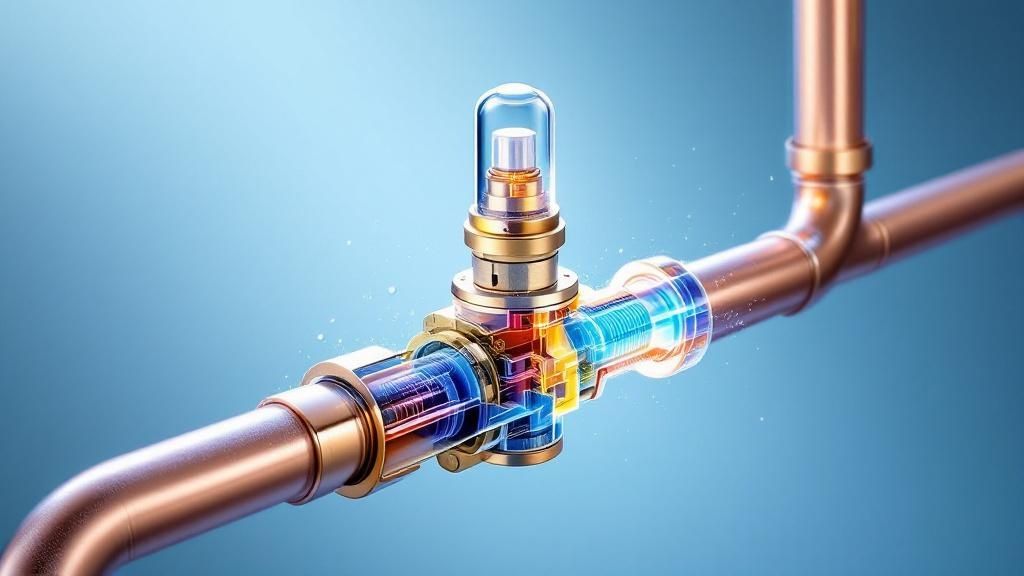
At the heart of any cooling system is a small but incredibly important part: the refrigeration expansion valve . This component is the main regulator for the entire system, controlling how much liquid refrigerant gets into the evaporator. Getting this flow just right is the key to performance, efficiency, and safety. The Smart Gatekeeper of Your Cooling System Think of the expansion valve as the intelligent gatekeeper for your refrigeration system. It works a bit like a high-precision nozzle on a hose, carefully managing both the volume and pressure of the refrigerant right before it enters the evaporator. This single component handles one of the most critical jobs in the whole refrigeration cycle. By creating a sharp drop in pressure, the valve lets the high-pressure liquid refrigerant expand in a flash, turning it into a cold, low-pressure mist. This transformation is where the magic of cooling really happens, prepping the refrigerant to absorb as much heat as possible. Without this step, your system simply wouldn't be able to cool anything down. Why This Control Is So Important The valve’s job isn't just about making things cold—it's about doing it efficiently and safely. How well it meters the refrigerant has a huge impact on the system's overall health. Boosting System Efficiency: By feeding the evaporator the perfect amount of refrigerant, the valve ensures it works at its best. This maximizes your cooling power while keeping energy waste to a minimum. Protecting the Compressor: This is probably its most critical role. The valve prevents liquid refrigerant from getting back to the compressor. Liquid can't be compressed and will cause catastrophic failure, making the expansion valve an essential safeguard. The idea of an automated valve was a game-changer for cooling technology. Before it came along, early systems needed someone to constantly adjust the refrigerant flow by hand—a process that was both inefficient and risky. This small but mighty device has been a cornerstone of refrigeration for almost a century. The first patent for what we now know as the thermostatic expansion valve (TXV) was filed on August 24, 1927 , by an inventor named Harry Thompson. He solved the nagging problem of how to protect compressors from liquid damage. You can learn more about the history of this critical invention and the impact it had. How the Expansion Valve Powers the Cooling Cycle To really get a feel for how a refrigeration expansion valve works, you have to follow the refrigerant on its journey through the system. It shows up at the valve's doorstep as a warm, high-pressure liquid, fresh from dumping heat in the condenser. At this stage, it’s full of potential, but it’s not nearly cold enough to do any actual cooling. This is where the expansion valve steps in. It acts like a gatekeeper with a tiny, precise opening. Forcing all that liquid refrigerant through this small hole is the secret to the entire cooling process. As it squeezes through, the refrigerant experiences a sudden, massive drop in pressure. Ever used a can of compressed air to clean a keyboard? You’ll notice the can gets incredibly cold after just a few seconds of spraying. That’s the exact same principle, a process called isenthalpic expansion . This abrupt pressure drop causes the liquid refrigerant to instantly expand and partially flash into vapor, transforming it into an ice-cold, low-pressure mist. The Transformation from Liquid to Cold Mist This change from a warm liquid to a frigid mist is where the magic really happens. The expansion valve’s main job is to perfectly control the amount of refrigerant flowing into the evaporator. This control creates the pressure drop needed for the refrigerant to boil and absorb heat from the surrounding space. It’s a simple but brilliant piece of engineering. Now, this super-chilled mixture of liquid and vapor flows into the evaporator coils. Because it's so much colder than the air blowing across the coils, it starts soaking up heat like a sponge soaks up water. Perfecting the Refrigerant Flow But the valve's work isn't done yet. It has to constantly fine-tune the refrigerant flow to match the cooling demand, or what we call the "heat load." It's a delicate balancing act. Too much refrigerant will flood the evaporator. The liquid won't have a chance to boil off completely, and it will get sent back to the compressor—a dangerous condition known as "liquid slugging" that can destroy it. Too little refrigerant starves the evaporator. The system won't cool effectively and will have to work much harder, just wasting energy and driving up your bills. The expansion valve's goal is to hit that sweet spot, making sure every last drop of liquid refrigerant boils into a gas right before leaving the evaporator. This maximizes cooling and ensures only vapor makes it back to the compressor. A properly working valve is essential for the health and efficiency of any cooling system. For businesses that depend on keeping things cold, this small part is a massive asset. Keeping your entire system healthy, from the valve to the compressor, is a cornerstone of smart commercial HVAC management. By carefully managing this process, the expansion valve ensures your system delivers reliable and efficient cooling day in and day out. Understanding Different Types of Expansion Valves Not all expansion valves are created equal. Just like a mechanic needs different tools for different jobs, refrigeration systems rely on various valve designs to get precise control over refrigerant flow. Getting to know these types is the first step in diagnosing issues and really appreciating the engineering that goes into efficient cooling. Each design takes a unique approach to metering refrigerant, and each comes with its own set of pros, cons, and best-use cases. The valve you choose—or the one in your existing system—directly impacts efficiency, complexity, and cost. The three most common types you'll run into are Thermostatic Expansion Valves (TXVs) , Electronic Expansion Valves (EEVs) , and simple capillary tubes . This graphic lays out the distinct designs of these common refrigeration expansion valve types. From the bare-bones simplicity of a capillary tube to the sophisticated digital brain of an EEV, each valve is built for a specific purpose and level of performance. The Workhorse: Thermostatic Expansion Valves (TXV) The Thermostatic Expansion Valve (TXV) is without a doubt the most common type you'll find in commercial refrigeration and air conditioning. It's a mechanical marvel, operating with a sensing bulb that's clamped right onto the evaporator outlet. This bulb measures the refrigerant's temperature (or superheat) and automatically adjusts the valve opening to keep everything in perfect balance. Its self-regulating nature is what makes the TXV so reliable and efficient across a wide range of conditions. How it Works: The bulb contains its own fluid that expands or contracts with temperature changes. This movement applies pressure to a diaphragm inside the valve, pushing it open or letting it close. Simple and effective. Best For: Systems with fluctuating heat loads, like commercial coolers or residential AC units, where demand is constantly changing throughout the day. The Precision Player: Electronic Expansion Valves (EEV) The Electronic Expansion Valve (EEV) brings refrigeration control into the modern age. Instead of a mechanical bulb, it uses a small motor run by a microprocessor. This setup allows for incredibly fine-tuned adjustments to refrigerant flow, all based on real-time data from multiple sensors. While they are more complex, EEVs deliver far superior efficiency and control. In fact, studies show that systems using EEVs can be 15-25% more energy-efficient than those with traditional TXVs, especially when dealing with variable loads. EEVs are the go-to choice for high-performance systems where squeezing out every bit of efficiency is the name of the game. They adapt to changing conditions in a split second—much faster than their mechanical cousins. Properly setting up and maintaining these advanced valves is a critical part of specialized commercial refrigeration work. To see how this fits into the bigger picture, you can learn more about **the role of comprehensive commercial HVAC services** in keeping these precise components in top shape. The Simple Solution: Capillary Tubes On the simplest end of the spectrum, we have the capillary tube . It's not really a "valve" in the traditional sense, but rather a long, skinny copper tube with a fixed diameter. It creates a constant pressure drop without any moving parts, which makes it extremely reliable and cheap to produce. But that simplicity is also its biggest weakness. A capillary tube can't adjust to changes in heat load or ambient temperature. It's designed to work best under one specific operating condition and that's it. How it Works: Its fixed length and tiny internal diameter act as a permanent restriction, metering a constant amount of refrigerant. No adjustments, no fuss. Best For: Small, simple systems with stable operating conditions. Think domestic refrigerators, freezers, and window air conditioners. To help you keep these straight, here's a quick comparison of the three main types. Comparison of Common Refrigeration Expansion Valves Valve Type Control Method Primary Advantage Common Applications Thermostatic (TXV) Mechanical (Sensing Bulb) Reliable & adaptable to load changes Commercial refrigeration, residential AC Electronic (EEV) Digital (Microprocessor & Motor) Highest efficiency & precise control High-performance systems, chillers Capillary Tube Fixed Orifice (No moving parts) Extremely simple, reliable, & low cost Domestic refrigerators, small freezers Choosing the right valve is all about matching the technology to the job. While a capillary tube is perfect for a mini-fridge, a large commercial walk-in cooler benefits immensely from the precision of an EEV. How Expansion Valves Changed Modern Refrigeration To really get why the refrigeration expansion valve is such a big deal, you have to imagine a world without it. Early refrigeration systems were clumsy, inefficient, and frankly, pretty dangerous. They were all about manual controls, which meant a technician had to stand there and constantly adjust the refrigerant flow by hand just to keep things running. This wasn't just a hassle—it was a huge risk. The first refrigerants, like ammonia and sulfur dioxide, were toxic and flammable. One wrong move could cause a dangerous leak, making these systems completely unsuitable for public use. Refrigeration was stuck as a specialized, industrial process, a far cry from the reliable convenience we count on today. The Dawn of a New Era in Cooling The big breakthrough finally came in the 1920s with the invention of the automated thermostatic expansion valve (TXV). This small, self-regulating device completely changed the game. It got rid of the need for constant human supervision, which paved the way for systems that were both stable and dependable. This innovation couldn't have come at a better time. It lined up perfectly with another major development—the creation of safer, non-toxic refrigerants like Freon. The combination of an automated valve and a safe refrigerant was the one-two punch that made modern refrigeration possible. It was the key to making cooling systems affordable, safe, and efficient enough for everyone. This critical development and the widespread adoption of the thermostatic expansion valve happened during a truly transformative period. Its invention in 1927 coincided with a surge in refrigeration demand across brewing, meat-packing, and the new household appliance market. Learn more about the detailed history of air conditioning and refrigeration milestones . From massive supermarkets that need consistent cooling to the air conditioner keeping your home comfortable, the legacy of the expansion valve is all around us. It turned a hazardous industrial process into an everyday necessity. It’s a bit of history that shows just how vital these parts are—and why professional [refrigeration services](https://www.pmechanicalfl.com/services) are so essential for keeping them in check. This single invention didn’t just improve a machine; it completely changed how we store food, cool buildings, and live our lives. Troubleshooting Common Expansion Valve Failures Even the most reliable refrigeration expansion valve will eventually run into trouble, and when it does, the entire system pays the price. A bad valve can act just like other system problems—say, a refrigerant leak or a tired compressor—which makes getting the diagnosis right the first time absolutely critical. For any service tech, learning to spot the unique symptoms of a failing valve is a non-negotiable skill. Most expansion valve failures fall into one of three buckets: it's stuck wide open, it's jammed shut, or it’s erratically “hunting” for the right position. Each of these scenarios creates a distinct fingerprint of pressure readings and physical symptoms. Once you know what to look for, you can zero in on the problem, saving time and avoiding needless parts swapping. Diagnosing a Valve Stuck Open When an expansion valve gets stuck in the open position, it's like a busted fire hydrant flooding the evaporator with too much refrigerant. The evaporator coil simply can't keep up and boil off all that liquid. This "flooding" condition can send raw liquid refrigerant straight back to the compressor—a surefire way to cause catastrophic damage. Here are the dead giveaways of a valve that’s stuck open: High Suction Pressure: With way too much refrigerant pouring into the low side, the suction pressure will be unusually high. Low Superheat: Because the refrigerant can’t fully vaporize, the temperature at the evaporator outlet will be just a hair above its boiling point. Your superheat reading will be close to zero . Compressor Sweating or Frosting: That cold, liquid refrigerant hitting the warm compressor will cause it to sweat heavily or even build up a layer of frost. This is one of the most dangerous failure modes for a system. Liquid slugging can obliterate compressor valves and bearings in no time. Identifying a Valve Stuck Closed or Restricted The flip side of the coin is a valve that’s stuck shut or severely clogged, which starves the evaporator of refrigerant. This is often caused by debris, wax, or moisture that’s frozen solid right at the valve's tiny opening. Without enough refrigerant, the system’s cooling capacity tanks, and the compressor is forced to work overtime under terrible conditions. Keep an eye out for these tell-tale signs: Low Suction Pressure: A starved evaporator will pull down into a deep vacuum or show very low suction pressure on your gauges. High Superheat: With barely any liquid to boil off, the small amount of vapor that does get through becomes super-heated, leading to sky-high superheat values. Short Cycling: The compressor will likely kick on and off repeatedly as the low-pressure safety switch does its job and trips the system. Differentiating between a restricted valve and a low refrigerant charge is critical. Both can present with low suction pressure, but a system with a restricted valve will show high superheat, whereas a low-charge system often has both low superheat and low subcooling. What Is Valve Hunting? Sometimes a valve isn’t stuck in one position but is bouncing wildly between open and closed. This erratic behavior is called "hunting," and it causes massive swings in suction pressure and superheat. The system can never find a stable operating point, which kills efficiency and puts a ton of unnecessary strain on the compressor. Hunting can be triggered by a few things, like a valve that’s oversized for the job, a sensing bulb that isn't mounted correctly, or a bulb that has lost its thermal charge. Figuring out which issue you're facing is key to getting the system back to stable, efficient operation. The guide below can help you connect the dots between what you're seeing in the field and what might be happening with the valve. Expansion Valve Troubleshooting Guide Use this table as a quick reference to link common system symptoms to potential expansion valve issues and rule out other possibilities. Symptom Potential Valve Issue Other Possible Causes Low Suction, High Superheat Valve Stuck Closed/Restricted Clogged filter-drier, low refrigerant charge High Suction, Low Superheat Valve Stuck Open Oversized valve, incorrect bulb placement Fluctuating Pressures Valve Hunting Improper bulb contact, loss of bulb charge Diagnosing these issues correctly not only fixes the immediate problem but also prevents future component failures. A methodical approach, guided by your gauges and an understanding of these failure modes, will always lead you to the right solution. Getting Installation and Maintenance Right Proper installation and routine maintenance are what make or break the long-term reliability of any refrigeration expansion valve . An ounce of prevention here is truly worth a pound of cure, helping you sidestep those frustrating callbacks and surprise system failures down the road. Even a top-of-the-line valve will let you down if it’s not installed with care. One of the details that gets overlooked far too often is the placement of the thermostatic sensing bulb. It absolutely must have firm, clean contact with the suction line to get an accurate read on the refrigerant temperature. Get this wrong, and you'll see the valve "hunting" for the right setting or, even worse, flooding the compressor. Always stick to the manufacturer's guidelines for positioning—which is usually at the 10 or 2 o’clock spot on horizontal lines. Protecting the Valve and System Your brazing technique is another critical piece of the puzzle during installation. It’s incredibly easy to overheat the valve body, which can permanently fry internal components like diaphragms and seals. You have to wrap the valve body with a wet rag or use a thermal heat-blocking paste to soak up that excess heat and protect its delicate guts from damage. A clean and dry system is a reliable system. Before you even think about installing a new refrigeration expansion valve, make sure you put in a new filter-drier. Then, pull a proper vacuum to get all the moisture and non-condensables out of there—those are the things that cause corrosion and blockages. Finally, proactive maintenance is what keeps that valve running efficiently for years. This isn't a "set it and forget it" part. Regular check-ins are vital for the health of the entire system. Preventative Maintenance Checklist: Verify Superheat: Every so often, check and tweak the superheat setting. You want to keep it in the manufacturer's sweet spot for the best performance. Inspect for Leaks: Get in there and carefully check all connections for any signs of refrigerant leaks, paying close attention to flare fittings and brazed joints. Check Insulation: Make sure the sensing bulb is properly insulated. If it's exposed, it will read the ambient air temperature and throw everything off. Following these practices is just part of being a professional in this field. Consistent upkeep doesn't just make the valve last longer; it boosts the whole system's efficiency. To learn more about building a solid upkeep routine, check out our guide on effective [preventative maintenance programs](https://www.pmechanicalfl.com/copy-of-maintenance-programs) . Frequently Asked Questions Even when you have a good handle on how expansion valves work, specific questions always pop up out in the field. Here are some straightforward, practical answers to the queries we hear most often from technicians and system owners. How Do I Know if My Expansion Valve Is Bad? A failing expansion valve will give you some clear warning signs. Keep an eye out for inconsistent cooling, a sudden frost buildup on the evaporator coils, or weird noises coming from a struggling compressor. You might also see some strange pressure readings on your gauges—either way too high or way too low. These are classic symptoms of a valve that’s stuck open, shut, or just can't find the right balance. Can a Refrigeration Expansion Valve Be Repaired? For nearly all modern systems, the answer is a firm no . Most expansion valves are precision-engineered, sealed units. They're built to be replaced, not repaired on-site. Trying to take one apart is a bad idea. You risk getting moisture or dirt into the refrigerant lines, which can cause much bigger headaches down the road, like a fried compressor. Swapping it out for a new one is always the safest and most reliable fix. Superheat is the temperature that refrigerant vapor gains after it has completely finished boiling into a gas. Think of it as a safety buffer that ensures no liquid droplets make it back to the compressor. What Is Superheat and Why Does It Matter? Superheat is one of the most important measurements in any cooling system. For a thermostatic expansion valve (TXV), it's the key piece of information it uses to control how much refrigerant flows into the evaporator. If your superheat is too low, the valve is letting in too much refrigerant, which could send liquid back to the compressor and cause serious damage. If it's too high, the system isn't getting enough refrigerant, leading to poor cooling and wasted energy. Nailing the correct superheat is everything for performance and protection. For more expert insights and HVAC tips, explore our comprehensive [P&M Mechanical blog](https://www.pmechanicalfl.com/blog) . At Putnam Mechanical LLC , we specialize in expert commercial HVAC and refrigeration services to keep your systems running at peak performance. If you're facing issues with your refrigeration expansion valve or any other component, contact us today for reliable, professional support .
- A Guide to Thermal Expansion Valve Refrigeration Systems
In any refrigeration system, the thermal expansion valve (TEV) is the unsung hero. Think of it as the gatekeeper that precisely controls how much liquid refrigerant flows into the evaporator. This single component is critical for making sure your system cools as efficiently as possible. The Heart of Cooling: How a TEV Manages Refrigerant Imagine a dam operator who needs to let just the right amount of water through to power a turbine. Too little, and you don't get enough power. Too much, and you risk overwhelming the whole system. A thermal expansion valve does the exact same job, but with refrigerant. The TEV is positioned right between the high-pressure liquid line and the low-pressure evaporator. Its main purpose is to create a massive pressure drop. As high-pressure liquid refrigerant is forced through the valve's tiny opening, it expands in a flash, causing its pressure to plummet. This process, known as flashing, instantly transforms the refrigerant into a super-chilled, low-pressure mix of liquid and vapor—perfectly prepped to start absorbing heat in the evaporator coil. At its core, the TEV has three key responsibilities that keep a refrigeration system running smoothly and efficiently. Key Functions of a Thermal Expansion Valve (TEV) Function Description Impact on System Pressure Reduction The TEV creates a significant pressure drop as refrigerant passes through its orifice. This drop allows the refrigerant to "flash" into a cold, low-pressure state, ready for heat absorption. Refrigerant Metering It precisely controls the volume of liquid refrigerant entering the evaporator. Ensures the evaporator coil is used effectively without being overfed or starved. Superheat Control It adjusts refrigerant flow based on the temperature at the evaporator outlet. Maintains optimal system efficiency and protects the compressor from damaging liquid floodback. Each of these jobs is crucial, but it's the valve's ability to manage superheat that truly sets it apart and defines its importance in the system. Controlling Superheat for Peak Efficiency The TEV’s most important job is maintaining the right amount of superheat . Superheat is simply the temperature of the refrigerant gas after it has completely boiled into a vapor, measured above its boiling point. By sensing the temperature at the evaporator outlet, the valve constantly opens and closes to fine-tune the refrigerant flow. If superheat gets too high, it means the evaporator is "starving." The valve opens wider to let more refrigerant in, putting the entire coil to work and boosting cooling power. If superheat drops too low, there's a risk of liquid refrigerant leaving the evaporator. The valve closes down to reduce the flow, protecting the compressor from liquid that can't be compressed. This precise regulation is the secret to an efficient system. By maintaining a target superheat, the TEV guarantees the evaporator is working at its maximum capacity without risking catastrophic compressor failure from liquid floodback. This balancing act is essential for both performance and the long-term health of the system. The market reflects this importance—the global TEV market was valued at around USD 1.2 billion and is expected to climb to USD 2.1 billion , largely because everyone is focused on energy-efficient cooling. Considering HVAC systems can be responsible for almost 40% of a commercial building's energy consumption, a properly functioning TEV is a huge factor in keeping those costs down. You can discover more insights about the growing TEV market and its direct impact on energy savings. Inside the Valve: Unpacking TEV Components and Operation To really get a feel for how a thermal expansion valve works its magic, we need to pop the hood and look inside. A TEV isn’t just one solid part; it’s a team of components engaged in a precise mechanical ballet. At its core, the valve’s operation is a constant balancing act between three distinct forces, each pushing and pulling to meter the perfect amount of refrigerant. This diagram gives a great close-up of how these internal parts interact to control the flow. As you can see, the temperature change picked up by the sensing bulb directly affects the diaphragm's position. That, in turn, adjusts the needle valve to let more or less refrigerant through. It's this direct mechanical link that makes the TEV so responsive. The Key Players Inside a TEV Four main components are responsible for this intricate dance: The Sensing Bulb and Capillary Tube: Think of this as the system's thermometer. It's a sealed component with its own refrigerant charge, strapped right onto the evaporator outlet pipe. Its entire job is to detect the final temperature of the refrigerant vapor leaving the evaporator. The Diaphragm: This is a flexible, pressure-sensitive disc at the top of the valve body. You could call it the decision-maker, as it flexes up and down based on pressure changes from above and below. The Spring: Tucked right underneath the diaphragm, this spring provides a constant, adjustable closing force. Technicians calibrate this spring to set the target superheat for the system. The Needle and Seat: This is the gatekeeper. The needle, physically connected to the diaphragm, moves in and out of a small opening (the seat) to either restrict or open up the path for the liquid refrigerant. These parts work together in a non-stop feedback loop, making constant, tiny adjustments to keep the superheat exactly where it needs to be. The Three Competing Forces The diaphragm's position is really determined by a constant tug-of-war between three different pressures. Picture the diaphragm as a scale that must always stay perfectly balanced. Bulb Pressure (The Opening Force): When the evaporator outlet gets warmer, the refrigerant inside the sensing bulb starts to boil, building pressure. This pressure travels down the capillary tube and pushes down on the diaphragm, trying to open the valve. Evaporator Pressure (A Closing Force): At the same time, the pressure from inside the evaporator pushes up on the underside of the diaphragm, trying to close the valve. Spring Pressure (Another Closing Force): The spring is always there, exerting a steady upward pressure that also works to close the valve. The valve finds its sweet spot when the opening force from the bulb perfectly equals the combined closing forces from the evaporator and the spring. This delicate balance is what guarantees the precise amount of refrigerant is always flowing. If the evaporator gets too warm (meaning high superheat), the bulb pressure wins the tug-of-war, pushing the needle open to let in more cooling. If things get too cold (low superheat), the closing forces take over, pinching the flow to stop liquid refrigerant from flooding back to the compressor. Choosing Your TEV: Different Valves for Different Jobs When you're dealing with a thermal expansion valve refrigeration system, picking the right component isn't a one-size-fits-all deal. The specific valve you choose has a direct impact on your system's efficiency, how stable it runs, and its overall reliability. Each design is engineered for specific jobs, from a simple home AC unit all the way up to a heavy-duty commercial walk-in freezer. The first and most basic distinction you'll run into is whether a valve is internally or externally equalized. The difference all comes down to where the valve is "listening" for pressure to decide when to close. Internally vs. Externally Equalized TEVs An internally equalized valve is the simpler of the two. It senses the evaporator pressure right at its own outlet port. This design works perfectly for small, single-circuit evaporators where there isn't much of a pressure drop from the inlet of the coil to the outlet. You can think of it as a valve that only needs to listen for pressure changes right outside its own door. But what about bigger systems? In refrigeration setups with long runs of refrigerant lines or multiple evaporator circuits, a significant pressure drop can happen as the refrigerant travels through the coil. If you used an internally equalized valve here, it would get a false reading and end up starving the evaporator of refrigerant. This is exactly where an externally equalized valve shines. It uses a small, separate line to sense the pressure at the outlet of the evaporator, right next to the sensing bulb. This gives it a much more accurate picture of the true evaporator pressure, allowing it to maintain the correct superheat even when there's a big pressure drop. For large-scale applications, like those found in a busy restaurant, making the right choice is critical. You can learn more about how to choose the right cooling system for a busy kitchen in our detailed guide . Advanced TEV Technologies Beyond the basic equalization method, modern TEVs have evolved to offer even greater control and efficiency, built to handle more demanding conditions. Balanced-Port TEVs: These valves are real workhorses, designed to operate consistently even when condenser pressure fluctuates, like on a cold day. They essentially cancel out the influence of the high-pressure liquid refrigerant, preventing the valve from overfeeding the evaporator and keeping the whole system stable year-round. Electronic Expansion Valves (EEVs): EEVs are the pinnacle of refrigerant control. Instead of relying on mechanical springs and diaphragms, they use a small stepper motor controlled by a microprocessor to position the valve with incredible precision. This allows for much tighter superheat control, faster response times, and a significant boost in energy efficiency. EEVs offer a level of precision that mechanical valves simply can't match. This leads to better system performance, reduced energy consumption, and smarter diagnostics, making them a cornerstone of modern, high-efficiency refrigeration. The growing push for energy efficiency has sent the EEV market soaring. Valued at over USD 7.02 billion , the market is projected to climb to USD 16.01 billion with an 8.6% CAGR . This boom is driven by the demand for energy-saving HVAC solutions and tighter environmental regulations across the globe. To make the choice a bit clearer, here's a quick breakdown of how these different valve types stack up against each other. Comparison of TEV Types Valve Type Key Feature Best Application Primary Advantage Internally Equalized Senses pressure at the valve outlet. Small, single-circuit evaporators with low pressure drop. Simple design, cost-effective for small systems. Externally Equalized Senses pressure at the evaporator outlet via a separate line. Large systems with significant evaporator pressure drop. Accurate superheat control in complex applications. Electronic (EEV) Microprocessor and motor control the valve opening. High-efficiency systems requiring precise temperature control. Unmatched precision, energy savings, and fast response. Ultimately, whether you need the straightforward reliability of an internally equalized valve or the high-tech precision of an EEV, understanding the fundamentals helps ensure your refrigeration system runs exactly as it should. How to Select the Right Thermal Expansion Valve Choosing the right thermal expansion valve for a refrigeration system isn't just a small technical detail—it’s one of the most important decisions you can make for its overall performance. Think of it like picking the right size fuel injector for an engine. Too large, and the system will constantly overcorrect in a condition called "hunting," where the valve erratically opens and closes. This leads to frustrating temperature swings and major inefficiency. On the flip side, an undersized valve will starve the evaporator. It simply won't be able to absorb enough heat, which tanks the system's cooling capacity. Either way, you're looking at poor performance, wasted energy, and even potential damage to the compressor down the road. Getting the selection right from the start is non-negotiable for a stable and reliable system. This need for precision is a huge reason why the global expansion valve market, valued at USD 11.5 billion , is expected to hit USD 17.3 billion in the next decade. Thermal expansion valves make up about 70% of this market because they're just that good at controlling refrigerant flow under different loads—a must-have for modern refrigeration. Core Selection Criteria To size a TEV correctly, you have to match it to the specific demands of the refrigeration system. This means gathering some key data points and then using the manufacturer’s spec sheets to find the perfect fit. The main factors you'll need to consider are: System Capacity: This is the cooling load, usually measured in tons of refrigeration or BTUs per hour. The valve must be rated to handle this load. Refrigerant Type: Different refrigerants like R-410A , R-134a , or R-404A have their own unique pressure-temperature personalities. You have to pick a valve designed for the exact refrigerant you're using. Evaporator Temperature: The temperature your evaporator runs at directly impacts the pressures inside the system, which in turn affects how the valve needs to perform. Liquid Temperature and Pressure Drop: Don't forget the temperature of the liquid refrigerant entering the valve and the pressure difference across it—both are critical for accurate sizing. Interpreting Manufacturer Data Sheets Once you have this information, it's time to dig into the manufacturer's capacity tables or software. These tools are designed to help you pinpoint the exact valve model for your job. They cross-reference system capacity with different operating conditions to give you a nominal tonnage rating. Remember, a valve's rated capacity is not a fixed number. It changes based on the operating pressures and temperatures of your specific system. Always use the correction factors provided by the manufacturer to adjust the nominal rating for your actual conditions. By carefully considering these factors, technicians and designers can steer clear of common sizing mistakes. This methodical approach is a cornerstone of effective commercial refrigeration maintenance. For more on this, check out our guide on [what you need to know about commercial HVAC and refrigeration maintenance](https://www.pmechanicalfl.com/post/what-you-need-to-know-about-commercial-hvac-and-refrigeration-maintenance) . When you get the selection right, you ensure the thermal expansion valve refrigeration unit operates at its best for years to come. TEV Installation and Maintenance Best Practices Proper installation and ongoing care are what separate a high-performing refrigeration system from one plagued with issues. Getting these steps right from the start prevents countless headaches and ensures the thermal expansion valve operates at peak efficiency for its entire lifespan. Believe it or not, the most common source of error lies in a simple but critical detail: the placement of the sensing bulb. Think of the sensing bulb as the valve's eyes and ears. If it's not positioned correctly, it can't get an accurate temperature reading, leading to poor superheat control. For the best results, the bulb must be strapped securely to the suction line right at the evaporator outlet, making sure it has tight, direct contact with the pipe. Proper Installation Steps Correct installation goes far beyond just bulb placement. Following a few key principles will protect the valve—and the entire system—from premature failure. Sensing Bulb Placement: Mount the bulb on a horizontal section of the suction line. On smaller pipes (under 7/8 inch ), place it at the 12 o’clock position. For larger pipes, the 4 or 8 o’clock positions are better to avoid readings distorted by any oil resting in the line. Insulation is Non-Negotiable: Once mounted, the sensing bulb must be fully insulated . This simple step shields it from the surrounding air temperature, making sure it only reads the true suction line temperature. Safe Brazing Technique: The intense heat from brazing can easily destroy the delicate internal components of a TEV. Always wrap the valve body in a wet rag or use thermal paste to absorb the heat while you work. This is a crucial step for protecting your investment. A correctly installed and insulated sensing bulb is the foundation of accurate superheat control. It ensures the thermal expansion valve receives the right information to precisely meter refrigerant, maximizing system efficiency and protecting the compressor. Maintenance and Fine-Tuning Superheat With the TEV correctly installed, the focus shifts to maintenance and adjustment. Proactive care is essential for keeping the system running smoothly and efficiently year after year. This means keeping the system clean and free of contaminants like moisture or debris, which can clog the valve's internal passages and cause it to fail. A regular schedule is key for a comprehensive approach. You can find excellent tips in our guide to creating a [preventive maintenance checklist template](https://www.pmechanicalfl.com/post/your-preventive-maintenance-checklist-template) to keep your entire system in top shape. Finally, fine-tuning the superheat setting is how you truly optimize performance. Using a set of refrigeration gauges and a thermometer, you can make small, incremental adjustments to the valve's spring. Turn the adjustment stem clockwise to increase superheat or counter-clockwise to decrease it, but be sure to wait several minutes between adjustments for the system to stabilize. This careful calibration ensures your refrigeration system delivers the consistent, efficient cooling you depend on. Troubleshooting Common TEV Problems and Solutions When a refrigeration system isn't cooling properly, the thermal expansion valve is one of the first places a good technician will look. It's so central to the whole operation that even a small problem can snowball into poor cooling or a total system shutdown. Learning to spot the symptoms is half the battle. Most issues with a thermal expansion valve refrigeration unit boil down to a few common culprits. You’ll usually see an evaporator that's either "starved" (not getting enough refrigerant) or "flooded" (getting way too much). Another classic sign is "hunting," where the valve can't seem to make up its mind, causing wild swings in temperature and pressure. Diagnosing a Starved Evaporator A starved evaporator is a common headache that results in low suction pressure, high superheat, and weak cooling. The system just can't pull enough heat out of the space because there isn't enough refrigerant flowing through the coil to do the job. A few things can cause this: Debris or Contaminants: Tiny particles of dirt, moisture, or sludge can easily clog the valve's small opening or filter screen, creating a physical roadblock for the refrigerant. Loss of Bulb Charge: If the sensing bulb loses its internal charge, it can no longer generate the pressure needed to open the valve. It gets stuck closed or barely cracks open. Incorrect Superheat Setting: If the superheat is cranked up too high, the spring puts too much pressure on the valve, keeping it from opening wide enough to meet the cooling demand. A consistently starved evaporator always points to a restriction. The trick is figuring out if that restriction is inside the valve itself or somewhere else, like a clogged filter drier. Uncovering the Cause of a Flooded Evaporator On the flip side, you have a flooded or overfed evaporator. This is a dangerous situation marked by low superheat, high suction pressure, and the very real risk of liquid refrigerant getting back to the compressor—which can destroy it in short order. An oversized TEV is a common reason for flooding, since it lets too much refrigerant pass through even when it's barely open. Another culprit is improper sensing bulb placement. If the bulb isn't making solid, clean contact with the suction line, it will read a warmer temperature and tell the valve to open up way too much. Regular system checks are crucial for catching these problems before they escalate. In fact, you can see how [regular refrigeration maintenance can prevent major food loss](https://www.pmechanicalfl.com/post/how-regular-refrigeration-maintenance-can-prevent-major-food-loss) by identifying issues like these early on. By methodically working through these common failure points, you can find the root cause and get your system back to running smoothly. Answering Your Questions About TEVs The thermal expansion valve is one of the hardest-working parts in your refrigeration system, so it’s natural to have questions about how it operates. Let's clear up a few common points that come up for technicians and business owners. What’s the Difference Between Superheat and Subcooling? Both are critical measurements for diagnosing a system, but they tell you completely different things about the refrigerant's state. Superheat is the heat absorbed by the refrigerant after it’s already turned into a gas in the evaporator. The TEV is in charge of controlling this to make sure no liquid gets back to the compressor. Subcooling , on the other hand, is the heat removed from the refrigerant after it’s turned back into a liquid in the condenser. This tells you if the system has the right amount of refrigerant. How Do You Know If a TEV Is Bad? A failing TEV usually sends out some pretty clear signals. If you’re seeing consistently high superheat and low suction pressure, the valve is likely stuck closed or has a blockage. The flip side is near-zero superheat with high suction pressure, which often means the valve is stuck wide open. Another tell-tale sign is a valve that’s "hunting"—opening and closing erratically. This is often caused by an oversized valve or a poorly placed sensing bulb, leading to an unstable system. If you think your TEV is on the fritz, it's best to address it right away to avoid bigger problems. For immediate steps you can take in a crisis, our **emergency commercial refrigeration repair guide** offers practical advice. Getting a quick diagnosis can save your compressor from serious damage down the road.
- A Guide to Commercial Kitchen Ventilation Requirements
If you're in the food service business, you know that commercial kitchen ventilation requirements aren't just suggestions—they're a critical part of keeping your staff, customers, and building safe from fire and poor air quality. A well-designed system is the lungs of your kitchen, pulling out dangerous grease-laden vapors, smoke, and heat. Falling short on these codes isn’t an option; it can lead to serious safety risks and even shut your doors for good. Why Kitchen Ventilation Requirements Matter It’s easy to think of a ventilation system as just a fan, but it's so much more. It's a life-safety machine. Without one, the air in your kitchen quickly fills with flammable grease particles, suffocating heat, and nasty contaminants. This creates a dangerous environment that puts everything from employee health to your building's structural integrity on the line. The number one goal of these regulations is fire prevention . Grease buildup in exhaust hoods and ductwork is one of the top causes of restaurant fires. A system that’s up to code is designed to capture that grease right at the source, stopping it from piling up and becoming a massive fire hazard. The Governing Bodies Setting The Standard In the United States, two main organizations lay down the rules that form the foundation of commercial kitchen ventilation requirements . Getting to know what they do is the first step toward getting compliant. NFPA (National Fire Protection Association): This is the group behind NFPA 96 , which is basically the bible for ventilation control and fire protection in commercial cooking. It gets into the nitty-gritty of everything from how hoods and grease filters should be built to ductwork installation and fire suppression systems. ICC (International Code Council): The ICC is responsible for the International Mechanical Code (IMC) , which is what most local governments use as their guide. The IMC handles the bigger mechanical picture, like setting required exhaust rates (CFM), specs for makeup air, and how the whole system should be balanced. These two standards are designed to work hand-in-hand. Think of NFPA 96 as the fire safety specialist, while the IMC makes sure the system is mechanically sound and keeps the air quality where it needs to be. Following these codes isn't just a good idea—it's the law, and your local fire marshal and building inspector will be the ones enforcing it. Before we go further, it's helpful to see exactly what kind of trouble a compliant system helps you avoid. Table: Key Risks Mitigated by Compliant Ventilation Systems This table breaks down the main hazards that a properly designed commercial kitchen ventilation system is built to handle. Risk Category Specific Hazard How a Ventilation System Helps Fire Safety Grease Buildup Captures flammable grease vapors before they accumulate in ducts. Fire Safety Flash Fires Removes superheated air and smoke that could ignite. Air Quality Carbon Monoxide Vents harmful combustion byproducts from gas-fired appliances. Air Quality Smoke & Odors Pulls smoke and strong cooking odors out of the kitchen and dining areas. Employee Health Heat Stress Removes excessive heat, reducing the risk of heat exhaustion for staff. Building Integrity Moisture & Mold Vents steam and moisture that can lead to mold growth and structural damage. As you can see, this is about more than just clearing a little smoke. It's about creating a fundamentally safe and workable environment. Compliance isn't just about passing an inspection. It's about creating a sustainable, safe, and efficient kitchen that protects your most valuable assets: your people and your business. Ignoring these rules can bring on a world of hurt, from failed inspections and hefty fines to being forced to close down. Even more importantly, it makes for an unsafe place to work. A properly ventilated kitchen makes a huge difference in employee comfort and productivity by getting rid of that oppressive heat and smoke. It also helps your other equipment run the way it should, since an unbalanced system can throw everything from your ovens to your coolers out of whack. The importance of equipment efficiency is a theme that runs through all kitchen operations; you can learn more about how ice machine efficiency can impact your bottom line in another of our detailed guides. At the end of the day, investing in a compliant ventilation system is an investment in your business’s future. Navigating Key Codes And Standards Trying to make sense of ventilation codes can feel like learning a new language. These documents are dense and technical, but their goal is simple: keep your kitchen safe and running smoothly. Think of them as the rulebook for the road—you have to know them to prevent accidents. The two most important players you'll deal with are NFPA 96 and the International Mechanical Code (IMC) . They work hand-in-hand, but each has a very different job. Getting a handle on what each one covers is the first big step toward making sure your kitchen is up to snuff. NFPA 96: The Fire Safety Guardian The National Fire Protection Association's Standard 96 is all about fire prevention. Its rules are laser-focused on stopping a fire before it starts and containing it if one ever breaks out. It’s best to think of NFPA 96 as a strict fire marshal who inspects every single detail related to grease and open flames. This standard sets the non-negotiable rules for the "what" and "where" of your system's fire defense. Grease Containment: This covers everything from the design of your exhaust hood and the specific type of UL Listed grease filters you use, to how your ductwork is built and installed to keep grease from escaping. Fire Suppression Systems: NFPA 96 requires an automatic fire suppression system built right into your hood. It specifies the kind of extinguishing agent you need and makes sure the system automatically cuts off fuel to appliances the moment it’s activated. Clearances and Access: The code also dictates the minimum safe distances between your hot cooking equipment, ductwork, and any combustible materials like drywall. It also mandates properly sized and placed access panels so everything can be cleaned regularly. The big idea behind NFPA 96 is that every part of your system—from the filter in the hood to the fan on the roof—must work together as one integrated unit to manage fire risk from grease-filled air. Cutting corners here isn't an option. Failing to meet NFPA 96 standards is a surefire way to fail an inspection and create a serious fire hazard. IMC: The Mechanical Systems Blueprint If NFPA 96 is the fire marshal, the International Mechanical Code (IMC) is the mechanical engineer. The IMC looks at your entire ventilation system to make sure it moves air correctly and efficiently. It’s less concerned with grease and more focused on the physics of airflow and keeping the indoor environment healthy. The IMC provides the "how-to" for your system's performance, governing crucial details like: Exhaust Rates: This is where you get into the nitty-gritty of Cubic Feet per Minute (CFM). The IMC determines exactly how much air your system needs to pull out of the kitchen based on the type and size of your cooking equipment. Makeup Air (MUA): For all that air you're exhausting, the IMC demands you bring a nearly equal amount of fresh, clean air back in. This simple step prevents negative air pressure, which can cause all sorts of problems like doors that are hard to open, pilot lights that won't stay lit, and hoods that just don't work right. Materials and Construction: The code also gets specific about the type and thickness of steel for ductwork and the right way to seal every seam, ensuring the system is airtight and built to last. While these standards started in the U.S., you’ll find similar rules all over the world. In Europe, for example, the EN 16282 standard lays out a detailed framework for commercial kitchens. Put into effect in 2017, it covers the entire ventilation path and even includes energy-saving measures like heat recovery, requiring a minimum thermal efficiency of 73% for certain equipment. You can discover more about these international regulations for commercial kitchen safety to see how these standards are evolving globally. A Tale Of Two Appliances Let's look at a real-world example. Say a restaurant is installing two new pieces of equipment: a deep fryer and a convection oven for baking. The deep fryer, which kicks out a huge amount of greasy vapor, gets a lot of attention from NFPA 96 . This code demands a Type I hood, special baffle filters, a powerful fire suppression system, and strict clearances from walls. Then, the IMC steps in to calculate the high CFM exhaust rate needed to capture all that hot, greasy air. On the other hand, the convection oven mostly produces heat and steam—not grease. Under NFPA 96, its fire safety needs are much less strict. The IMC still determines the exhaust rate required to manage the heat and keep the kitchen from turning into a sauna, but the overall system is far simpler. The Core Components Of A Ventilation System To really get a handle on commercial kitchen ventilation requirements , it helps to stop thinking of the system as one giant machine. Instead, picture it as a team of specialists working together, almost like your kitchen's own circulatory system. Every component has a specific job. If one part fails, the whole system starts to struggle. Let’s walk through how each piece contributes to a safe, compliant, and comfortable kitchen, starting right where all the action happens. The Exhaust Hood Where It All Starts The exhaust hood is your first line of defense. It’s basically a giant funnel positioned right over your cooking appliances to capture all that hot, greasy air before it has a chance to escape and make a mess of your kitchen. But hoods aren't a one-size-fits-all deal. They fall into two main categories, and picking the right one is crucial. Type I vs. Type II Exhaust Hoods Choosing between a Type I and Type II hood is one of the most important decisions you'll make for your kitchen's safety and compliance. A Type II hood placed over a deep fryer isn't just a mistake—it's a serious code violation and a massive fire risk. This table breaks down the key differences to help you get it right. Feature Type I Hood (Grease Hood) Type II Hood (Condensate Hood) Primary Use Appliances producing grease & smoke (fryers, grills, ranges) Appliances producing only heat & steam (ovens, dishwashers) Grease Filters Required . Must be UL Listed to trap flammable grease. Not Required . No grease is produced. Fire Suppression Required . Integrated system to extinguish grease fires. Not Required . Low fire risk. Construction Heavy-duty, typically welded stainless steel. Lighter construction, as it only handles moisture. Ultimately, the type of cooking you do dictates the type of hood you need. If there's grease involved, it has to be a Type I. Grease Filters The Unsung Heroes Tucked inside every Type I hood, you'll find grease filters . These are the unsung heroes of fire prevention in any commercial kitchen. These metal baffles are designed to do one thing and do it well: trap flammable grease particles as air gets pulled through. This prevents a dangerous, sticky buildup from forming inside your ductwork. It's why codes like NFPA 96 mandate that these filters must be UL Listed —it’s proof they meet strict standards for flame resistance and grease-trapping performance. Keeping them clean isn't just a good idea; it's the law. Clogged filters choke off airflow, forcing your exhaust fan to work way harder and creating a serious fire hazard right above your cooks. Ductwork The Arteries Of The System Once the air zips through the filters, it shoots into the ductwork . Think of these as the arteries of your ventilation system. Their job is to safely transport all that contaminated air from the hood, up through the building, and out to the exhaust fan on the roof. To meet fire codes, this isn't just any ductwork. It has to be constructed from welded steel—usually 16-gauge carbon steel or 18-gauge stainless steel —strong enough to contain a grease fire if one were to break out. All the seams must be completely liquid-tight to stop flammable grease from dripping out onto ceilings or other combustible surfaces. The Exhaust Fan The Heart Of The Operation At the very end of the ductwork, usually on the roof, sits the exhaust fan . This is the powerful heart of the whole operation, responsible for pumping all the contaminated air out of the building. This fan is what creates the negative pressure needed to pull smoke, heat, and grease up into the hood and away from your staff. The size and power of the fan are calculated based on your kitchen's specific needs, measured in CFM (Cubic Feet per Minute). As you can see, a bigger kitchen with more heavy-duty cooking equipment is going to need a much higher CFM. This ensures the air is changed out frequently enough to keep the environment safe and clear. Makeup Air The Lungs Of The Kitchen Finally, we get to the most overlooked—and arguably most critical—component: the Makeup Air (MUA) unit . Your powerful exhaust fan is constantly pulling air out of the kitchen. For every cubic foot of air it removes, you have to bring a nearly equal amount of fresh, filtered air back in . This is your kitchen breathing in. Without a proper makeup air system, your kitchen basically becomes a vacuum. This negative pressure can cause all sorts of problems: doors that are suddenly impossible to open, pilot lights that won't stay lit, and even dangerous back-drafting of carbon monoxide from your gas appliances. The MUA unit prevents this chaos by pumping fresh, conditioned air back into the space, creating a balanced and comfortable kitchen. It’s a huge factor in managing air quality and temperature, which is a constant battle in a busy kitchen. For a deeper dive into that challenge, our guide on how to choose the right cooling system for a busy kitchen has some great insights. Each of these parts must work in perfect harmony to meet commercial kitchen ventilation requirements and keep your operation running smoothly. Calculating Your Kitchen's Ventilation Needs Sizing a ventilation system isn't just guesswork; it's a science. The entire process hinges on one critical metric: CFM , which stands for Cubic Feet per Minute. Think of CFM as the horsepower of your ventilation system—it’s a direct measure of how much air your exhaust fan can pull out of the kitchen every single minute. Nailing this number is the foundation of an effective and compliant kitchen. A system with too little CFM will leave your kitchen hazy and hot as it struggles to capture smoke and grease. But a system that's too powerful will just suck out all your expensive conditioned air, sending your energy bills through the roof. Decoding Your Kitchen's CFM Needs So, how do you figure out this all-important number? It all comes down to the heart of your operation: the cooking equipment. The size, type, and heat output of your appliances are what dictate the CFM your system needs. A fiery charbroiler, for instance, is going to demand a lot more ventilation muscle than a simple countertop steamer. While a certified HVAC professional should always handle the final calculations, understanding the basics helps you have a smarter conversation with your contractor. A common method they use is the "linear foot method," which assigns a specific CFM value for every linear foot of the exhaust hood, depending on what's cooking underneath it. Let's walk through a quick example to see it in action. Example Scenario: Imagine a small diner with a 6-foot-long exhaust hood hanging over a standard cooking line with a griddle and two deep fryers. This setup is typically considered "medium-duty." To calculate the necessary exhaust CFM, the process looks something like this: Identify Equipment Type: The griddle and fryers fall into the medium-duty category. Find the CFM Per Linear Foot: Local codes and the IMC provide specific rates. For medium-duty cooking, a standard requirement is 300 CFM per linear foot of the hood. Calculate Total Exhaust CFM: Just multiply the hood's length by the CFM rate. * 6 feet (hood length) x 300 CFM/foot = 1,800 CFM This simple math tells us the exhaust fan needs to be strong enough to pull 1,800 cubic feet of air out of that kitchen every minute to properly handle all the heat, smoke, and grease from that specific cook line. The Critical Importance Of A Balanced System But figuring out the exhaust CFM is only half the battle. For every cubic foot of air your system pushes out, you have to bring a nearly equal amount of fresh, clean air back in. This is the job of the Makeup Air (MUA) unit, and getting this right creates what we call a balanced system . Think about trying to suck air out of a sealed water bottle—you can't. The same principle applies to your kitchen. If you're only pulling air out, the space creates a vacuum, a state known as negative air pressure . This imbalance leads to a whole host of problems that can throw a wrench in your daily operations: Stubborn Doors: Exterior doors suddenly become heavy and hard to open as the building desperately tries to suck in air from anywhere it can. Appliance Problems: Gas appliances can "back-draft," pulling dangerous combustion fumes like carbon monoxide back into the kitchen instead of venting them safely outside. Poor Hood Performance: The exhaust hood can't do its job right, leaving smoke and grease to linger in the kitchen. A properly balanced system ensures your kitchen can "breathe" correctly. The MUA system should supply about 80-90% of the air that the exhaust fan removes. This keeps the kitchen slightly negative—just enough to contain odors inside—without causing all those operational headaches. This balance is just as vital as keeping your other key equipment in check. You can see how this idea of preventive care impacts your whole operation when you learn more about how often you should schedule maintenance for your refrigeration equipment . Ultimately, understanding CFM and air balance helps you make sure your ventilation system isn't just compliant, but truly effective and efficient for your business. Installation Best Practices For Compliance A perfect ventilation design on paper means nothing if it’s not installed correctly. Proper installation is where the blueprint meets the real world, and it's the final, critical step in meeting commercial kitchen ventilation requirements . Getting this part right ensures your system runs safely, passes inspection, and protects your investment for years to come. Think of it like assembling a high-performance engine. Every bolt has to be tightened just right, every connection sealed perfectly, and every component placed with absolute precision. Even one small mistake can snowball into huge problems, from fire hazards to failed inspections. This is why you can't afford to be hands-off during installation—you have to hold your contractor to the highest standard. It's a big deal for the whole industry. The global market for these systems was valued at around USD 4.30 billion in 2024 and is projected to hit USD 6.82 billion by 2032, largely because of strict safety rules. North America makes up 36.27% of this market, leading the charge in adopting better ventilation to keep kitchens safe. You can dig deeper into these market trends over at Fortune Business Insights . Non-Negotiable Rules From NFPA 96 NFPA 96 lays out a strict checklist for installers, and it's all about one thing: preventing fires. These aren't just suggestions; they are hard-and-fast rules your contractor must follow to the letter. Clearance from Combustibles: This is a big one. All hoods and ductwork must be installed at least 18 inches away from combustible materials like wood framing or drywall. If you can't get that distance, you absolutely must have a certified heat shield or fire-rated barrier in place. Proper Duct Sloping: Grease is a liquid when it's hot, and it will condense and pool inside your ductwork. To deal with this, NFPA 96 demands that all horizontal duct runs be sloped back toward the hood. This lets liquid grease drain safely into the hood's collection traps instead of sitting in the ducts, where it becomes a major fire hazard. Liquid-Tight Welds: Every single seam in the ductwork has to be fully welded so it's completely liquid-tight. This is critical for preventing flammable grease from leaking out and creating a hidden fire path through your building’s ceilings and walls. The core idea behind a compliant installation is containment. The entire path from the hood to the exhaust fan must be a perfectly sealed, fire-resistant tunnel that gives grease and fire absolutely no place to escape. Final Inspection Checkpoints When the fire marshal or building inspector shows up for the final sign-off, they have a specific list of things they’re going to look at. Knowing what they're looking for helps you make sure your project is ready for their visit. Functional Fire Suppression Link: They will physically verify that the fire suppression system is linked to the fuel sources. When that system trips, it must automatically shut off the gas or electricity to all cooking appliances under the hood. No exceptions. Strategically Placed Access Panels: Inspectors will be on the lookout for clearly marked and easy-to-reach cleaning panels. These have to be installed at regular intervals along the ductwork and at every single change in direction, ensuring every inch of the system can be cleaned. Balanced Air Pressure: A quick test they often perform is simply opening the kitchen door. If the door is hard to pull open or slams shut on its own, it’s a huge red flag for negative air pressure, which means your makeup air system isn't balanced correctly. Making sure these checkpoints are met is a team effort between you and your contractor. A solid installation is just the first step. For more on keeping your system running right, check out our guide on why regular HVAC service is critical in food service settings . The Future Of Kitchen Ventilation And Energy Efficiency Commercial kitchens are getting smarter, and so is the technology that keeps them running. There's a growing pressure to be both highly productive and sustainable, which is pushing ventilation systems to evolve. The old way of doing things—blasting exhaust fans at full speed all day long—is quickly becoming a thing of the past. The future is all about precision and efficiency. It’s about creating systems that adapt to what’s actually happening on the cook line, moment by moment, to cut down on wasted energy. How Smart Ventilation Works The star of this new approach is Demand Controlled Kitchen Ventilation (DCKV) . Think of it like a smart thermostat for your kitchen's exhaust system. Instead of running at one constant, energy-guzzling speed, it uses a network of advanced sensors to monitor the air for heat and smoke. When things are quiet on the line, the DCKV system automatically slows the fans to a near-silent hum. But as soon as a chef throws a steak on the grill and smoke starts to pour, those sensors instantly kick the fans into high gear to clear the air. This is a complete game-changer compared to traditional systems, which are basically like leaving every light in the building on overnight. By perfectly matching ventilation power to real-time cooking activity, DCKV systems can slash your energy consumption. A ventilation system that only works as hard as it needs to is one of the single most impactful energy-saving upgrades a commercial kitchen can make. It directly reduces utility costs while shrinking the kitchen's carbon footprint. Emerging Technologies And Regulations Even though DCKV technology has been around for a while, it's still surprisingly rare, with a market penetration currently below 5% . That’s changing fast, though, as codes and standards begin to catch up. California's Title 24 building standards, for example, now require efficiency measures that are giving DCKV adoption a huge push. You can discover the details behind DCKV technology adoption to see where the industry is headed. Another key innovation on the rise is heat recovery . These clever systems capture the waste heat from the hot air being exhausted out of the kitchen. They then use that captured energy to pre-warm the fresh makeup air being pulled in from outside—a massive benefit in colder climates. It’s a simple way to recycle energy and reduce the strain on your building’s main heating system. Investing in these technologies isn't just about meeting future commercial kitchen ventilation requirements . It's about building a more sustainable, resilient, and profitable business. Understanding the link between ventilation and energy bills in food service spaces is the first step toward making smarter decisions that will pay off for years to come. Common Questions About Kitchen Ventilation Even when you've got a handle on the codes and components, you're bound to run into specific questions managing your commercial kitchen ventilation requirements . Think of this section as your quick-reference guide for those day-to-day "what-if" scenarios that always seem to pop up. Getting the small details right is what keeps your kitchen safe, efficient, and compliant. From maintenance schedules to troubleshooting airflow, let's clear up a few of the most common issues we see in the field. Hood Cleaning Frequency And System Use Two areas that inspectors always zoom in on are system cleanliness and making sure the right equipment is being used for the job. How often should my kitchen hood system be professionally cleaned? There's no single answer that fits every kitchen. The cleaning schedule is laid out by NFPA 96 and depends entirely on what—and how much—you're cooking. Quarterly: This is for the heavy hitters. If you're doing high-volume cooking with solid fuel, charbroiling, or using a wok, you'll need a cleaning every three months. Semi-Annually: The most common schedule. This is the standard for moderate-volume kitchens doing typical grilling and frying. Annually: This applies to low-volume operations like day camps, churches, or senior centers where grease production is minimal. Remember, your local fire marshal has the final say, so it's always smart to confirm these schedules with them directly. Can I use a Type II hood over a deep fryer? Absolutely not. This is one of the most critical safety mistakes you can make. A Type II hood is only built to handle heat, steam, and moisture— not grease . They're perfect for appliances like dishwashers or steam ovens. A deep fryer, on the other hand, puts out a ton of grease-laden vapor. That legally requires a Type I hood , which comes equipped with grease filters and a built-in fire suppression system to manage the serious fire risk that comes with frying. Using the wrong hood isn't a small mix-up; it's a major code violation that creates an immediate and dangerous fire hazard. It's a guaranteed way to fail an inspection and get shut down until it's fixed. Troubleshooting Airflow Issues Understanding common performance problems can save you a world of headaches and costly downtime. One issue that puzzles a lot of kitchen managers is "short-circuiting." What is 'short-circuiting' in a ventilation system? Short-circuiting is what happens when your makeup air (MUA) unit dumps fresh air too close to the exhaust hood. Instead of circulating through the kitchen to cool things down and replace the air being pulled out, that fresh air gets immediately sucked right back out by the exhaust fan. It creates a pointless, wasteful loop. Your system is running hard and burning energy, but it's not actually ventilating the space. The solution is simple in concept: make sure your MUA diffusers are placed far enough away from the hood to allow the fresh air to mix and distribute properly. When it comes to keeping your kitchen's ventilation system compliant, efficient, and reliable, you need a partner you can trust. The certified experts at Putnam Mechanical LLC have over 75 years of combined experience in installing, maintaining, and repairing commercial HVAC systems across West Florida. Get in touch today for upfront pricing and expert service at https://pmechanicalfl.com .
- Demystifying the Cost of Commercial HVAC Systems
Trying to nail down the cost of a commercial HVAC system can feel a bit abstract. For a standard installation, you're typically looking at a range between $5,000 and $12,500 , which covers both the equipment and the labor. But that’s just a starting point. For more complex projects that need a lot of new ductwork or specialized units, it's not uncommon to see the total investment climb past $22,000 . Your Quick Guide to Commercial HVAC System Costs Budgeting for a new commercial HVAC system is a lot like buying a vehicle for your business. Think about it: a simple cargo van for local deliveries has a completely different price tag and purpose than a custom-fitted, heavy-duty truck built for specialized hauling. The van gets the basic job done, while the truck is a serious investment in specific, high-demand capabilities. It’s the same with your HVAC. The final price tag is a blend of the equipment itself, the skilled hands required for installation, and the unique demands of your building. Those initial numbers give you a ballpark, but they don’t tell the whole story. To get an accurate quote, you have to look under the hood at factors like your facility's size, the type of system you need, and even where you're located. To give you a clearer starting point, let's look at what the numbers typically shake out to. Commercial HVAC System Cost at a Glance This table breaks down the common expenses you'll see on a quote, giving you a quick reference for what to expect. Cost Component Average Price Range Key Factors HVAC Unit (Equipment) $3,000 – $9,000+ Tonnage (size), brand, energy efficiency (SEER rating), and system type (e.g., rooftop, split-system). Labor & Installation $2,000 – $6,000+ Project complexity, technician experience, regional labor rates, and time required for installation. Ductwork Installation $1,000 – $2,700+ The size of the building, the complexity of the layout, and whether it's a new install or a replacement. Permits & Misc. $300 – $1,500+ Local permit fees, necessary electrical upgrades, or minor structural modifications. Remember, these are just averages. A simple swap-out will be on the lower end, while a complex installation in a large or older building will push costs higher. Breaking Down the Initial Numbers Industry data shows that the average cost to install a new commercial HVAC system lands around $7,500 . This figure usually covers the core equipment and the labor for a pretty straightforward installation. However, most commercial buildings have needs that go beyond the basics. For instance, if your space requires brand-new ductwork, that alone can add another $1,000 to $2,700 to the project. Want to add advanced features like a high-efficiency HEPA filtration system? That will also bump up the final price. For a deeper dive into these numbers, check out this insider's price guide for heating and cooling systems . A commercial HVAC system isn't just an expense; it's a critical infrastructure investment. Viewing it through this lens helps you make strategic decisions that balance upfront costs with long-term operational efficiency and occupant comfort. Core Components of Your Total Cost The total cost of a commercial HVAC system isn’t just one big number. It’s a combination of several key expenses every business owner should know about. Understanding these moving parts helps you read quotes more effectively and see exactly where your money is going. Your final invoice will generally break down into these main buckets: Equipment Costs: This is the price of the physical HVAC unit. It can vary wildly based on its size (tonnage), the brand you choose, and its energy efficiency rating. Labor and Installation Fees: This often makes up a big chunk of the total. It covers the technicians' time, their expertise, and the specialized tools needed to get the job done right. Ductwork and Ventilation: Think of this as the "lungs" of your building. This is the cost tied to installing, modifying, or repairing all the necessary ductwork. Permits and Additional Modifications: This can include things like local permits, any required electrical upgrades, or even small structural changes needed to support the new unit. When you see the cost broken down this way, you can budget with more confidence and ask contractors the right questions. It’s the best way to make sure there are no surprises down the road. Decoding the Key Drivers of HVAC Pricing Trying to understand why one commercial HVAC system costs so much more than another can be confusing. But the final quote you get isn't just a random number; it's a careful calculation based on several major factors that affect performance, lifespan, and your budget. Think of it less like buying a machine and more like commissioning a custom-built solution for your specific building. A few powerful drivers shape the total cost of a commercial HVAC system . These include the sheer size of your facility, the type of equipment you need, the brand’s reputation, and the system's energy efficiency. Each piece of this puzzle plays a big role in your upfront investment and your long-term operating costs. Once you break these components down, you stop being a passive price-taker and become an informed buyer. You’ll be able to ask the right questions and make smart decisions that will benefit your business for years. Building Size and System Capacity The most basic factor driving the price is the size of the space you need to heat and cool. This goes beyond simple square footage—it's about the building's total volume, layout, number of occupants, and even the heat thrown off by equipment inside. All this data goes into a "load calculation," which tells us the required tonnage , a term for the system's cooling power. A sprawling retail store with high ceilings and giant display windows will need a much more powerful—and more expensive—unit than a small office building with the same square footage. A bigger, more powerful system simply costs more to build, ship, and install. Key Takeaway: Getting the system size right is absolutely critical. An undersized unit will run nonstop, struggling to hit the right temperature and burning out way too soon. An oversized unit will switch on and off constantly, failing to properly dehumidify the air and wasting a ton of energy. Equipment Type and Brand Reputation The specific type of HVAC system your building needs is another huge piece of the cost puzzle. Different technologies are built for different jobs, and their prices vary a lot. Rooftop Units (RTUs): These are the all-in-one workhorses you see on top of many commercial buildings. They are fairly straightforward to install, which often makes them a cost-effective choice. Split Systems: These offer more flexibility for buildings with multiple zones or smaller spaces, but the installation can be more complex since they have separate indoor and outdoor parts. Variable Refrigerant Flow (VRF) Systems: This is an advanced technology that can heat one area while cooling another. It's perfect for places like hotels or medical offices, but all that complexity comes with a much higher upfront price tag. Beyond the system type, the brand's reputation and quality also matter. Well-known brands with a track record for reliability and strong warranties will usually cost more. They tend to offer different product tiers, from basic models to premium units packed with advanced features. The Critical Role of Energy Efficiency Finally, a system's energy efficiency rating has a direct line to its upfront cost. You’ll see ratings like SEER (Seasonal Energy Efficiency Ratio) or EER (Energy Efficiency Ratio). The higher the number, the more efficient the unit is—and the more it will cost to buy. This creates a classic trade-off: pay more now for lower energy bills later. A high-SEER unit might cost thousands more at the start, but it can shave a significant amount off your monthly utility bills. Since long-term costs are a huge part of the equation, it's vital to focus on maximizing HVAC energy efficiency . The right efficiency level for you often comes down to your local climate, energy prices, and how long you plan to own the building. Investing in a modern, efficient system not only cuts down on expenses but also improves your indoor air quality and reliability. To learn more, check out the key benefits of upgrading to a modern commercial AC system and see the difference it can make. Comparing Costs of Different HVAC System Types Choosing the right commercial HVAC system feels a lot like picking an engine. You wouldn't put a tiny four-cylinder in a semi-truck, and you wouldn't drop a massive V8 into a compact car. Each is built for a specific job, and the same goes for HVAC systems. The technology you pick directly impacts your upfront cost and how well it performs for years to come. The final cost of a commercial HVAC system is tied directly to its type. Some systems are designed as straightforward, all-in-one workhorses, while others give you pinpoint control over complex spaces. Getting a handle on these differences is the first step toward making a smart investment. Packaged Rooftop Units (RTUs): The All-in-One Workhorse Packaged rooftop units, or RTUs, are the go-to for many single-story commercial buildings like retail stores, warehouses, and standalone restaurants. Think of an RTU as a reliable desktop computer—it has all the key components (compressor, condenser, and evaporator) tucked into one sturdy cabinet that sits on the roof. This all-in-one design makes installation much simpler and more affordable than other systems. Maintenance is also more direct since a technician can access everything in one spot. Split Systems: Flexible and Versatile Just like the name suggests, a split system divides the HVAC components into two main parts: an outdoor unit with the compressor and condenser, and one or more indoor units with the evaporator coils and air handler. This setup is perfect for smaller commercial spaces like offices, small clinics, or multi-level buildings where a single rooftop unit just won't work. The biggest advantage here is flexibility. You can place indoor units in different zones for better temperature control across various rooms or floors. But that flexibility comes with a more involved installation, since refrigerant lines have to be run between the indoor and outdoor parts, which bumps up labor costs. Making the right call is critical, and our guide on how to choose the right HVAC system for your business can walk you through the details. Variable Refrigerant Flow (VRF) Systems: Precision and Efficiency Variable Refrigerant Flow (VRF) systems are the high-tech option in the commercial HVAC world. If an RTU is that reliable desktop PC, a VRF system is like a custom-built server network—highly scalable and designed for specific, complex needs. These systems use a single outdoor unit connected to multiple indoor units, and each one can be controlled on its own. That means a VRF system can heat one office while cooling another at the same time, making it ideal for buildings with diverse needs like hotels, medical facilities, or multi-tenant office buildings. VRF systems deliver top-tier energy efficiency and precise zone control, but this advanced technology comes with the highest upfront equipment and installation cost. The investment often pays for itself through major long-term energy savings. To help you see how these options stack up, here’s a quick comparison of the most common system types. Comparison of Commercial HVAC System Types and Costs System Type Best For Typical Equipment Cost Range Primary Advantage Packaged Rooftop Unit (RTU) Single-story buildings with large, open floor plans (retail, warehouses). $4,000 - $15,000+ Cost-effective installation and straightforward maintenance. Split System Smaller or multi-level spaces needing zoned control (offices, clinics). $5,000 - $20,000+ Flexible installation and targeted temperature control. Variable Refrigerant Flow (VRF) Buildings with diverse heating/cooling needs (hotels, medical facilities). $15,000 - $50,000+ Superior energy efficiency and simultaneous heating and cooling. Each system has its place, and choosing the right one means balancing your building's needs with your budget. As you can see from the infographic below, equipment is the biggest piece of the pie, but labor costs are a significant part of the total investment. The price of the equipment itself also varies widely. For example, furnaces can run from $2,000 to $8,000 , while boilers can reach up to $16,000 . Heat pumps have the broadest price range, from around $2,500 to $39,000 , especially for advanced geothermal models. Ultimately, matching the system type to your building’s unique demands is the key to balancing cost and performance. Uncovering the Hidden Costs of Installation The price tag on the HVAC unit itself is just the first piece of the puzzle. When you're calculating the total cost of a commercial HVAC system , it’s easy to focus on the hardware, but the reality is that installation introduces a whole new set of expenses that can seriously inflate your budget. Believe it or not, the labor, ductwork, and other site-specific needs often account for nearly half of the final project cost. If you ignore these factors, you’re setting yourself up for unexpected overruns and a skewed view of your real financial commitment. To create an accurate budget, you have to look beyond the shiny new machine and understand everything it takes to get that system up and running safely and efficiently. The Major Role of Labor Costs Skilled labor is one of the biggest—and most variable—expenses you’ll face. Unlike a simple appliance that just plugs into the wall, installing a commercial system is a complex job. It demands certified technicians who bring specialized knowledge and tools to the table. Several key factors will influence your final labor bill: Project Complexity: A straightforward rooftop unit swap will cost far less in labor than a complex VRF system that requires extensive refrigerant line work and detailed calibration. Building Accessibility: Is your building tough to get to? If technicians need a crane to lift units onto a high roof or have to navigate tight, cramped spaces, labor hours and costs are going to climb. Regional Wage Standards: A technician’s hourly rate can vary dramatically from one city to another, and that difference will show up on your invoice. Because of this complexity, labor can easily eat up 40% to 50% of your total installation budget. Ductwork: The Building’s Respiratory System Think of your building's ductwork as its respiratory system. This network of channels is responsible for delivering clean, conditioned air to every corner of your space and pulling out the stale air. If this system is poorly designed, damaged, or the wrong size, even the best HVAC unit in the world won’t perform well. The condition of your existing ductwork plays a huge role in the final cost. Your ductwork must be perfectly matched to your new HVAC unit's capacity. A mismatch is a leading cause of inefficiency, poor air quality, and premature equipment failure. That makes a professional ductwork assessment a non-negotiable step in the quoting process. Depending on what the pros find, you could be looking at one of three scenarios: New Ductwork Installation: This is the most expensive route, usually for new construction or buildings where the old ducts are unsalvageable. The upside? You get a perfectly designed system from scratch. Ductwork Retrofitting: A more common and affordable option, this involves modifying or adding to existing ducts to accommodate the new system’s airflow requirements. Simple Repairs and Sealing: If your ducts are in good shape, they might just need minor patching or sealing to prevent air leaks. This is by far the most cost-effective solution. Other Potential Installation Expenses Beyond labor and ductwork, a few other "hidden" costs can pop up on your final invoice. Knowing about them ahead of time helps you build a complete and realistic budget. Permits and Inspections: Most cities and counties require permits for commercial HVAC work to ensure it meets safety and building codes. These fees can range from a few hundred to over a thousand dollars. Electrical Upgrades: A powerful new HVAC system might need more juice than your current electrical panel can provide. Upgrading the panel is another potential expense to plan for. Old System Disposal: Your old HVAC unit can't just be tossed in a dumpster. It needs to be safely decommissioned and disposed of, which involves a fee for labor and the proper removal of environmentally sensitive refrigerants. Long-Term Maintenance: Smart business owners also factor in ongoing upkeep from day one. To learn more, our guide on how regular maintenance prevents costly equipment breakdowns is a must-read. For major commercial projects, like a full system overhaul or a new build, you might want to look into specialized financing. Options like hard money loans for commercial real estate can be a practical way to manage these extensive upfront costs. How Market Trends Are Shaping HVAC Prices Ever wonder why the quote for a new system seems a lot higher than you remember? The cost of a commercial HVAC system doesn't exist in a bubble—it’s directly tied to powerful global economic forces. Understanding what’s happening behind the scenes helps you anticipate price shifts and make a smarter, more strategic purchase. Think of it like the price of gas. Factors happening miles away—like global crude oil production or international politics—are what really set the price you pay at the pump. It's the same with HVAC equipment. A complex web of supply chain snags, inflation, and the rising cost of raw materials all shape the final price tag. When core metals like copper, steel, and aluminum get more expensive on the global market, manufacturers have to pay more to build each unit. That increase inevitably trickles down to you, showing up as a higher number on your quote. The Impact of Tariffs and Regulations It’s not just raw materials, either. Government policies also play a huge part. New tariffs and regulations on imported HVAC components can tack a noticeable percentage onto the equipment cost. Many of the most critical parts—compressors, motors, and complex circuit boards—are made overseas. When a new tariff hits these components, it acts like a tax that gets added at every step of the supply chain. A new tariff on imported compressors might not sound like a big deal on its own. But when you combine it with rising steel prices and shipping delays, it creates a domino effect that can seriously inflate the cost of a complete rooftop unit. This is a major reason why pricing can feel so unpredictable right now. The commercial HVAC market is seeing a clear price increase driven by these exact economic and regulatory pressures. New tariffs on imported parts have added 8% to 15% to equipment prices, and overall equipment costs have already jumped by roughly 12% in the past year alone. You can discover more insights about rising HVAC prices on yarbroughandsons.com for a deeper analysis. Navigating an Unpredictable Market So, what does all this mean for you as a business owner or property manager? It means that waiting to replace an old, inefficient system might end up costing you more, not less. In an inflationary market with ongoing supply chain issues, prices are more likely to keep climbing. Planning ahead has never been more important. This includes: Budgeting Proactively: Start setting aside funds for a replacement or major repair now, and assume the cost will be higher than it was a few years back. Prioritizing Maintenance: Keeping your current system in peak condition is the best way to delay a full replacement. For a closer look at this strategy, check out our article on why property managers should prioritize routine HVAC maintenance . Acting Decisively: When it's finally time to upgrade, getting multiple quotes and locking in a price can protect you from future increases. By understanding the outside forces shaping the market, you can navigate the process with confidence and make a timely, cost-effective decision for your property. A Practical Framework for Getting Accurate Quotes Navigating the quoting process for a big investment like a new HVAC system can feel like a maze. But if you have a clear game plan, you can move forward with confidence and land a competitive, reliable quote. This framework will help you sidestep the common pitfalls and make sure you get a fair price for a quality installation. First things first: you absolutely must insist on a professional load calculation . Think of it like getting a survey done before you build a house—it's the non-negotiable foundation for the whole project. This detailed analysis, often called a Manual J calculation, looks at your building’s size, insulation, window types, and even how many people are inside to figure out the exact heating and cooling power you need. Without this calculation, a contractor is just guessing. That can leave you with an undersized unit that can’t keep up on hot days or an oversized one that constantly cycles on and off, wasting a ton of energy. Secure and Compare Itemized Quotes Once that load calculation is in hand, the next move is to get at least three itemized quotes from reputable, licensed commercial contractors. This is the only real way to get a feel for the market rate and the true cost of a commercial hvac system in your area. But be careful—not all quotes are created equal. A vague, one-page estimate is a huge red flag. A professional quote should be a detailed document that breaks down every single part of the job, giving you a transparent look at where your money is going. A truly comprehensive quote empowers you to make an informed decision. It moves the conversation from "How much will it cost?" to "What exactly am I getting for my investment?" This level of detail protects you from hidden fees and ensures you are comparing apples to apples. Anatomy of a High-Quality Quote To make sure you’re getting all the information you need, use this checklist as you review each proposal. Every solid quote should include: Detailed Equipment Breakdown: This should list the specific make, model, and serial numbers for all major components, along with their efficiency ratings (SEER/EER). Itemized Labor Costs: The quote needs to clearly separate the cost of labor from the equipment. It should outline the scope of work and give you an estimate of the hours involved. Warranty Information: Look for specifics on both the manufacturer’s parts warranty and the contractor’s labor warranty. Permit and Inspection Fees: The contractor should be handling all the necessary permits, and those costs should be listed clearly. Project Timeline: A clear start date and an estimated completion date help set expectations and let you manage your business operations around the installation. Beyond the initial quotes, you’ll want to keep a close eye on expenses as the project gets underway. You can learn more about how to get your day back by efficiently tracking job and project costs . Finally, always vet your potential contractors. Verify their licenses, check for valid insurance, and ask for a few recent client references. This due diligence is your best defense against shoddy work and future headaches. Common Questions About Commercial HVAC Costs Making a big investment like a new commercial HVAC system is bound to bring up a few questions. That's perfectly normal. Getting clear answers helps you move forward with confidence, ensuring you make a smart, cost-effective decision that serves your business for years. Here are some straightforward answers to the questions we hear most often from business owners. How Can I Reduce My Total Cost? While the initial price tag can look intimidating, there are several savvy ways to bring down the overall investment. Timing is one. If you can schedule your purchase during the off-season (think spring or fall), you can sometimes find better pricing from contractors who aren't in their busiest season. It also pays to look for manufacturer rebates or local utility incentives, which often reward businesses for installing high-efficiency units. And speaking of efficiency, choosing the right tier is key. The most expensive, highest-SEER unit isn't always the best fit. A solid mid-tier system might offer the perfect balance of upfront cost and long-term savings for our Florida climate. What Makes Commercial HVAC More Expensive? The price jump from residential to commercial really boils down to three things: durability, complexity, and sheer scale. Commercial units are built like tanks, with heavy-duty components designed to run almost nonstop and survive the harsh conditions on a commercial rooftop. They're also significantly larger and more powerful. A commercial system is an intricate network built to manage complex ventilation needs, multiple temperature zones, and massive volumes of air—a job that’s far beyond what a home A/C unit is designed for. This requires specialized equipment and installation expertise, which naturally costs more. How Long Should a Commercial System Last? With proper care, a well-maintained commercial HVAC system will typically last between 15 and 20 years . But that lifespan isn't a guarantee; it hinges almost entirely on proactive maintenance. If you neglect routine care, you could see a unit fail in as little as ten years, which is a costly and premature end. Regular maintenance is the single most important thing you can do to maximize your investment. It stops major breakdowns before they happen, keeps the system running efficiently, and helps it reach its full operational life. To get a detailed look at what you could be saving, check out your guide to a commercial HVAC energy audit and see where improvements can be made. Is a High-Efficiency Unit Worth the Price? In almost every case, yes. A high-efficiency unit pays for itself over time, delivering a strong return on your investment. While the upfront cost is higher, the long-term energy savings are substantial. You could easily shave 20-40% off your monthly cooling and heating bills. Not sure if it’s worth it for your specific business? You can calculate the payback period yourself. Just divide the extra cost of the high-efficiency model by your estimated annual energy savings. That number tells you exactly how many years it will take for the unit to pay for itself through lower utility bills. At Putnam Mechanical LLC , we believe in transparent, upfront pricing to help you make informed decisions for your business. Contact us today for a detailed quote and find a reliable HVAC partner you can trust.
- How Often Should You Schedule Maintenance for Your Refrigeration Equipment?
Refrigeration systems are one of the most critical pieces of equipment in food service, retail, and commercial operations. Without regular upkeep, these systems can break down, leading to food spoilage, lost sales, and expensive repairs. That’s why routine refrigeration maintenance is essential, not just when something goes wrong, but as part of your regular operations. At Putnam Mechanical, we help Sarasota businesses keep their refrigeration equipment in top condition. With the right maintenance schedule, you can prevent problems before they happen and extend the life of your investment. Ideal Maintenance Frequency For most commercial systems, refrigeration maintenance should be scheduled at least twice a year, once before summer and once before winter. However, in high-use environments such as restaurants, grocery stores, or large kitchens, quarterly service is a smart choice. Busy systems run around the clock and can build up dust, grime, or wear much faster. With quarterly refrigeration maintenance, you’ll catch small issues early and keep things running smoothly all year long. What Regular Maintenance Includes At Putnam Mechanical, we take a thorough approach to refrigeration maintenance . During each service, our technicians: Inspect and clean condenser and evaporator coils Check refrigerant levels and look for leaks Test thermostat function and controls Inspect door gaskets and hinges Check for unusual noises or vibrations Measure airflow and temperature accuracy This detailed process ensures every part of your system is operating efficiently. Regular refrigeration maintenance helps reduce energy use, improve cooling performance, and extend the lifespan of your equipment. The Cost of Skipping Maintenance Putting off refrigeration maintenance might seem like a way to save time or money, but it almost always backfires. When systems aren’t cleaned or inspected regularly, they lose efficiency and are more likely to break down. Even small issues like a dirty coil or a cracked gasket can increase your energy bills and reduce your system’s ability to keep food at safe temperatures. Over time, neglected systems wear out faster and need costly repairs or replacements. By sticking to a regular refrigeration maintenance plan, you avoid those surprise breakdowns and keep your business running smoothly. Custom Plans for Every Business No two businesses have the same needs. A small café may only need semi-annual service, while a supermarket with multiple coolers and freezers will benefit from monthly or quarterly refrigeration maintenance . At Putnam Mechanical, we customize your maintenance plan based on your system size, usage, and environment. Whether you have one cooler or a full refrigeration line, our expert technicians make sure your system is cared for properly and on schedule. Our Sarasota team is trusted by restaurants, retail stores, and commercial kitchens alike for reliable and affordable refrigeration maintenance. Contact Our Team Today Don’t wait for your equipment to fail before giving it the attention it needs. Let Putnam Mechanical handle your refrigeration maintenance with expert care and reliable scheduling. We help Sarasota businesses stay ahead of costly issues and keep their systems running like new. Contact our team today or call Putnam Mechanical at (941) 444-9244 to set up your custom maintenance plan.
- Your Guide to a Commercial HVAC Energy Audit
Ever wonder where all your energy money is going? An HVAC energy audit is the best way to find out. It’s a deep, diagnostic look into your building's heating, ventilation, and air conditioning systems. The main goal is to pinpoint exactly where and how energy is being wasted, giving you a clear roadmap to a more efficient system and lower bills. Decoding Your Building’s Energy Health Think of an HVAC energy audit like a full physical for your building’s mechanical guts. Just like a doctor checks your vital signs to find hidden problems, our technicians dig into your HVAC network to diagnose energy leaks and inefficiencies. This is way more than just a quick look-around. It's a serious investigation designed to uncover the sneaky issues that are quietly inflating your utility bills month after month. For facility managers and building owners, the audit turns guesswork into a data-driven strategy. You get the insights you need to keep tenants comfortable and extend the life of your equipment. The Core Purpose of an Audit So, what’s the point? An HVAC energy audit translates all that complex system data into a plan you can actually use. Its main goals are pretty straightforward: Spot Energy Waste: We hunt down the specific culprits, like leaky ductwork, aging equipment, or thermostats set incorrectly, that are eating up extra power. Create a Strategic Roadmap: You get a prioritized list of recommendations. We’ll show you everything from low-cost tweaks to long-term upgrades, so you can make improvements that fit your budget. Improve Overall Performance: A better-running system means more reliable temperature control and healthier air quality for everyone in the building. It’s a win-win. This methodical approach ensures every dollar you invest in your HVAC system is put to good use and delivers real, measurable results. Before we dive deeper, it's helpful to see what a properly executed audit can deliver. The table below breaks down the typical results we see and how they directly benefit your building's operations and bottom line. Expected Outcomes from an HVAC Energy Audit Audit Outcome Impact on Your Building Detailed Energy Usage Report Gives you a clear picture of where every energy dollar is going. Prioritized Improvement List Helps you budget effectively by tackling the most critical issues first. Equipment Performance Grades Shows which units are working hard and which are wasting money. Air Quality Assessment Identifies opportunities to improve comfort and health for tenants. Projected Cost Savings Provides a clear ROI for each recommended upgrade or repair. Ultimately, the audit gives you a solid, evidence-based foundation for making smart financial decisions about one of your building’s most critical assets. The ultimate goal of an HVAC energy audit is to create a strategic roadmap for improving performance, reducing operational expenses, and enhancing tenant comfort. It moves building maintenance from a reactive to a proactive model. It establishes a baseline for efficiency and guides all your future maintenance and upgrade efforts. This ensures your property operates at its best for years to come, saving you headaches and money along the way. Why Your Building Needs an HVAC Energy Audit It’s easy to look at an hvac energy audit as just another line item on the expense sheet. That's a mistake. A much smarter way to see it is as a strategic investment in your building's financial health and long-term value. An audit is designed to dig deeper than surface-level problems to find the hidden issues quietly draining your budget. When we uncover things like improperly set controls or tiny leaks in the ductwork, we create a direct path to serious, long-term savings. Fixing these issues does more than just lower your utility bills—it gets your entire system running the way it was meant to, making sure every dollar you spend on energy is put to good use. But the real wins go far beyond your bottom line. An audit is a powerful way to improve the overall environment inside your building, creating a more comfortable and productive space for everyone. More Than Just Cost Savings A thorough audit delivers some major returns that aren't just about money but directly impact your property’s reputation and value. When your HVAC system runs efficiently, it delivers consistent temperature and humidity, which makes a world of difference for the people inside. This improved comfort leads directly to happier tenants and higher retention rates. Comfortable tenants are satisfied tenants, which means fewer complaints, longer leases, and a more predictable revenue stream for you. Plus, a well-tuned ventilation system drastically improves indoor air quality, making your building a healthier place to work. There's a growing focus on energy efficiency for a reason. HVAC systems are a huge slice of global energy consumption, making these audits more important than ever. When you pair an audit with smart management, commercial buildings can cut their HVAC energy use by 20-30% . A Proactive Approach to Asset Management Think of an HVAC energy audit as the foundation of a smart, proactive maintenance plan. Instead of waiting for a total system failure during a sweltering summer heatwave, an audit flags potential trouble spots before they blow up into expensive emergency repairs. This kind of foresight lets you schedule maintenance on your own terms, avoiding surprise downtime and business disruptions. By catching and fixing small issues early, you also extend the life of your expensive HVAC equipment, protecting the money you’ve already invested. An audit is fundamentally an exercise in risk management. It provides the data you need to protect your building's most critical assets, reduce liability, and ensure operational continuity. At the end of the day, a building that’s certified as energy-efficient is simply more attractive to potential buyers and tenants, boosting its market value. An HVAC energy audit isn't just about fixing what’s broken; it’s about building a stronger, more valuable, and more profitable asset for the future. You can learn more about how to [boost commercial building energy efficiency today](https://www.pmechanicalfl.com/post/boost-commercial-building-energy-efficiency-today) in our detailed guide. Our Step-by-Step HVAC Energy Audit Process A proper HVAC energy audit isn't just a quick walkthrough—it's a deep dive into how your system works and where your money is going. We believe in being transparent, so we want to show you exactly how we diagnose the health of your commercial HVAC system and turn that information into real savings. The whole thing is built on gathering solid data and doing some hands-on analysis. We start by looking at your building's history, move to a detailed on-site inspection, and finish by giving you a practical, no-nonsense action plan. Phase 1: Initial Data Collection and Review Before we even step foot in your building, the work has already begun. We start by collecting and analyzing historical data to get a sense of your building's unique energy footprint. This isn't just about crunching numbers; it's about spotting patterns and setting a baseline for how your system should be performing. This initial phase includes a detailed look at: Utility Bills: We dig into at least 12-24 months of your energy bills. This helps us see seasonal spikes, weird consumption patterns, and the overall energy trends of your building. Maintenance Logs: Your system's service history tells a story. We look for recurring problems, frequent repairs, and any signs of chronic equipment issues that could point to bigger inefficiencies. System Specifications: We review the original design documents and equipment manuals. This tells us what your system was supposed to do versus how it's actually performing today. Think of it like a doctor reviewing your medical history before a physical exam. This prep work allows our technicians to arrive on-site with a good idea of where the problem areas might be, making the physical inspection much more focused and efficient. As you can see, each step builds on the last. This ensures our final report is based on a complete picture, not just a quick glance. Phase 2: On-Site Inspection and Diagnostic Testing Next up, our certified technicians conduct a meticulous on-site inspection of your entire HVAC system. This is where we get our hands dirty, physically checking every component and using advanced diagnostic tools to gather real-time performance data. We don’t just look; we measure. With specialized equipment, we can spot things the naked eye would miss. For instance, a thermal imaging camera helps us instantly find air leaks around ductwork or find spots with poor insulation. An airflow meter tells us if your ventilation is balanced, making sure conditioned air is actually getting where it needs to go. The goal here is to connect the dots. We're validating the patterns we saw in the data and uncovering the physical root causes of energy waste. It’s the critical link between what the numbers say and what’s actually happening. Phase 3: Analysis and Reporting The final phase is where it all comes together. We take all the data—from your utility bills to our thermal imaging scans—and translate it into a clear, actionable report. We won't just hand you a stack of technical jargon and walk away. Our report gives you: A straightforward summary of our findings. A prioritized list of what to do next, from low-cost fixes to larger capital improvements. Projected costs and the estimated ROI for each recommendation. This clear roadmap empowers you to make smart decisions that fit your budget and goals. It ensures every dollar you put into your HVAC system delivers the best possible return. Key Areas Covered in Our Audit Checklist A proper HVAC energy audit is more than just a quick walkthrough. It’s a deep dive into every single component that affects how your building uses—and wastes—energy. We follow a detailed checklist to make sure nothing gets missed. Think of it like a detective story. We treat your system as an interconnected network, where one small problem can cause a ripple effect of inefficiency. This method helps us pinpoint the root cause of high energy bills, not just the obvious symptoms. We want you to see exactly what we’re looking for and understand why it matters for your bottom line. Core Equipment and Mechanical Health The heart and soul of your HVAC system are the big pieces of machinery: the air handlers, compressors, chillers, and furnaces. If these aren’t running like a well-oiled machine, you’re practically guaranteed to be wasting money. Our first step is always a thorough physical inspection. We’re looking for: Worn or Damaged Parts: We check belts, fans, and motors for any signs of wear and tear. A frayed belt or a struggling motor can drag down the whole system’s efficiency and set you up for a sudden breakdown. Cleanliness of Coils: Dirty evaporator and condenser coils are energy vampires. They force your system to work much harder to cool the air, causing a major spike in your electricity usage. Refrigerant Levels: If your system's refrigerant charge is too low or too high, it won't cool effectively and can even damage the compressor—one of the most expensive parts to replace. Catching these issues early saves a lot more than just energy. It saves you from costly emergency repairs down the road. According to data from workyard.com , U.S. consumers spend a whopping $10 billion on repairs each year, and many of those could be avoided with proactive checks like these. HVAC Audit Focus Areas To get a full picture, our technicians systematically examine every critical part of your HVAC system. The table below outlines some of the key components we look at and what we're searching for. System Component Key Inspection Points Air Handlers/Furnaces Check for clean filters, fan motor operation, and secure electrical connections. Condensing Units/Chillers Inspect coil cleanliness, refrigerant levels, and compressor performance. Ductwork System Look for air leaks, disconnected joints, poor insulation, and airflow blockages. Thermostats & Controls Verify sensor accuracy, programming schedules, and proper zone setpoints. Ventilation System Ensure balanced air intake and exhaust, and check for proper damper operation. Pumps & Piping Inspect for leaks, proper insulation on hot/chilled water lines, and motor efficiency. This detailed approach ensures we don't just find one problem; we identify every opportunity to make your building more efficient and comfortable. Ventilation and Air Distribution Network You can have the most powerful, efficient AC unit on the market, but if the cooled air can't get where it needs to go, what's the point? Your ductwork is the delivery system, and it’s often a major source of hidden energy loss. Leaky ducts are a huge problem. We often find that up to 30% of a system's energy loss comes from gaps and cracks in the ductwork. Sealing these is one of the quickest and most cost-effective fixes you can make. Our technicians meticulously inspect the entire air distribution network. We also make sure the airflow is balanced, so you don't have one office that's freezing while another is sweltering. Consistent temperatures mean less energy is wasted trying to overcompensate. Control Systems and Building Automation In a modern commercial building, the brains of the operation are the control systems and thermostats. But if they're not programmed correctly or the sensors are off, they can completely undermine your efficiency goals. We dig into your building automation system (BAS) to make sure the schedules and temperature setpoints actually match how your building is used. Are you cooling an empty conference room all weekend? Is the system running at full blast after everyone has gone home? Fine-tuning your controls is a simple, low-cost way to get immediate savings. Keeping these systems in check is an ongoing task, which is why following an [essential commercial HVAC maintenance checklist for optimal performance](https://www.pmechanicalfl.com/post/essential-commercial-hvac-maintenance-checklist-for-optimal-performance) is so crucial for long-term success. Calculating the ROI of an HVAC Energy Audit An HVAC energy audit isn't just another inspection—it's a financial planning tool. Most building owners immediately ask about the cost, but the real question is about the return on investment (ROI). A professional audit gives you the hard data you need to make smart, evidence-based decisions that actually pay off. Think of it this way: the initial investment in a comprehensive HVAC energy audit is quickly paid back through both immediate and long-term energy savings. It's like a roadmap to profitability, showing you exactly where your energy dollars are being wasted and how to get them back. Quick Wins and Long-Term Gains The ROI from an audit really comes in two waves. First, you get the quick wins from low-cost or even no-cost adjustments. This could be as simple as optimizing control settings, recalibrating thermostats, or sealing a few minor duct leaks. These small fixes often deliver savings of 5-15% almost right away. Then come the long-term gains from bigger, strategic upgrades. Your audit report will prioritize larger investments, like replacing an aging chiller or installing a modern building automation system. These are the projects that deliver deeper, more substantial savings that compound year after year, protecting your asset's value. To see exactly how an audit can cut your expenses, [explore our detailed post on lowering operating costs](https://www.pmechanicalfl.com/post/can-an-hvac-energy-audit-really-lower-your-operating-costs) . An HVAC energy audit transforms maintenance from a recurring expense into a strategic investment. It provides a clear framework for analyzing financial benefits, ensuring every dollar spent improves efficiency and boosts your bottom line. This forward-thinking approach is becoming more critical as demand for efficient systems skyrockets. The global HVAC market is projected to nearly double, reaching USD 505.73 billion by 2035 , all driven by the need for smarter, energy-saving technology. You can [discover more insights about HVAC market trends on sphericalinsights.com](https://www.sphericalinsights.com/blogs/top-20-hvac-companies-in-global-2025-statistics-view-by-spherical-insights-and-consulting) . Investing in an audit now positions your property to capitalize on this shift, making sure it stays competitive and cost-effective for years to come. Partnering with Putnam Mechanical for Your Audit Choosing a partner for your HVAC energy audit is about more than just getting a report. It’s about finding a team that can turn complex data into a real-world action plan you can actually use. At Putnam Mechanical, we combine years of hands-on expertise with advanced diagnostic tools to give you a clear, honest picture of your system's health. Our whole approach is built on partnership. We get that every commercial building is different, with its own operational demands and budget realities. We don’t just hand you a generic checklist; we sit down with you to prioritize recommendations that will make the biggest difference for your business. Beyond the Standard Checklist Our certified technicians go way beyond a simple, surface-level inspection. We see the audit as the first step in a long-term relationship—one focused on making your building as efficient and reliable as possible. We take the time to explain what we find in plain English, so you understand not just what needs to be fixed, but why it matters. Here’s what that looks like in practice: Customized Analysis: We tailor every audit to your building. A restaurant with critical refrigeration needs is a world away from a multi-tenant office complex, and our inspection reflects that. Budget Alignment: We present solutions that make sense for your finances. We’ll show you low-cost fixes you can do right away, as well as long-term strategies for capital improvements. Clear Action Plans: Our reports are designed to be used. You’ll get a prioritized roadmap that makes it easy to decide what to do next. We believe a successful audit is one that empowers you with knowledge. Our goal is to give you complete confidence in your maintenance and upgrade decisions, turning technical data into a powerful tool for managing your bottom line. An audit from Putnam Mechanical isn't just a snapshot in time. It’s a strategic blueprint designed to deliver a tangible return on investment and build a foundation for sustained energy savings and system longevity. A Focus on Tangible Returns Ultimately, our success is measured by yours. We earn your trust by focusing on a clear path to a more efficient, cost-effective building. From the first look at the data to the final report, our process is built to uncover every opportunity for improvement, ensuring your investment pays for itself through lower utility bills and fewer surprise repairs. This commitment to long-term value is especially important when you’re thinking about major system upgrades or replacements. To help you navigate those bigger decisions, check out our guide on [how to choose the right HVAC system for your business](https://www.pmechanicalfl.com/post/how-to-choose-the-right-hvac-system-for-your-business) for more valuable insights. Common Questions About HVAC Energy Audits Deciding to get an HVAC energy audit is a big step toward taking control of your building's operational costs. But it’s natural to have a few questions before you dive in. We hear the same ones from facility managers all the time, so let's clear them up right now. One of the first things people ask is, "How long is this going to take?" The honest answer is: it depends. For a small retail shop, we might be in and out in a day. For a sprawling office complex with multiple systems, it could take several days to do the job right. And that leads right into the next question: "Will this disrupt my business?" We know you can't just shut down. Our entire process is built to be as invisible as possible. We’ll coordinate with your team to schedule our work during off-peak hours or tackle the building in phases so your operations continue without a hitch. What Happens After the Audit So, you’ve got the report in your hands. Is that it? Not even close. That report is just the starting point—it’s the roadmap. The real work begins when we sit down with you and walk through the findings. We'll help you figure out which recommendations will give you the biggest bang for your buck, whether that’s a simple thermostat calibration or a long-term plan for an equipment upgrade. The real value of an HVAC energy audit isn't just in identifying problems—it's in creating a clear, actionable plan that aligns with your budget and long-term goals for asset management. Finally, clients want to know how often they should do this. For most commercial buildings, we recommend a full audit every 3 to 5 years . But some places need more attention. Take restaurants, for example, where the kitchen equipment is running full blast all day. Those high-demand environments benefit from more frequent checks. You can learn more about why regular HVAC service is critical in food service settings in our dedicated article. Staying on top of it ensures your systems are always running at their best. Ready to uncover hidden savings and boost your building's efficiency? Contact Putnam Mechanical LLC today to schedule your comprehensive HVAC energy audit and take the first step toward lower operating costs. https://pmechanicalfl.com
- Boost Commercial Building Energy Efficiency Today
Boosting your building's energy efficiency is one of the smartest business moves you can make. It’s not just about being green—it's about strengthening your bottom line and making your operations more resilient. Think of an inefficient building as a bucket riddled with tiny holes, constantly leaking money through high utility bills. Your Blueprint for a Greener Bottom Line We'll show you how to patch those leaks and turn that wasted energy back into profit. This guide is a clear roadmap for facility managers and property owners, walking you through everything from energy audits and HVAC upgrades to smart controls and continuous monitoring. Let's get your property working for you, not against you. An inefficient commercial building doesn't just drain your bank account. It also creates an uncomfortable environment for tenants and staff, adds to your maintenance headaches, and ultimately lowers the value of your asset. The good news? The path to a high-performing building is clearer than ever. The Foundation of Efficiency At its heart, energy efficiency is all about cutting down energy use without sacrificing comfort or productivity. It's about making smarter choices in how a building runs, from the massive rooftop HVAC units all the way down to the lightbulbs in the storage closet. This means focusing on a few key areas. Operational Intelligence: First, you have to know where your energy is actually going. Pinpointing where, when, and how your building consumes power is the only way to find the biggest sources of waste. System Optimization: Are your most critical systems, like heating, ventilation, and air conditioning (HVAC), running at their best? Getting them tuned up and optimized is a huge piece of the puzzle. Building Envelope Integrity: You need to shore up your building's physical shell—the roof, windows, and insulation. A leaky envelope lets all that expensive conditioned air escape right outside. Proactive Maintenance: It’s time to move away from fixing things after they break. A well-maintained building is an efficient one. For a great starting point, check out our [top commercial building maintenance checklist for 2025](https://www.pmechanicalfl.com/post/top-commercial-building-maintenance-checklist-for-2025) . Financial Incentives and Modernization On top of the direct savings you’ll see on your utility bills, there are some serious financial incentives out there to help you upgrade. Tax credits and deductions can bring down the upfront cost of these projects, making the return on your investment look even better. For instance, the Section 179D Commercial Building Energy-Efficiency Tax Deduction offers a deduction of up to $5.00 per square foot for qualifying improvements in lighting, HVAC, and the building envelope. This kind of financial backing makes it much easier to invest in long-term solutions. When you pair these incentives with a solid, strategic plan, you build an undeniable business case for efficiency. The result is a more resilient, valuable, and profitable property that stands out from the competition. This guide is your first step in making that happen. Pinpointing Waste with an Energy Audit Before you can improve your commercial building energy efficiency , you first have to figure out where you’re losing money. The best way to do that is with a professional energy audit. Think of an audit as a complete health check-up for your property. It’s the essential first step that takes the mystery out of high utility bills and shows you exactly where the problems are. It moves you from guessing to knowing. Instead of just seeing a big number on your monthly statement, an audit gives you a detailed breakdown of what’s driving that cost—from an aging HVAC unit and drafty windows to inefficient day-to-day habits. This diagnostic process is the foundation of any smart efficiency strategy. It replaces guesswork with a clear, prioritized list of improvements. Suddenly, you have a targeted plan designed for the biggest impact and a solid return on your investment. What an Energy Audit Uncovers Professional auditors don't just walk around with a clipboard. They use specialized tools and techniques to build a complete picture of your building's energy performance, looking at how all your systems work together to find the weakest links in the chain. The process usually involves a few key stages: Historical Data Analysis: Auditors start by looking at your past utility bills. This helps them establish a baseline and spot seasonal spikes or other irregularities that point to underlying issues. On-Site Inspection: Next comes a thorough walk-through of the facility. They'll visually inspect equipment, check the building envelope for obvious problems, and observe how everything operates on a typical day. System Testing and Measurement: This is where the real magic happens. Advanced tools come into play to gather precise data that the naked eye just can't see. The goal of an audit isn’t just to find problems—it’s to put a number on them. It answers critical questions like, "How much is this air leak actually costing us per year?" or "What are the real savings if we upgrade this specific piece of equipment?" For instance, an auditor might use a thermal imaging camera to find hidden gaps in insulation around windows and doors, which are often major sources of energy loss. They might also use a blower door test to measure your building's overall airtightness, pinpointing exactly how much of your expensive conditioned air is escaping outside. This level of detail is what you need to make smart decisions. From Diagnosis to Action Plan A comprehensive energy audit doesn’t just leave you with a list of problems. It delivers a strategic roadmap that prioritizes fixes based on cost, potential savings, and payback period. This lets you tackle the "low-hanging fruit" first—the fixes that give you the biggest bang for your buck right away. A typical audit report will sort recommendations into clear categories: No-Cost or Low-Cost Fixes: These are often simple operational changes, like adjusting thermostat settings, calibrating sensors, or creating better shutdown procedures for equipment. Short-Term Payback Projects: This category includes upgrades like retrofitting your lighting to LEDs or adding basic insulation. These projects often pay for themselves in just one to three years . Long-Term Capital Investments: These are the bigger projects, like a full HVAC system replacement or a new building management system. They have longer payback periods but deliver substantial long-term savings. Ultimately, the audit provides the business case you need to get improvements approved and funded. It turns the vague goal of "being more efficient" into a concrete set of projects with predictable financial outcomes. By starting with a detailed audit—especially for your most energy-hungry systems—you ensure every dollar you invest is put to its best possible use. For a deeper dive, you can learn more about how an [HVAC energy audit can lower your operating costs](https://www.pmechanicalfl.com/post/can-an-hvac-energy-audit-really-lower-your-operating-costs) and become the cornerstone of your entire efficiency strategy. Upgrading Your HVAC and Building Envelope Think of your building’s HVAC system as its lungs, and the building envelope—its roof, walls, windows, and doors—as its skin. These two systems are the heavyweights of energy consumption, and they have to work together. A state-of-the-art HVAC system is wasted if your building’s skin can't keep all that conditioned air inside. This two-pronged approach is the key to achieving real commercial building energy efficiency . You need to produce heated and cooled air efficiently, then make sure you contain it. Neglecting one side of the equation is like trying to fill a leaky bucket; you’ll keep pouring resources in while value escapes right out the cracks. Modernizing Your Mechanical Systems Your HVAC system is probably the single largest energy hog in your facility, often eating up 40% or more of your total energy use. Older, outdated units have to work much harder, they break down more often, and they drive up your operating costs with every cycle. Modern upgrades aren't just about swapping out old equipment—they're strategic improvements that pay for themselves over time. Key HVAC upgrades include: High-SEER/EER Units: The Seasonal Energy Efficiency Ratio (SEER) and Energy Efficiency Ratio (EER) are your bottom-line metrics for cooling efficiency. Upgrading to a modern unit with a higher rating can slash cooling costs by a massive 20% to 50% . Variable Frequency Drives (VFDs): Imagine a dimmer switch for your HVAC motors. Instead of running at full blast all the time, VFDs adjust the motor's speed to match the real-time demand. This simple change dramatically cuts energy use during slow periods or mild weather. Demand-Controlled Ventilation (DCV): These smart systems use sensors (usually CO2 sensors) to figure out how many people are in a space. They then adjust the amount of fresh air being brought in, ensuring great air quality without wasting energy ventilating empty rooms. Making these changes can transform your HVAC from a major liability into a highly efficient asset. To see exactly how this works, you can explore the key benefits of upgrading to a modern commercial AC system in our detailed guide. Fortifying the Building Envelope Once you’re generating conditioned air efficiently, the next challenge is to keep it from getting out. A building's envelope is its main line of defense against the weather. Even small weaknesses like old single-pane windows or poorly sealed joints can lead to huge thermal loss, forcing your HVAC system to work overtime. A well-sealed and insulated building envelope doesn't just lower energy bills—it also improves occupant comfort by eliminating drafts and temperature fluctuations, while also reducing strain on your mechanical equipment. Improving the building shell is a critical part of any energy strategy. It's a proven approach that delivers real results. High-Impact Envelope Upgrades Strengthening your building's skin involves a few targeted improvements that deliver substantial returns. These upgrades directly reduce the heating and cooling load on your HVAC system, creating a powerful synergy that saves you money. Consider these key strategies: Low-Emissivity (Low-E) Windows: These windows have a microscopic, transparent coating that reflects heat. In the summer, it reflects the sun's heat out ; in the winter, it reflects your building’s heat back in , keeping the indoor temperature stable. Continuous Insulation: This involves adding a layer of rigid foam insulation to the exterior walls or roof to eliminate "thermal bridges"—spots where heat can easily travel through structural parts like steel studs. It creates an unbroken thermal barrier. Cool Roofs: A cool roof is made of materials that reflect sunlight and absorb less heat than a standard dark roof. During hot summer months, a cool roof can stay more than 50°F cooler than a conventional one, which significantly cuts down your building's air conditioning needs. By tackling both your HVAC systems and your building envelope, you create a powerful one-two punch against energy waste. This integrated approach ensures every dollar you spend on heating and cooling delivers maximum value, keeping your building comfortable, your tenants happy, and your operating costs low. Illuminating Savings with Smart Lighting When looking for ways to boost your building's energy efficiency, lighting is one of the easiest places to start and see an immediate impact. It might not seem like a big deal, but lighting can eat up as much as 25% of a commercial building's total energy budget. A modern approach here goes way beyond just swapping out a few old bulbs. The journey begins with a foundational shift in technology: moving away from old-school fluorescent or incandescent lights to Light Emitting Diodes (LEDs). This one upgrade is a true game-changer. LEDs consume up to 75% less energy and last an incredible 25 times longer than their traditional counterparts. That means you’re not just slashing your electricity bill—you’re also saying goodbye to frequent maintenance and replacement costs. This initial step often pays for itself quickly and sets the stage for even bigger savings down the road. Beyond the Bulb: Smart Controls The real magic happens when you add a layer of intelligence to your new lights. Smart lighting controls take a static, one-size-fits-all system and turn it into a dynamic, responsive network that adapts to your building's actual needs in real time. Think of it as the difference between a simple light switch and a fully automated system that thinks for itself. These controls work together to make sure you’re only using the exact amount of light needed, precisely when and where it's needed. Occupancy Sensors: These are the most straightforward type of smart control. They automatically switch lights on when someone walks into a room and turn them off when the space is empty. They’re perfect for lower-traffic areas like conference rooms, break rooms, and restrooms, where lights are often left on by mistake. Vacancy Sensors: A subtle but important variation, these sensors require someone to manually turn the lights on , but they'll automatically shut them off after the room has been empty for a while. This is a popular choice in offices to keep lights from switching off on someone working quietly at their desk. Daylight Harvesting: This is a more sophisticated strategy that uses photosensors to measure the natural light pouring in through windows. The system then automatically dims the artificial lights to just the right level, maintaining perfect, consistent lighting while taking full advantage of the free light from the sun. Networked Systems and Intelligent Dimming When you connect these controls to a networked lighting system, you unlock a whole new level of command and efficiency. Instead of each light acting on its own, every fixture can communicate with a central hub. This allows you to schedule lighting for the entire facility—dimming lights in common areas after hours or brightening them just before the first employees arrive. A networked system lets you fine-tune the lighting environment across your entire property from a single dashboard. This doesn't just cut energy use; it also makes the space more comfortable and productive by providing the ideal lighting for any time of day. For instance, you can use "task tuning" to set maximum brightness levels for different zones based on what happens there. A hallway doesn't need the same intense light as a detailed workshop, and this kind of granular control stops you from over-lighting spaces—a common and expensive source of energy waste. Ultimately, a smart lighting strategy is a clear win for any commercial property. It starts with the fast payback of an LED retrofit and builds into a sophisticated, automated system that keeps finding new ways to cut costs. By combining efficient hardware with intelligent controls, you don't just save money; you create a more comfortable, productive, and modern building. Unlocking Efficiency With Smart Building Controls If an energy audit is the health check-up for your building and HVAC upgrades are major surgery, then smart building controls are the brain. A Building Management System (BMS) acts as the central nervous system, connecting all your separate systems—HVAC, lighting, security—into a single, intelligent platform. It’s like an orchestra conductor making sure every component works in perfect harmony. This technology transforms a static structure into a dynamic, responsive environment. Instead of systems running on simple timers or manual switches, a BMS uses real-time data to make smart, automated decisions. This shift from reactive to proactive management is what commercial building energy efficiency is all about. From Automation to Intelligence A basic automated system might turn off the lights at 7 PM every day. Simple enough. But what if a team is working late? A smart BMS uses occupancy sensors to see that the floor is still active and keeps the lights and climate control running only where needed, shutting down empty zones. This granular control cuts out an enormous amount of waste. These smart platforms use a constant stream of data to spot performance issues, predict maintenance needs, and run energy-saving routines automatically. They can even talk to the local utility grid to reduce demand during peak hours—a process known as demand response —which can earn you bill credits or even generate revenue. A Building Management System moves beyond simple automation. It provides operational intelligence, allowing a building to adapt to changing conditions, occupancy levels, and even energy prices in real-time. The market for these technologies is growing fast for a reason. Valued at roughly $43.84 billion in 2025, the global commercial building energy efficiency market is projected to grow at a strong compound annual growth rate of 8% through 2033. This boom is fueled by rising energy costs and the clear ROI from smart technologies like BMS and the Internet of Things (IoT) that provide superior energy control. You can discover more insights on this market growth and its drivers. Key Functions of a Modern BMS A well-implemented BMS is the key to getting the most out of your other energy efficiency upgrades. It ensures your high-efficiency HVAC and lighting systems are only used when absolutely necessary, maximizing their lifespan and your return on investment. Here’s what a modern system can do: Centralized Monitoring: See the real-time status of all connected equipment from a single dashboard, whether you're on-site or remote. Intelligent Scheduling: Create complex schedules for HVAC and lighting that adjust based on occupancy data, time of day, and even the weather forecast. Fault Detection and Diagnostics (FDD): The system can automatically detect when equipment is underperforming—like a fan motor drawing too much power—and alert maintenance staff before it fails completely. Energy Reporting: Generate detailed reports that show exactly where your energy is being consumed, helping you track the impact of efficiency initiatives and find new ways to save. To make these upgrades more tangible, it helps to see how they stack up against each other. Comparing Key Energy Efficiency Strategies This table breaks down some of the most popular upgrades, giving you a clearer picture of what to expect in terms of cost, savings, and how quickly you can expect to see a return. Strategy Typical Upfront Cost Potential Annual Savings Average Payback Period LED Lighting Retrofit Low to Moderate 15-30% on lighting costs 1-3 years High-Efficiency HVAC High 20-40% on HVAC costs 5-10 years Building Insulation Moderate to High 10-25% on heating/cooling 7-15 years Smart Controls (BMS) Moderate 10-30% on total energy 2-5 years As you can see, each strategy offers a different path to savings. The key is finding the right combination that fits your building's specific needs and budget. The infographic below shows the powerful impact that a combination of these upgrades can have on a building's energy use and operational costs. The data here is clear: strategic upgrades managed by a smart control system can drastically reduce both energy consumption and annual costs, often paying for themselves surprisingly fast. Ultimately, investing in smart building controls is what ties your entire energy efficiency strategy together. It gives facility managers the power to make data-driven decisions, automates countless small adjustments that add up to big savings, and ensures your building operates at its absolute peak. This level of control is no longer a luxury—it’s an essential tool for any modern commercial property. Ensuring Long-Term Success and Impact Achieving commercial building energy efficiency isn't a one-and-done project. It's a continuous journey. Once the upgrades are finished, the real work of maintaining that momentum begins. This final phase is all about building a lasting culture of efficiency that protects your investment and keeps delivering savings year after year. Think of it like owning a high-performance car. You wouldn't drop a ton of money on a top-tier engine only to skip the oil changes. In the same way, your building needs ongoing attention to keep its systems running at their absolute best. This means shifting from one-time fixes to a cycle of measurement, engagement, and constant improvement. Tracking Progress with Key Metrics You can't manage what you don't measure. To make sure your efficiency efforts are actually paying off, you need to track specific Key Performance Indicators (KPIs). These numbers give you a clear, data-driven picture of your building’s health and point to new ways to optimize. One of the most powerful metrics out there is Energy Use Intensity (EUI) . EUI simply measures a building's total energy use in a year divided by its total square footage. This single number lets you benchmark your property against similar buildings and track your own progress. A dropping EUI is a sure sign your strategies are working. Other vital KPIs to keep an eye on include: Peak Demand (kW): This shows the highest spike of electricity used at any one time, which often drives a huge chunk of your utility bill. HVAC Run-Time Hours: Tracking this helps spot systems that are working way harder than they should, pointing to maintenance needs. A steady approach to upkeep is essential, which is exactly [why regular HVAC service is critical](https://www.pmechanicalfl.com/post/why-regular-hvac-service-is-critical-in-food-service-settings) for sustained efficiency. Occupant Comfort Complaints: A sudden increase in "it's too hot" or "it's too cold" calls can be an early warning of system problems or equipment drifting out of calibration. The Human Element of Efficiency Technology and fancy equipment are only half the battle. Your building’s occupants—the employees, tenants, and visitors—play a massive role in its total energy consumption. Their daily habits can either supercharge your efficiency goals or completely undermine them. An engaged and educated group of occupants can become your greatest allies in the quest for efficiency. Simple actions, when multiplied across an entire building, create a significant impact on your bottom line. For example, encouraging your staff to turn off lights and equipment when they leave a room, report drafts promptly, and use blinds to manage sunlight can collectively slash energy waste. You could even create awareness campaigns or friendly competitions to make conservation a shared goal. This focus on building performance is more critical than ever. The buildings sector uses over 32% of total global energy and is responsible for about 34% of energy-related CO2 emissions. While progress is happening—with over 20% of new commercial buildings in OECD countries now earning green certifications—we still have a long way to go. By combining diligent monitoring with active occupant engagement, you create a powerful cycle of improvement. This locks in your gains and transforms your building into a truly high-performing, sustainable asset for the long haul. Frequently Asked Questions Diving into commercial building energy efficiency can feel overwhelming, and it’s natural to have questions. Here are some straightforward answers to the things building owners and facility managers ask us most often. What Is the Typical Payback Period for an Energy Efficiency Project? That’s a great question, but the honest answer is: it depends. The payback timeline changes a lot based on how big the project is, what your local utility charges are, and what incentives you can get. Simple fixes, like switching to LED lighting, often pay for themselves in just 1-3 years . Bigger jobs, like a full HVAC system replacement or installing a new BMS, usually take a bit longer, somewhere in the 3 to 7-year range. The only way to get a solid projection is with a professional energy audit. It’ll pinpoint the upgrades that will give you the fastest return on your investment first. Where Is the Best Place to Start If My Budget Is Limited? If you’re working with a tight budget, the key is to focus on low-cost moves that make a big impact. A great starting point is a "tune-up" for your existing systems. This means catching up on any deferred maintenance and making sure your thermostats are properly calibrated. Sealing up obvious air leaks around windows and doors is another easy win. From there, swapping out old lights for LEDs is usually the next best step. It delivers quick, noticeable savings. You can then take those savings and roll them into bigger, more expensive projects down the road. To keep your equipment in prime condition, check out these [preventive maintenance best practices for HVAC](https://www.pmechanicalfl.com/post/7-preventive-maintenance-best-practices-for-hvac-in-2025) . Don't forget about operational tweaks. Adjusting equipment schedules and launching a simple employee awareness campaign costs next to nothing but can lead to real drops in energy use. Are There Financial Incentives Available for Energy Upgrades? Absolutely. There's a whole world of financial incentives out there from federal, state, and local governments, not to mention utility companies. They all want to encourage energy efficiency, and they’re willing to help you pay for it. These incentives often come in a few different forms: Tax Credits: These directly reduce how much you owe in taxes when you install qualifying equipment. Rebates: Think of it as cash back for buying specific high-efficiency products like new boilers or chillers. Grants: This is funding set aside for certain efficiency projects, often aimed at specific industries or communities. It’s definitely worth researching the programs available in your area. They can slash the upfront cost of a project and shorten its payback period significantly. A fantastic place to start your search in the U.S. is the Database of State Incentives for Renewables & Efficiency (DSIRE). With these programs, making your commercial building more energy-efficient is more achievable than ever. Your building's efficiency depends on expertly maintained systems. For top-tier commercial HVAC and refrigeration services in West Florida, trust the certified technicians at Putnam Mechanical LLC . We offer transparent pricing and unparalleled expertise to keep your operations running smoothly. Visit us at https://pmechanicalfl.com to schedule a consultation today.
- Top Commercial Building Maintenance Checklist for 2025
Maintaining a commercial building is a complex, high-stakes responsibility where proactive measures can save thousands in emergency repairs and operational downtime. A reactive 'fix-it-when-it-breaks' strategy is no longer viable for property managers aiming to maximize asset value and minimize liability. This guide provides a comprehensive commercial building maintenance checklist , moving beyond generic advice to offer actionable, detailed steps for every critical system within your facility. It's designed to be a practical tool, not just a theoretical overview. We will explore the specific tasks, schedules, and professional insights needed to optimize your building's performance, enhance safety, and protect your investment. The goal is to shift your maintenance approach from reactive to proactive, identifying potential issues before they escalate into costly failures. This detailed checklist covers everything from routine HVAC filter changes to in-depth inspections of your electrical, plumbing, and fire safety systems. Whether you manage a bustling retail space, a multi-tenant office complex, or a large industrial facility, this checklist will serve as your essential roadmap to operational excellence. By implementing these structured maintenance protocols, you can ensure regulatory compliance, improve tenant satisfaction, and extend the lifespan of your property's most critical assets. This isn't just about upkeep; it’s about strategic asset management. Let's dive into the core components that keep your property safe, efficient, and profitable, starting with your HVAC system. 1. HVAC System Inspection and Maintenance A building's Heating, Ventilation, and Air Conditioning (HVAC) system is its circulatory and respiratory system, essential for maintaining a comfortable, safe, and productive environment. This first item on our commercial building maintenance checklist is non-negotiable; it involves a comprehensive program of monitoring and servicing all HVAC components. This includes everything from filters and ductwork to thermostats, coils, fans, and mechanical parts. Regular cleaning, calibration, and timely replacement of worn components are crucial for ensuring optimal climate control, superior air quality, and significant energy efficiency. Neglecting HVAC maintenance leads to predictable and costly outcomes: soaring energy bills, poor indoor air quality, frequent breakdowns, and uncomfortable tenants. Proactive servicing, however, turns this critical system into a reliable asset. The Impact of Proactive HVAC Care Leading commercial properties demonstrate the immense value of a structured HVAC maintenance plan. For instance, the Empire State Building's landmark energy retrofit, which heavily focused on HVAC upgrades, resulted in a staggering 38% reduction in energy consumption. Similarly, Microsoft’s Redmond campus leverages predictive maintenance for its HVAC systems, cutting equipment downtime by 25% and preventing issues before they disrupt operations. These examples prove that a well-maintained HVAC system is a cornerstone of a high-performing commercial building. The following infographic provides a snapshot of the key metrics associated with a robust HVAC maintenance program. These figures highlight that the investment in routine care yields substantial returns through energy savings and operational reliability. Actionable HVAC Maintenance Tips To implement an effective HVAC strategy, facility managers should integrate the following practices into their commercial building maintenance checklist: Schedule Strategically: Plan maintenance activities during off-peak hours or low-occupancy periods to minimize disruption to tenants and business operations. Maintain Detailed Logs: Keep meticulous records of all service activities, repairs, and performance metrics for each unit. This data is invaluable for tracking equipment health and making informed decisions about future upgrades. Invest in Smart Technology: Upgrade to programmable or smart thermostats that allow for precise temperature control and scheduling, leading to better energy management and cost savings. Empower Your Team: Train facility staff to recognize early warning signs of HVAC trouble, such as unusual noises, reduced airflow, or strange odors. Early detection can prevent minor issues from escalating into major repairs. By adopting a proactive stance, you can transform your HVAC system from a potential liability into a powerful asset. For a deeper dive into this topic, you can learn more about why property managers should prioritize routine HVAC maintenance . 2. Electrical System Safety Inspections A building's electrical system is its central nervous system, powering everything from critical business operations to essential life-safety equipment. This second item on our commercial building maintenance checklist involves the systematic examination and testing of the entire electrical infrastructure. This includes panels, circuits, outlets, lighting systems, and emergency power equipment to ensure safety, reliability, and compliance. Routine inspections are fundamental for preventing electrical fires, avoiding power-related failures, and maintaining uninterrupted power distribution. Neglecting electrical system integrity can lead to catastrophic consequences, including devastating fires, costly equipment damage, extended business downtime, and severe safety hazards for occupants. Proactive inspections, guided by standards from organizations like the NFPA and OSHA, transform this critical infrastructure from a potential liability into a dependable asset. The Impact of Proactive Electrical Care Leading-edge facilities underscore the immense value of a rigorous electrical maintenance program. Google's data centers, for example, use continuous electrical monitoring to prevent over 99.9% of power-related outages, ensuring near-perfect uptime. Similarly, Amazon warehouses have implemented predictive electrical maintenance programs that have successfully reduced downtime by an estimated 30%. These cases demonstrate that a meticulously maintained electrical system is a non-negotiable component of a high-performance commercial property. The strategic benefits of this approach are clear: enhanced safety, improved operational continuity, and extended equipment lifespan. A well-managed electrical system not only meets regulatory requirements but also provides a stable foundation for all other building functions. Actionable Electrical Maintenance Tips To build an effective electrical safety strategy, facility managers should incorporate these practices into their commercial building maintenance checklist: Schedule Inspections Strategically: Conduct comprehensive electrical inspections during low-activity periods or scheduled shutdowns to minimize disruption to business operations and tenants. Maintain Detailed Electrical Drawings: Keep accurate, up-to-date schematics and diagrams of the building's electrical system. Any modifications or additions should be documented immediately to ensure future work is safe and efficient. Install Protective Devices: Equip circuits powering sensitive electronic equipment with high-quality surge protectors to safeguard them against voltage spikes and transient currents. Train Staff for Hazard Recognition: Educate facility staff and tenants on how to identify early warning signs of electrical problems, such as burning smells, flickering lights, buzzing sounds, or sparking outlets. Keep a Spare Parts Inventory: Maintain a stock of common spare parts like breakers, fuses, and outlets to enable swift repairs and minimize downtime when minor issues arise. By adopting a proactive and systematic approach to electrical maintenance, you can ensure the safety and reliability of your facility. For more insights into modern operational strategies, you can discover more about facility management best practices for success . 3. Plumbing and Water System Maintenance A building’s plumbing and water systems are its lifeline, providing essential services for sanitation, comfort, and operations. This vital item on our commercial building maintenance checklist involves the regular inspection, cleaning, and repair of all water-related infrastructure. This scope covers water supply lines, drainage systems, fixtures like sinks and toilets, and water heating equipment. Diligent maintenance, including leak detection, pipe integrity checks, and ensuring proper water pressure, is fundamental to preventing costly damage and conserving resources. Neglecting plumbing systems can lead to catastrophic failures: undetected leaks can cause severe structural damage and mold growth, while clogged drains can halt business operations entirely. Proactive management transforms this potential liability into a reliable, efficient network. The Impact of Proactive Plumbing Care Leading commercial properties highlight the significant benefits of a strategic approach to water management. For instance, Chicago's Willis Tower deployed smart water monitoring systems that successfully reduced water waste by 20%. Similarly, Apple Park features an advanced water recycling system that relies on continuous monitoring to support its sustainability goals. These examples demonstrate that a well-maintained plumbing system is a cornerstone of both operational efficiency and corporate responsibility. These case studies prove that investing in plumbing maintenance yields direct returns through reduced utility costs, lower repair expenses, and enhanced building resilience. A structured approach ensures system longevity and prevents service interruptions that can affect tenants and customers. Actionable Plumbing Maintenance Tips To implement an effective plumbing strategy, facility managers should incorporate the following practices into their commercial building maintenance checklist: Install Leak Detection Sensors: Place smart water sensors in high-risk areas such as basements, boiler rooms, and near major appliances to get immediate alerts about leaks before they cause significant damage. Maintain Emergency Contacts: Keep an updated and easily accessible list of trusted, pre-vetted emergency plumbers available for after-hours issues. This simple step can drastically reduce response times and mitigate damage during a crisis. Schedule Regular Drain Cleaning: Proactively clean drains in high-traffic areas like commercial kitchens and public restrooms to prevent clogs that can cause backups and costly operational shutdowns. Monitor Water Bills Closely: Scrutinize monthly water bills for any sudden, unexplained increases. A significant spike often serves as the first indicator of a hidden leak within the system. Educate Building Occupants: Provide simple guidelines to tenants and staff on proper fixture use, such as what not to flush or pour down drains. This helps prevent avoidable blockages and equipment damage. By taking a proactive stance, you protect your property from water-related disasters and optimize one of your most critical resources. Establishing a relationship with a reliable service provider is a key part of this strategy; you can learn more about how expert plumbing services can support your facility . 4. Roofing and Waterproofing Inspections A commercial building's roof is its first line of defense against the elements, making its integrity a top priority for facility managers. This crucial item on our commercial building maintenance checklist involves a thorough examination of all roofing materials, drainage systems, flashing, seals, and waterproof membranes. The goal is to proactively identify and rectify potential failure points to prevent water infiltration, which can lead to catastrophic structural damage, mold growth, and compromised building assets. Regular inspections, debris removal, and prompt repairs are fundamental to preserving the building envelope. Ignoring the roof's condition is a high-stakes gamble that can result in costly emergency repairs, business interruptions, and significant damage to the interior. A proactive and systematic approach to roofing and waterproofing, however, ensures the building remains secure, dry, and protected for the long term. The Impact of Proactive Roof Care The value of diligent roof maintenance is evident in large-scale commercial and government projects. For example, the Pentagon's extensive roof renovation incorporated advanced waterproofing technologies and materials, which is projected to extend the roof's service life by an additional 25 years. On the industrial side, the Tesla Gigafactory utilizes smart roof monitoring systems with sensors that provide real-time data, enabling predictive maintenance to address issues before they cause damage. Similarly, Amazon fulfillment centers have adopted drone technology for roof inspections, dramatically improving the efficiency and safety of identifying potential problems across vast surface areas. These examples underscore how a modern, proactive roofing strategy protects massive capital investments. These forward-thinking approaches demonstrate that investing in regular inspections and modern technology yields a powerful return by preventing costly damage and extending the lifespan of the entire structure. Actionable Roofing and Waterproofing Tips To build a resilient roofing maintenance program, facility managers should incorporate these practices into their commercial building maintenance checklist: Schedule Strategically: Plan at least two comprehensive inspections per year, typically in the spring and fall. Crucially, conduct additional inspections immediately following severe weather events like heavy storms, hail, or high winds. Clear Debris Regularly: Ensure gutters, downspouts, and roof drains are consistently free of leaves, branches, and other blockages. Clogged drainage is a primary cause of water pooling, which accelerates membrane deterioration and can lead to leaks. Document and Photograph: Maintain a detailed log of every inspection, including dated photographs of the roof's condition. This visual record is invaluable for tracking wear over time and is essential for supporting warranty or insurance claims. Address Small Issues Immediately: Treat minor issues like small punctures, cracked sealant, or loose flashing with urgency. These seemingly insignificant problems are often precursors to major leaks and far more expensive repairs if left unaddressed. Consider Reflective Materials: When planning a roof replacement or major repair, evaluate reflective or "cool roof" materials. These can significantly reduce a building's heat absorption, lowering energy costs associated with cooling. 5. Fire Safety and Security System Testing A building's fire safety and security systems are its frontline defense, safeguarding occupants, assets, and the structure itself. This critical item on our commercial building maintenance checklist involves the rigorous and regular testing of all life safety and security components. This encompasses fire alarms, sprinkler systems, emergency lighting, fire extinguishers, security cameras, access control panels, and alarm monitoring services. Routine inspection, functional testing, and swift repairs ensure these systems are compliant and ready to perform flawlessly during an emergency. Overlooking fire safety and security maintenance creates unacceptable risks: catastrophic fire damage, potential loss of life, severe legal penalties, and vulnerability to security breaches. Proactive testing transforms these essential systems from a compliance checkbox into a robust shield. The Impact of Proactive Safety and Security Care World-class facilities underscore the importance of integrated and meticulously maintained safety systems. For example, One World Trade Center incorporates highly advanced, redundant fire safety systems designed for maximum protection in a high-rise environment. Major corporations like Boeing implement unified fire and security monitoring across their vast facilities, ensuring consistent and rapid response capabilities. Similarly, hospital systems such as Kaiser Permanente maintain 24/7 fire safety monitoring with immediate response protocols, a non-negotiable requirement for protecting vulnerable occupants. These examples demonstrate that a well-maintained safety and security infrastructure is fundamental to a building's operational integrity and its occupants' well-being, a principle heavily advocated by organizations like the National Fire Protection Association (NFPA). Actionable Safety and Security System Tips To implement an effective fire safety and security strategy, facility managers should integrate the following practices into their commercial building maintenance checklist: Coordinate Testing Schedules: Inform tenants and building occupants well in advance of any planned alarm tests or drills to minimize disruption and avoid unnecessary panic. Schedule intrusive tests during off-peak hours whenever possible. Maintain Detailed Logs: Keep meticulous records of all system tests, inspections, maintenance activities, and incident reports. This documentation is crucial for regulatory compliance audits and for tracking system performance over time. Train Staff on Emergency Procedures: Ensure all relevant staff members are thoroughly trained on emergency procedures, system operations, and their specific roles during a fire or security event. Regular fire drills are essential to ensure occupants know evacuation routes and procedures. Keep Critical Spares: Stockpile essential spare parts, such as batteries for smoke detectors and alarm panels, extra sprinkler heads, and key components for access control systems. This allows for quick repairs and minimizes system downtime. By adopting a proactive approach, you ensure your building's safety and security systems are always prepared to protect what matters most. For comprehensive guidelines, you can learn more about NFPA codes and standards that govern these systems. 6. Exterior Building Envelope Maintenance A building's exterior envelope, which includes its walls, roof, windows, doors, and foundations, is its primary defense against the elements. This item on our commercial building maintenance checklist involves the systematic care of these external surfaces to preserve structural integrity, maintain energy efficiency, and uphold the property's aesthetic and market value. It encompasses a range of tasks from routine cleaning and sealing to major structural repairs and painting. Neglecting the building envelope leads to water intrusion, energy loss, pest infestations, and accelerated deterioration of building materials. A proactive maintenance strategy ensures the building remains weatherproof, secure, and visually appealing, preventing small issues from becoming expensive capital projects. The Impact of Proactive Exterior Care Iconic commercial properties worldwide underscore the value of diligent exterior envelope maintenance. For example, Chicago's Willis Tower undergoes continuous upkeep using specialized window-washing and facade-inspection systems to combat the harsh urban environment. Seattle's Columbia Center employs advanced building envelope monitoring systems to detect moisture intrusion and thermal bridging in real-time, allowing for immediate intervention. These examples demonstrate that maintaining the exterior is crucial for longevity and operational performance. A well-maintained building envelope directly impacts tenant satisfaction and operational costs. It is a critical component of any comprehensive building management plan. Actionable Exterior Maintenance Tips To implement an effective exterior maintenance strategy, facility managers should add the following practices to their commercial building maintenance checklist: Schedule Strategically: Plan all exterior work, such as painting, sealing, and repairs, during favorable weather conditions to ensure proper material application and curing, and to minimize safety risks. Use High-Quality Materials: Select durable, weather-resistant materials that match the building's existing aesthetics for all repairs and upgrades. This ensures longevity and maintains a cohesive, professional appearance. Document All Maintenance: Keep a detailed visual log with before-and-after photos of all exterior maintenance and repair work. This documentation is invaluable for tracking a project's effectiveness and planning future needs. Coordinate with Tenants: Proactively communicate with tenants regarding schedules for window cleaning, facade work, or any other maintenance that might require window access or cause minor disruptions. By adopting a structured approach to exterior care, you protect your building's value and operational efficiency. For more detailed guidance, you can explore this preventive maintenance checklist template to integrate these tasks into your routine. 7. Elevator and Mechanical Systems Servicing A building's vertical transportation systems, including elevators and escalators, are the arteries that manage the flow of people and goods. This item on our commercial building maintenance checklist addresses the critical need for professional servicing of these mechanical systems. It encompasses a regular schedule of lubrication, adjustment, safety testing, and performance analysis to ensure they operate reliably, safely, and in full compliance with local and federal regulations, including accessibility standards. Neglecting elevator and escalator maintenance can have severe consequences, including sudden failures, safety hazards, tenant dissatisfaction, and potential legal liabilities. Proactive servicing transforms these complex machines from a potential risk into a dependable, efficient feature of the building, ensuring smooth and safe transit for all occupants. The Impact of Proactive Mechanical Care Modern high-rise buildings demonstrate the power of diligent mechanical system maintenance. For example, the Burj Khalifa's 57 elevators are managed with advanced monitoring systems that track performance in real-time to predict and prevent faults. Similarly, major transportation hubs like the World Trade Center rely on 24/7 monitoring and rigorous maintenance schedules to handle immense daily traffic without interruption. Companies like Otis Elevator Company, a pioneer in the industry, now utilize IoT-connected systems that provide predictive maintenance data to facility managers in major commercial buildings, minimizing downtime and enhancing safety. These cases underscore that a meticulous servicing plan is not just about compliance; it's a cornerstone of operational excellence and tenant safety in a modern commercial property. Actionable Elevator Maintenance Tips To implement a robust servicing strategy for your building's mechanical systems, facility managers should add the following practices to their commercial building maintenance checklist: Schedule Strategically: Plan all maintenance activities during periods of the lowest usage, such as overnight or on weekends, to minimize disruption to building occupants and daily business operations. Keep Detailed Maintenance Logs: Meticulously document all inspections, repairs, and service activities. These records are essential for demonstrating regulatory compliance and tracking the long-term health of the equipment. Partner with Certified Professionals: Maintain a strong relationship with a certified and reputable elevator service company. Their expertise is invaluable for both routine maintenance and emergency repairs. Communicate with Occupants: Post clear notices and maintenance schedules in advance to inform building tenants and visitors about any planned service, reducing inconvenience and confusion. Consider Modernization Upgrades: For older systems, evaluate the benefits of modernization. Upgrades can improve energy efficiency, enhance safety features, and provide a smoother, more reliable rider experience. By taking a proactive approach, you ensure your building's vertical transportation systems are safe, reliable, and efficient. To expand your knowledge on maintaining various building systems, you can learn more about a guide to commercial equipment services . 7-Point Commercial Maintenance Checklist Comparison Maintenance Type Implementation Complexity Resource Requirements Expected Outcomes Ideal Use Cases Key Advantages HVAC System Inspection and Maintenance High - Requires specialized technical skills Skilled technicians, calibration tools, replacement parts Improved energy efficiency, indoor air quality, extended equipment life Large commercial buildings, energy retrofit projects Energy savings, consistent climate control, equipment longevity Electrical System Safety Inspections High - Must use licensed electricians Licensed electricians, testing equipment Prevents fires, ensures compliance, reduces outages Facilities with complex electrical infrastructure Safety assurance, regulatory compliance, outage reduction Plumbing and Water System Maintenance Medium - Specialized tools and expertise Plumbers, leak detection devices, repair parts Prevents water damage, reduces waste, maintains sanitation Buildings with significant water infrastructure Water damage prevention, cost reduction, health safety Roofing and Waterproofing Inspections Medium - Weather and safety dependent Roofing specialists, inspection tools Prevents leaks, extends roof life, maintains structure All building types, especially in harsh climates Structural protection, mold prevention, weather resistance Fire Safety and Security System Testing High - Requires certifications and expertise Certified inspectors, testing devices Ensures safety, legal compliance, emergency readiness Buildings requiring life safety compliance Occupant safety, insurance benefits, threat detection Exterior Building Envelope Maintenance Medium - Weather and access-dependent Skilled labor, scaffolding/equipment Maintains appearance, energy efficiency, prevents damage Commercial buildings focused on aesthetics and durability Property value preservation, energy savings, weather protection Elevator and Mechanical Systems Servicing High - Certified technicians needed Certified elevator mechanics, testing tools Ensures safety, smooth operation, compliance Buildings with vertical transportation systems Occupant safety, reliability, lifespan extension Partnering for Peak Performance and Peace of Mind Navigating the complexities of facility management can feel like an endless cycle of reactive fixes and unexpected costs. This comprehensive commercial building maintenance checklist is designed to break that cycle. It provides a strategic, proactive framework to transform your maintenance routine from a necessary chore into a powerful business asset that protects your investment, ensures safety, and enhances operational efficiency. By systematically addressing HVAC, electrical, plumbing, roofing, fire safety, the building envelope, and mechanical systems, you create a resilient and reliable environment. This isn't just about ticking boxes; it's about building a culture of foresight. Proactive maintenance is the cornerstone of a high-performing commercial property, directly impacting everything from tenant satisfaction and employee productivity to long-term property value and brand reputation. From Checklist to Strategic Advantage The true value of this guide lies in its implementation. A well-executed maintenance plan is not a static document but a dynamic strategy that adapts to your facility's unique needs. The key is to move beyond mere compliance and embrace a holistic view of building health. Financial Foresight: Preventive maintenance helps you shift from a reactive, emergency-driven budget to a predictable, planned operational expenditure. This predictability is crucial for accurate financial planning and avoids the premium costs associated with emergency repairs and system failures. Operational Resilience: A meticulously maintained building suffers fewer disruptions. For a restaurant, this means refrigeration systems that don't fail during a dinner rush. For an office building, it means an HVAC system that provides consistent comfort, boosting employee morale and focus. Risk Mitigation: Every unchecked item on a maintenance list represents a potential risk. A small leak can become a major structural issue, and a faulty electrical connection can pose a significant fire hazard. Diligent adherence to a commercial building maintenance checklist is one of the most effective risk management tools at your disposal. Key Insight: The most successful facility managers understand that their role is not just to fix what's broken but to create an environment where systems are so reliable that they are virtually invisible to occupants. This is the hallmark of operational excellence. The Power of a Professional Partnership While this checklist provides the "what," executing the "how" often requires specialized expertise, particularly for complex mechanical systems like commercial HVAC, ventilation, and refrigeration. These systems are the operational heart of most commercial facilities, and their efficiency dictates energy costs, air quality, and regulatory compliance. Attempting to manage these intricate systems without certified professionals can lead to inefficient operation, voided warranties, and even catastrophic failures. Partnering with a dedicated mechanical services provider is a strategic decision that offers an immediate return on investment. Professionals bring the necessary tools, diagnostic equipment, and in-depth knowledge of evolving technologies and regulations. They can identify subtle signs of wear and tear that an untrained eye would miss, addressing minor issues before they escalate into costly emergencies. This partnership frees up your internal resources to focus on core business activities, providing invaluable peace of mind that your facility’s most critical assets are in expert hands. Ultimately, mastering your commercial building maintenance is about taking control. It’s about ensuring your physical space is a direct reflection of your business’s commitment to quality, safety, and excellence. By leveraging this checklist and aligning with the right experts, you can ensure your facility not only meets but exceeds the demands of today and is prepared for the challenges of tomorrow. Ready to transform your maintenance strategy from a reactive burden into a proactive advantage? For expert management of your critical HVAC, refrigeration, and ventilation systems in West Florida, trust the certified professionals at Putnam Mechanical LLC . Contact Putnam Mechanical LLC today to create a customized preventive maintenance plan that safeguards your investment and delivers unparalleled peace of mind.
- Key Considerations for HVAC and Refrigeration in Manufacturing Spaces
In manufacturing environments, every part of your building plays a role in productivity, including the heating, cooling, and refrigeration systems. Properly designed and maintained systems don’t just improve comfort; they protect equipment, products, and workers. That’s why investing in efficient HVAC and refrigeration for industrial buildings is essential. At Putnam Mechanical, we specialize in helping industrial facilities in Sarasota manage their HVAC and refrigeration needs with tailored solutions designed for large-scale operations. System Size and Layout Matter One of the most important factors in HVAC and refrigeration for industrial buildings is proper system sizing. If the system is too small, it will struggle to maintain temperature, leading to overheating equipment or spoiled inventory. If it’s too large, it may cycle on and off frequently, wasting energy and wearing out components. Our team carefully evaluates your building layout, equipment load, and climate demands to design the most efficient system possible. HVAC and refrigeration for industrial buildings require detailed planning, and we take that seriously. Energy Efficiency and Cost Control Industrial buildings often run HVAC and refrigeration systems 24/7. That makes energy efficiency a top priority. Efficient systems reduce your monthly utility bills, lower maintenance costs, and reduce your carbon footprint. At Putnam Mechanical, we help you upgrade outdated units, install programmable controls, and maintain systems regularly for maximum performance. Our services around HVAC and refrigeration for industrial buildings are designed to save you money in the long term while keeping your systems reliable. Safety and Regulatory Compliance Certain industries, like food processing or pharmaceuticals, require precise temperature control for safety and compliance. Failure to maintain correct conditions could lead to production losses or regulatory fines. That’s why HVAC and refrigeration for industrial buildings must be maintained by professionals who understand industry standards. We perform routine checks, calibrations, and inspections to help you stay compliant and avoid costly penalties. Maintenance Is Non-Negotiable Downtime in a manufacturing facility can cost thousands in lost productivity. Preventive maintenance helps keep your systems running and extends their life. With regular inspections and maintenance, you can prevent sudden failures and ensure smooth operation. Putnam Mechanical offers scheduled service plans specifically for HVAC and refrigeration for industrial buildings. We focus on identifying and resolving problems promptly, ensuring your operations stay on track. Customized Service for Every Facility No two manufacturing spaces are alike. That’s why our approach to HVAC and refrigeration for industrial buildings is fully customized. We assess your unique requirements, from air quality needs to humidity control, and deliver solutions that fit your business. Whether you're working with sensitive electronics, chemicals, or food products, we design systems that keep everything within safe operating ranges. HVAC and refrigeration for industrial buildings must be both powerful and flexible, and we make sure you get the best of both. Contact Our Team Today If you manage an industrial facility and need reliable support for your heating and cooling systems, Putnam Mechanical is ready to help. Our experience in HVAC and refrigeration for industrial buildings means you’ll get expert service that’s fast, efficient, and built to last. Don’t wait for breakdowns or rising costs to act— contact our team today or call Putnam Mechanical at (941) 444-9244. We proudly serve Sarasota and surrounding areas.
- 7 Facility Management Best Practices for 2025 Success
In today's competitive landscape, simply keeping the lights on isn't enough. Proactive, strategic facility management is the engine that drives operational excellence, ensuring safety, efficiency, and significant cost savings. Many businesses struggle with reactive maintenance, which leads to unexpected breakdowns, soaring energy bills, and compliance headaches, especially with critical systems like commercial HVAC and refrigeration. This cycle of costly repairs and downtime can directly impact your bottom line and customer satisfaction. This guide moves beyond the basics, offering seven actionable facility management best practices designed for today’s demanding environments. We will explore how to transform your operations from a necessary cost center into a strategic asset. You will learn how to leverage everything from predictive maintenance programs to integrated smart building technology. Adopting these advanced practices will not only streamline your daily operations but also future-proof your facility against rising costs and evolving regulations. The goal is to create a more resilient, sustainable, and productive environment. By implementing these strategies, you can gain a distinct competitive advantage, ensuring your physical assets actively contribute to your organization's success. Let's dive into the specific methods that will get you there. 1. Preventive Maintenance Programs A proactive approach is the cornerstone of effective facility management best practices, and nothing embodies this principle more than a structured preventive maintenance (PM) program. Rather than reacting to equipment breakdowns as they happen, this strategy involves scheduled inspections, servicing, and component replacements to address potential issues before they escalate into costly failures. This systematic method moves maintenance from a reactive, emergency-based expense to a predictable, budgeted operational cost. By regularly servicing critical systems like HVAC and refrigeration units, organizations can significantly extend asset lifecycles, ensure consistent performance, and maintain a safe, comfortable environment for employees and customers. Why It's a Top Practice Implementing a PM program is a fundamental shift that directly impacts your bottom line and operational stability. It minimizes unexpected downtime, which is especially critical in industries like hospitality, manufacturing, or retail where equipment failure can halt business entirely. For example, General Motors leverages PM to achieve an astounding 99.5% equipment availability in its plants, a benchmark for operational excellence. Similarly, Marriott Hotels applies consistent PM schedules across its 7,000+ properties to ensure guest comfort and avoid expensive emergency repairs. The following infographic highlights the compelling financial and operational benefits of adopting a preventive maintenance strategy. These metrics clearly show that the upfront investment in planned maintenance pays significant dividends by reducing costly failures and maximizing the value of your assets. How to Implement It Getting started with a PM program doesn't have to be overwhelming. Follow these actionable steps: Prioritize Critical Assets: Begin by identifying the equipment most crucial to your operations. For a restaurant, this would be refrigeration units and kitchen exhaust systems; for an office building, it’s the primary HVAC system. Establish a Baseline Schedule: Use manufacturer recommendations as your starting point for maintenance frequency and tasks. This ensures you comply with warranty requirements. Leverage Technology: Equip your technicians with mobile maintenance management apps to streamline work orders, access equipment history, and document completed tasks in real-time. Track Performance: Monitor key performance indicators (KPIs) like Mean Time Between Failures (MTBF) to measure the effectiveness of your program and identify areas for improvement. For a deeper dive into creating a robust schedule for your HVAC systems, you can learn more about 7 preventive maintenance best practices for HVAC on pmechanicalfl.com . 2. Space Utilization Optimization One of the most impactful facility management best practices for the modern era is the strategic optimization of physical space. This involves more than just fitting people into an office; it's about analyzing how every square foot is used, identifying underutilized areas, and reconfiguring layouts to boost efficiency, cut operational costs, and enhance the employee experience. As work patterns evolve with hybrid and remote models, a static, one-size-fits-all office is no longer effective. Optimizing space means creating a dynamic environment that aligns with how teams actually work today, reducing expenses on heating, cooling, and maintaining empty desks or conference rooms. Why It's a Top Practice Effective space utilization directly translates to significant cost savings and improved productivity. By understanding real-world usage patterns, organizations can consolidate their footprint, sublease excess space, or reallocate areas for more valuable purposes like collaboration zones or employee wellness rooms. For instance, Unilever uses occupancy sensors across its global offices to achieve an impressive 85% utilization rate, ensuring real estate costs are closely tied to actual need. Similarly, Microsoft strategically reduced its physical office space by 50% while maintaining productivity by embracing a hybrid work model supported by optimized, bookable workspaces. This data-driven approach transforms real estate from a fixed overhead into a flexible, strategic asset that supports organizational goals and employee well-being. How to Implement It Optimizing your facility's layout can be achieved through a clear, step-by-step process. Here’s how to get started: Conduct Space Utilization Audits: Use a combination of technology like IoT occupancy sensors and direct observation to gather accurate data on how different areas are used throughout the day and week. Embrace Flexible Work Models: Implement strategies like "hot-desking" (unassigned seating) or Activity-Based Working (ABW), where employees choose from various work settings tailored to specific tasks. Deploy Booking Technology: Use mobile apps and integrated software to allow employees to easily reserve desks, meeting rooms, and other resources, which also provides valuable utilization data. Involve Your Team: Gather employee feedback through surveys and workshops to understand their needs and preferences. Involving them in the planning process ensures the new layout is both functional and well-received. For a deeper look at how technology is reshaping workplace design, you can explore how IoT is revolutionizing smart buildings on the Propmodo blog. 3. Energy Management and Sustainability Modern facility management best practices extend beyond just maintaining equipment; they encompass a strategic approach to reducing environmental impact and controlling operational costs. An integrated energy management and sustainability program involves monitoring, controlling, and optimizing energy consumption across all facility systems, particularly high-usage assets like HVAC and refrigeration. This approach combines smart building technologies, green building certifications, and sustainable operational procedures to achieve significant cost savings and meet corporate responsibility goals. By systematically reducing a facility's carbon footprint, organizations can enhance their brand reputation while simultaneously improving their bottom line. Why It's a Top Practice A focus on sustainability is no longer optional; it's a competitive advantage that delivers tangible returns. For example, the famous Empire State Building retrofit reduced its energy use by 38%, saving $4.4 million annually. Similarly, Google's data centers use AI-powered cooling optimization to consume 50% less energy than the industry average, showcasing how technology-driven sustainability can lead to massive operational efficiencies. These initiatives prove that strategic energy management directly translates to lower utility bills, increased asset value, and compliance with evolving environmental regulations. Popularized by frameworks like LEED certification and building automation leaders like Johnson Controls, this practice is a cornerstone of a resilient and forward-thinking facility strategy. How to Implement It Integrating sustainability into your facility operations can be a phased, manageable process. Here are key steps to get started: Conduct an Energy Audit: The first step is to identify your biggest energy consumption sources and areas of waste. This data-driven baseline is crucial for prioritizing your efforts. Implement Smart Controls: Install occupancy sensors, smart thermostats, and automated lighting controls to ensure energy is only used when and where it's needed. Upgrade to Efficient Equipment: When replacing or upgrading systems like HVAC units or commercial refrigerators, prioritize models with high Energy Star ratings to guarantee long-term efficiency. Establish Real-Time Monitoring: Use energy management dashboards to track consumption in real-time. This allows facility managers to spot anomalies and address issues before they lead to high utility bills. To understand the foundational step of this process, discover more about how an HVAC energy audit can lower your operating costs on pmechanicalfl.com . 4. Integrated Workplace Management Systems (IWMS) Moving beyond siloed spreadsheets and disconnected software, a core facility management best practice is centralizing operations through an Integrated Workplace Management System (IWMS). This comprehensive software platform consolidates key functions like maintenance management, space planning, real estate portfolio oversight, and sustainability tracking into a single, unified database. By integrating disparate data streams, an IWMS provides a holistic view of your entire facility ecosystem. This allows for more strategic, data-driven decision-making, transforming facility management from a collection of reactive tasks into a cohesive operational strategy that aligns directly with broader business objectives. Why It's a Top Practice Adopting an IWMS is a game-changer for organizations managing large or complex portfolios, enabling them to optimize resources at a macro level. It eliminates data redundancy, improves communication between departments, and provides powerful analytics for forecasting and budgeting. For instance, the General Services Administration (GSA) uses an IWMS to effectively manage its massive portfolio of 370 million square feet of federal real estate. Similarly, global pharmaceutical leader Pfizer leverages Archibus IWMS to optimize space utilization across its R&D facilities, ensuring expensive lab space is used efficiently. This centralized intelligence helps managers identify trends, reduce operational costs, and improve the overall performance and sustainability of their buildings, making it an indispensable tool for modern facility management. How to Implement It Successfully deploying an IWMS requires careful planning and a phased approach. Follow these actionable steps for a smooth transition: Define Clear Requirements: Before evaluating vendors like IBM TRIRIGA or Planon, identify your specific operational challenges and define clear success metrics. What problems are you trying to solve? Prioritize Core Modules: Start with the most critical functions for your business, such as maintenance and space management. You can expand to other modules like capital project management or sustainability tracking later. Plan for Data Migration: A successful implementation hinges on clean data. Allocate significant time and resources to cleanse, format, and migrate your existing asset, maintenance, and lease data into the new system. Invest in Comprehensive Training: Ensure all user levels, from technicians to executives, receive role-specific training. This drives user adoption and maximizes the return on your software investment. For those exploring software solutions, G2 offers a detailed comparison of top IWMS software options to help you find the right fit for your organization. 5. Vendor Management and Strategic Partnerships No facility operates in a vacuum, making the systematic management of external service providers a critical component of modern facility management best practices. This approach involves selecting, managing, and optimizing relationships with vendors to ensure high-quality service, cost-effectiveness, and risk mitigation. It moves beyond a purely transactional dynamic to build collaborative partnerships that align vendor capabilities with your organization's strategic goals. By establishing clear service level agreements (SLAs), performance metrics, and open lines of communication, you transform suppliers from mere contractors into valuable extensions of your team. This strategic alignment ensures that every external partner, from HVAC technicians to custodial staff, contributes directly to your operational efficiency and long-term success. Why It's a Top Practice Effective vendor management is about maximizing value, not just minimizing cost. Strategic partnerships give you access to specialized expertise and resources you may not have in-house, ensuring tasks are performed correctly and efficiently. For example, Apple partners with JLL for comprehensive global facility management, leveraging JLL's expertise to maintain its high standards across all properties. Similarly, Amazon Web Services relies on strategic partners for its complex data center operations, ensuring reliability and uptime. This approach mitigates risk by ensuring vendors are properly vetted, insured, and compliant with safety regulations. It also fosters innovation, as trusted partners are more likely to recommend new technologies or process improvements that can benefit your facility. How to Implement It Building a robust vendor management framework requires a structured and consistent process. Follow these actionable steps: Develop Comprehensive Evaluation Criteria: Look beyond the lowest bid. Evaluate potential vendors on their experience, reliability, safety record, and cultural fit with your organization. Establish Clear Performance Metrics: Define your expectations in a formal SLA. Include key performance indicators (KPIs) like response times, work quality standards, and communication protocols. Foster Collaborative Relationships: Schedule regular performance reviews to discuss successes and challenges. Treat vendors as partners by sharing relevant business goals and listening to their expert advice. Use Technology for Tracking: Implement a vendor management system or use your CMMS to track performance, manage contracts, and streamline communication, creating a single source of truth for all vendor interactions. When selecting partners, especially for critical systems like HVAC, it's essential to find the right fit for your specific needs. To understand this better, you can explore the nuances of choosing an HVAC company on pmechanicalfl.com . 6. Risk Management and Business Continuity Planning Beyond routine maintenance, one of the most crucial facility management best practices involves preparing for the unexpected. A comprehensive risk management and business continuity plan provides a framework for identifying, assessing, and mitigating facility-related risks to ensure operations continue during a disruption. This strategy covers everything from emergency preparedness and disaster recovery to security management, protecting people, assets, and business functions. This forward-thinking approach prepares your organization to handle various threats, including natural disasters, utility failures, or security breaches. By having clear protocols in place, you can minimize damage, protect stakeholders, and restore normal operations far more quickly than if you were reacting without a plan. Why It's a Top Practice Effective risk management is not just about disaster recovery; it's about building organizational resilience. It safeguards your reputation, ensures employee safety, and protects your financial stability. For instance, financial institutions like JPMorgan Chase maintain fully redundant data centers to guarantee uninterrupted service, a non-negotiable for their industry. Similarly, large-scale venues like Disney's theme parks conduct regular, rigorous drills for countless scenarios, ensuring guest safety and operational continuity remain paramount. For commercial properties, even a single critical system failure, like an HVAC outage during a heatwave, can halt business. A robust plan anticipates such events, outlining immediate actions to mitigate impact and protect assets, a principle that underscores the importance of proactive system care. How to Implement It Building a resilient facility requires a structured and repeatable process. Follow these actionable steps to get started: Conduct a Risk Assessment: Identify potential threats specific to your facility and location, such as hurricanes, power grid failures, or equipment malfunctions. Analyze the potential impact of each risk on your operations. Develop Emergency Protocols: Create clear, step-by-step procedures for various scenarios. This includes evacuation plans, communication trees, and instructions for shutting down critical systems safely. Test and Refine Your Plan: Regularly conduct drills and tabletop exercises to test your emergency procedures. Use the findings to identify weaknesses and update your plan accordingly. Ensure System Redundancy: Test backup systems, such as generators and secondary HVAC units, on a routine schedule to confirm they are ready to perform when needed. Developing a business continuity plan often highlights the immense operational risk tied to core systems. To understand more about mitigating these risks through proactive care, you can learn more about why property managers should prioritize routine HVAC maintenance on pmechanicalfl.com . 7. Technology Integration and Smart Building Solutions Modern facility management best practices increasingly rely on harnessing the power of technology to create intelligent, responsive, and efficient building environments. This involves the strategic integration of Internet of Things (IoT) sensors, building automation systems (BAS), and data analytics to optimize performance. By connecting disparate systems like HVAC, lighting, and security, facilities can operate cohesively, adjusting to real-time conditions automatically. This intelligent approach transforms a building from a static structure into a dynamic ecosystem. It allows for continuous monitoring and automated adjustments that enhance occupant comfort, reduce energy consumption, and provide facility managers with a wealth of actionable data. The goal is to move beyond scheduled operations and toward a predictive, data-driven management model. Why It's a Top Practice Integrating smart technology is no longer a futuristic concept; it's a competitive advantage that delivers tangible returns on investment. Smart buildings can significantly lower operational costs by optimizing energy usage based on occupancy and environmental conditions. For instance, The Edge in Amsterdam, often cited as the world's smartest building, uses 28,000 sensors to manage everything from temperature to desk availability, resulting in extreme energy efficiency. Similarly, Salesforce Tower in San Francisco employs smart environmental controls and elevator systems to enhance the employee experience and minimize its carbon footprint. These examples prove that a well-integrated technology stack can drive both sustainability and operational excellence, making it a crucial practice for forward-thinking facility managers. How to Implement It Adopting smart building technology can be approached in manageable phases. Follow these actionable steps to ensure a successful integration: Start with Pilot Projects: Begin with a focused initiative, such as installing smart thermostats in a specific zone or IoT sensors on a critical HVAC unit, to test the technology and demonstrate its value before a full-scale deployment. Prioritize Interoperability: Select systems and platforms that use open standards. This ensures that technologies from different vendors can communicate with each other, preventing you from being locked into a single ecosystem. Ensure Robust Cybersecurity: As you connect more devices to your network, cybersecurity becomes paramount. Implement strong security protocols, conduct regular updates, and train staff to recognize potential threats. Train Your Team: Equip your staff with the knowledge to manage and leverage the new technologies. Establish clear procedures for monitoring data, responding to alerts, and utilizing the system's analytical capabilities. Smart technology often works best when paired with solid maintenance fundamentals. To understand how this tech can help prevent failures, you can learn more about how regular maintenance prevents costly equipment breakdowns on pmechanicalfl.com . Facility Management Best Practices Comparison Item Implementation Complexity Resource Requirements Expected Outcomes Ideal Use Cases Key Advantages Preventive Maintenance Programs Moderate to high; requires planning, training Dedicated maintenance staff, CMMS Reduced equipment failures, extended asset life Industrial, manufacturing, large facilities Lowers maintenance costs, improves safety Space Utilization Optimization Moderate; involves sensors and data analysis Occupancy sensors, analytics tools Reduced real estate costs, improved productivity Offices with hybrid/flexible work environments Enhances space efficiency, supports flexible work Energy Management and Sustainability High; involves integration of smart systems Capital-intensive tech, technical experts Lower energy costs, improved sustainability Commercial buildings, data centers, campuses Reduces energy costs, qualifies for certifications Integrated Workplace Management Systems (IWMS) High; complex software implementation IT support, user training, software licenses Centralized data, cost reduction, compliance Large multi-site organizations Eliminates silos, comprehensive analytics Vendor Management and Strategic Partnerships Low to moderate; process-driven Vendor oversight, performance tracking Cost control, quality service, risk mitigation Organizations relying on multiple vendors Access to expertise, scalability Risk Management and Business Continuity Planning Moderate to high; extensive coordination Backup systems, emergency planning staff Minimized disruption, enhanced safety Critical facilities, hospitals, financial centers Protects assets and people, ensures compliance Technology Integration and Smart Building Solutions High; requires tech deployment and integration IoT devices, software, technical skills Real-time monitoring, predictive maintenance Smart buildings, high-tech offices, campuses Automation, improved comfort, energy efficiency Build a Resilient Facility, Starting Today Navigating the complexities of modern facility management requires more than just reacting to problems as they arise. It demands a strategic, forward-thinking approach. The best practices detailed in this article, from implementing a robust preventive maintenance program to integrating smart building technology, are not isolated tactics. They are interconnected pillars that support a resilient, efficient, and cost-effective operational framework. By embracing these principles, you shift your facility's posture from reactive to proactive. You move beyond day-to-day firefighting and begin architecting a future where your buildings actively contribute to your organization's success. This is the core of effective facility management: transforming a physical space from a cost center into a strategic asset that enhances productivity, ensures safety, and supports long-term growth. Key Takeaways for Immediate Impact The journey toward operational excellence is a continuous one, but you can start making significant strides today. The most crucial takeaway is that small, consistent improvements compound over time. Focusing on a few high-impact areas first will build momentum for broader change. Consider these central themes from our discussion: Data is Your Ally: Whether optimizing space utilization or managing energy consumption, data-driven decisions consistently outperform guesswork. An Integrated Workplace Management System (IWMS) is the engine for this, centralizing information and providing actionable insights. Prevention Outweighs Reaction: The upfront investment in a comprehensive preventive maintenance schedule for critical systems like HVAC and refrigeration delivers exponential returns. It minimizes costly emergency repairs, extends equipment lifespan, and prevents disruptive downtime. Partnerships are Power: You cannot be an expert in everything. Cultivating strategic partnerships with specialized vendors, especially for complex technical systems, provides access to expertise, ensures compliance, and allows your team to focus on core responsibilities. Your Actionable Path Forward Implementing these facility management best practices might feel overwhelming, but progress is made one step at a time. Start by conducting a thorough audit of your current operations. Where are your biggest pain points? Are they frequent equipment failures, soaring utility bills, or inefficient use of space? Use your findings to prioritize one or two key areas. For instance, if unexpected HVAC breakdowns are crippling your budget and operations, your first step is clear: formalize a preventive maintenance plan. If your team is buried in manual administrative work, exploring IWMS or other technology integrations should be your top priority. By adopting this methodical approach, you build a stronger, more resilient facility that is prepared for the challenges of tomorrow while performing optimally today. Ready to master your facility's most critical systems? For specialized expertise in commercial HVAC and refrigeration, a proactive partnership is key. Let Putnam Mechanical LLC help you implement the facility management best practices that protect your assets, control costs, and eliminate downtime. Contact our team today to build your custom preventive maintenance plan.
- Essential Commercial HVAC Maintenance Checklist for Optimal Performance
Commercial HVAC systems are the silent workhorses of any business, ensuring comfort, safety, and operational continuity. However, neglecting their upkeep can lead to staggering energy bills, unexpected breakdowns, and costly emergency repairs that disrupt your operations. A proactive approach isn't just recommended; it's essential for protecting your investment and maintaining a productive, comfortable environment for employees and customers alike. Waiting for a problem to arise is a costly gamble that can impact everything from inventory to revenue. This comprehensive commercial HVAC maintenance checklist breaks down the most critical tasks into actionable, scheduled steps. By following this guide, facility managers and business owners can shift from a reactive 'fix-it-when-it-breaks' model to a strategic, preventive maintenance plan. This structured approach saves significant money, enhances system longevity, and guarantees peak performance year-round. We will detail the essential checks needed for everything from air filters and coils to refrigerant levels and control systems. This guide provides the framework you need to build a robust maintenance schedule, prevent catastrophic failures, and keep your system running at maximum efficiency. Let's dive into the eight key areas that demand your attention for a healthy, reliable HVAC system. 1. Air Filter Inspection and Replacement The air filter is the first line of defense for your entire commercial HVAC system. Its primary role is to capture airborne contaminants like dust, pollen, and debris before they can enter the system, clog components, and degrade indoor air quality. Neglecting this simple yet critical task forces the system to work harder, increasing energy consumption and accelerating wear and tear on vital parts like the fan motor and coils. This is a foundational step in any effective commercial HVAC maintenance checklist. Why It's a Top Priority A dirty, clogged filter restricts airflow, leading to a cascade of problems. Reduced airflow can cause your evaporator coils to freeze over, potentially damaging the compressor, one of the most expensive components to replace. Furthermore, poor filtration allows contaminants to accumulate on internal components, reducing efficiency and creating a breeding ground for mold and bacteria, which negatively impacts occupant health and productivity. Practical Implementation and Examples Different commercial environments have unique needs that dictate their filter maintenance schedules. Corporate Offices: In a high-occupancy office building, filters may require inspection monthly and replacement quarterly to manage dust and allergens effectively. Manufacturing Facilities: A factory with airborne particulates may use a two-stage system with disposable pre-filters changed weekly and more robust final filters replaced every few months. Hospitals and Clinics: These facilities adhere to strict protocols, using high-efficiency particulate air (HEPA) filters that are changed on a rigorous, documented schedule to ensure patient safety and compliance. The following infographic summarizes the core principles of effective air filter management. As the data highlights, a simple commitment to a monthly inspection and timely replacement can yield significant energy savings, directly impacting your operational budget. Pro Tip: Keep a detailed log either digitally or physically on the air handler unit. Record the date of each filter change, the filter's specifications (size and MERV rating), and the initials of the technician. This practice ensures consistency and provides a valuable maintenance history. 2. Coil Cleaning and Inspection Evaporator and condenser coils are the heart of your HVAC system's heat exchange process, responsible for absorbing heat from inside your building and releasing it outside. Over time, these coils accumulate dirt, dust, grease, and other debris, which acts as an insulator and severely impedes their ability to transfer heat effectively. A comprehensive coil cleaning and inspection is a non-negotiable part of any commercial HVAC maintenance checklist, ensuring the system runs efficiently and reliably. Why It's a Top Priority Dirty coils force the compressor to work harder and longer to achieve the desired temperature, leading to a significant increase in energy consumption and utility costs. This added strain accelerates wear on the compressor and other critical components, drastically increasing the risk of premature failure. Furthermore, dirty evaporator coils can become a breeding ground for mold and bacteria, which are then circulated throughout your facility, compromising indoor air quality and occupant health. Understanding how regular maintenance prevents costly equipment breakdowns is key to appreciating the value of this task. Practical Implementation and Examples The required frequency and intensity of coil cleaning vary based on the operating environment and its specific challenges. Restaurant Chains: Kitchen exhaust and airborne grease require aggressive, quarterly coil cleaning schedules to prevent thick buildup that can completely block airflow and cause system failure during peak business hours. Data Centers: These facilities depend on precise temperature control to protect sensitive IT equipment. Even a thin layer of dust can compromise cooling, so specialized, often low-moisture, coil cleaning is performed semi-annually to maintain peak performance and prevent overheating. Retail Stores: Located in high-traffic areas, these stores typically schedule deep coil cleaning in the spring and fall to prepare the system for the heavy cooling and heating demands of the upcoming seasons. Regular, professional cleaning restores heat transfer efficiency, directly lowering your operational expenses and extending the lifespan of your equipment. Pro Tip: Always document coil condition with before and after photos for maintenance records. This visual evidence is invaluable for tracking performance, justifying maintenance expenditures, and identifying recurring issues that may point to environmental problems needing correction. 3. Belt and Motor Inspection The belts and motors are the heart and muscle of your HVAC system's air handler, driving the fans that circulate conditioned air throughout your facility. Over time, belts can stretch, crack, or misalign, while motors can suffer from bearing wear and electrical issues. A proactive inspection of these components is essential to prevent catastrophic failures, maintain optimal airflow, and avoid the energy waste associated with an inefficient system. This task is a non-negotiable part of any comprehensive commercial HVAC maintenance checklist. Why It's a Top Priority A failing belt or motor can bring your entire HVAC operation to a sudden halt, leading to costly emergency repairs and significant business disruption. A loose belt reduces fan speed, diminishing airflow and system efficiency, while an overly tight belt puts excessive strain on motor bearings, leading to premature failure. Worn motor components can increase energy consumption, produce disruptive noise, and pose a potential fire hazard, making regular inspections a critical safety and operational measure. Practical Implementation and Examples The approach to belt and motor maintenance varies depending on the facility's operational demands and technological capabilities. Office Buildings: During quarterly preventive maintenance visits, technicians typically perform a visual inspection of belts for wear, check tension with a gauge, and listen for unusual motor noises. Shopping Malls: These large facilities may implement motor current signature analysis (MCSA) to detect subtle electrical imbalances that signal impending motor failure, allowing for planned replacement during off-hours. Manufacturing Plants: In environments where system uptime is paramount, predictive maintenance tools like vibration analysis are often used to monitor motor and bearing health in real-time, catching problems long before they cause a shutdown. Implementing these preventive maintenance best practices ensures your system operates with maximum reliability and efficiency. Pro Tip: Always replace belts in matched sets, even if only one appears worn. A new belt paired with older, stretched ones will create an imbalance, putting uneven stress on the motor shaft and bearings, which can accelerate wear and lead to premature failure of all components. 4. Thermostat and Controls Calibration Your HVAC system’s controls and thermostats are the brain of the entire operation, dictating when and how the equipment runs. Systematic calibration ensures these components receive accurate information and send the correct commands, preventing energy waste and maintaining occupant comfort. Neglecting this crucial task is like having a perfectly tuned engine with a faulty steering wheel; the system may function, but it won't operate efficiently or provide the desired results. This step is a cornerstone of any modern commercial HVAC maintenance checklist. Why It's a Top Priority An uncalibrated thermostat, off by just a few degrees, can cause the HVAC system to run excessively or shut off prematurely, leading to significant energy waste and uncomfortable temperature swings. Inaccurate sensors can trigger false alarms or fail to respond to actual environmental changes, compromising both efficiency and safety. For sophisticated Building Automation Systems (BAS), precise calibration is essential for leveraging advanced features like load shedding, economizer modes, and occupancy-based scheduling, which are key to minimizing operational costs. Practical Implementation and Examples The complexity of HVAC controls varies widely, requiring a tailored approach to calibration and testing across different commercial settings. Corporate Headquarters: A modern office may use smart thermostats with occupancy sensors to adjust temperatures in unused zones. Calibration involves verifying both temperature accuracy and the responsiveness of the occupancy sensors to prevent heating or cooling empty rooms. School Districts: These facilities often rely on centralized control systems to manage energy use across multiple buildings. Maintenance includes verifying that programmed schedules for holidays and weekends are active and that individual classroom sensors are communicating correctly with the central unit. Healthcare Facilities: Hospitals maintain strict temperature and humidity levels in sensitive areas like operating rooms. Here, calibration is a compliance issue, requiring technicians to use certified instruments to verify and document that all sensors meet rigorous healthcare standards. Pro Tip: Always verify sensor accuracy against a calibrated, independent testing instrument rather than relying on another sensor in the system. Document every programming change, update, and calibration result in a centralized log. This creates an invaluable performance history for future troubleshooting and optimization. 5. Ductwork Inspection and Sealing The ductwork is the circulatory system of your commercial HVAC, responsible for delivering conditioned air efficiently to every corner of your facility. Often hidden above ceilings and behind walls, leaks, damage, and poor insulation in this network can lead to significant energy waste and comfort issues. A thorough inspection and sealing protocol is a vital component of any comprehensive commercial HVAC maintenance checklist, preventing conditioned air from escaping into unconditioned spaces like attics and plenums. Why It's a Top Priority Leaky ductwork forces your HVAC system to run longer and work harder to achieve the desired temperature, directly increasing utility bills. According to ENERGY STAR, the typical commercial building can lose 20-30% of the air that moves through its duct system to leaks, holes, and poor connections. This not only wastes energy but also creates pressure imbalances, introduces dust and pollutants into the building, and leads to inconsistent temperatures and occupant complaints. You can learn more about how damaged ductwork impacts your HVAC system's efficiency to better understand these risks. Practical Implementation and Examples The approach to ductwork maintenance can vary significantly based on the facility's design and use. A proactive strategy ensures both comfort and efficiency. Office Buildings: A multi-story office seeking ENERGY STAR certification might perform a duct blaster test to quantify leakage and then systematically seal all accessible joints with mastic, achieving a 15% reduction in heating and cooling costs. Retail Stores: To solve issues of "hot and cold spots," a retail chain could inspect duct insulation and repair damaged sections, ensuring consistent comfort across large, open-plan sales floors. Warehouses: A large distribution center can significantly reduce its massive heating expenses by sealing major leaks in its extensive overhead ductwork and ensuring all sections are properly supported and insulated. Pro Tip: Use thermal imaging cameras while the HVAC system is running to quickly and accurately identify significant air leaks and areas with failed insulation. This technology allows technicians to prioritize repairs on the most problematic sections first for the greatest immediate impact. 6. Refrigerant Level and Leak Detection The refrigerant is the lifeblood of your HVAC system’s cooling cycle, responsible for absorbing and releasing heat to cool your commercial space. Proper refrigerant levels are essential for optimal performance, and even a small leak can significantly degrade efficiency, increase energy costs, and cause severe damage to critical components like the compressor. Verifying refrigerant charge and performing diligent leak detection are non-negotiable tasks in any thorough commercial HVAC maintenance checklist. Why It's a Top Priority An undercharged system cannot cool effectively, forcing it to run longer cycles to meet thermostat demands, which drives up utility bills. Conversely, an overcharged system can cause liquid refrigerant to flood the compressor, leading to catastrophic failure. Refrigerant leaks also pose a serious environmental risk, as many older refrigerants are potent greenhouse gases. Proactive leak detection and repair are crucial for both operational efficiency and environmental compliance. Practical Implementation and Examples The approach to refrigerant management varies based on the facility's equipment and regulatory requirements. Data Centers: These facilities rely on precision cooling and cannot tolerate performance degradation. They often employ systems with strict refrigerant management protocols, including frequent electronic leak detection and pressure testing to ensure uptime. Grocery Stores: A supermarket with extensive CO2 refrigeration systems may implement continuous monitoring with built-in alarms to detect leaks instantly, protecting valuable inventory and ensuring food safety. As businesses explore commercial HVAC and refrigeration maintenance , they find that integrated systems are key. Office Buildings: A building transitioning from older refrigerants like R-410A to newer, low-GWP (Global Warming Potential) alternatives must perform a meticulous leak check and repair process before charging the system with the new refrigerant to ensure compliance and system integrity. Maintaining accurate refrigerant levels is not just about performance; it’s a critical aspect of responsible and cost-effective facility management. Pro Tip: Always maintain a detailed refrigerant log for each piece of equipment. Document the date of service, pressures and temperatures recorded, the amount of any refrigerant added or recovered, and the results of leak tests. This log is essential for tracking performance and is required for EPA compliance. 7. Drainage System Maintenance The condensate drainage system is a crucial, yet often overlooked, component of your commercial HVAC unit. As the system cools and dehumidifies the air, it produces a significant amount of water (condensate) that must be safely routed away. This system, which includes drain pans, pipes, and traps, prevents water from overflowing and causing extensive damage to the building, equipment, and inventory. A proactive approach to drainage maintenance is a non-negotiable part of any comprehensive commercial HVAC maintenance checklist. Why It's a Top Priority A clogged or malfunctioning condensate drain line can lead to immediate and expensive consequences. Water overflow can saturate ceilings, walls, and floors, leading to structural damage and costly repairs. More insidiously, the standing water in a clogged drain pan creates a perfect environment for the growth of mold, mildew, and bacteria. These contaminants can be circulated throughout the building, severely compromising indoor air quality and posing health risks to occupants. Practical Implementation and Examples The maintenance needs of a drainage system vary based on the facility's operational demands and environmental conditions. Hotels: In a hospitality setting, a water leak can disrupt guest experiences and damage rooms. Many hotels implement automated condensate pump monitoring systems that send alerts to maintenance staff at the first sign of a high-water level, preventing overflows. Medical Facilities: To uphold strict hygiene standards, medical clinics often install UV germicidal lights directly in the drain pans. This technology constantly sanitizes the pan and coils, preventing microbial growth and supporting infection control protocols. Schools: Educational facilities typically schedule thorough drain line flushing and cleaning during the summer maintenance period when the buildings have low occupancy, ensuring the systems are clear and ready for the school year. Pro Tip: Place slow-release biocide tablets in the condensate drain pan at the beginning of the cooling season. These tablets dissolve over time, preventing the buildup of slime, algae, and other organic matter that commonly causes clogs. This simple step can prevent emergency service calls. 8. System Performance Testing and Documentation Beyond simple visual inspections, system performance testing provides a quantitative, data-driven look into how your commercial HVAC system operates. This process involves measuring key performance indicators (KPIs) like temperature splits, airflow volumes, static pressure, humidity levels, and energy consumption. This data creates a vital performance baseline, allowing facility managers to track trends over time, identify inefficiencies, and diagnose potential problems before they lead to failures. It’s a proactive step in any advanced commercial HVAC maintenance checklist that moves from reactive repairs to strategic asset management. Why It's a Top Priority Without performance data, you are essentially flying blind. A system can seem to be running correctly while secretly consuming excessive energy or failing to maintain design specifications for temperature and humidity. Documenting these metrics allows you to spot gradual performance degradation, such as a slow refrigerant leak or a fan motor losing efficiency. This trend analysis is crucial for predictive maintenance, budget forecasting, and ensuring the system meets the environmental needs of the building and its occupants. Practical Implementation and Examples The application of performance testing varies significantly based on the facility’s operational goals and regulatory requirements. Corporate Campuses: These facilities often use Internet of Things (IoT) sensors and building automation systems (BAS) for continuous, real-time performance monitoring, flagging anomalies for immediate investigation. Government Buildings: To comply with standards like ASHRAE 90.1, government facilities conduct rigorous, scheduled performance tests to verify energy efficiency and document adherence to strict public sector mandates. Manufacturing Facilities: A plant seeking ISO 50001 certification will meticulously track and document energy consumption and system performance to demonstrate continuous improvement in energy management. A comprehensive testing and documentation strategy is essential for optimizing system efficiency. For a structured approach, you can explore templates for your preventive maintenance checklist to ensure all critical data points are captured. Pro Tip: Establish your system's baseline performance measurements immediately after commissioning or a major service. Compare all future readings against this "as-new" data and the manufacturer's original specifications. Use a cloud-based Computerized Maintenance Management System (CMMS) for easy data entry, access, and analysis across your maintenance team. 8-Point Commercial HVAC Maintenance Checklist Comparison Item Implementation Complexity Resource Requirements Expected Outcomes Ideal Use Cases Key Advantages Air Filter Inspection and Replacement Moderate - routine manual tasks Filters, labor, possible monitoring equipment Improved air quality, energy savings, equipment longevity Offices, hospitals, manufacturing Enhances air quality, energy efficiency, prevents damage Coil Cleaning and Inspection High - specialized equipment and chemicals Chemical cleaners, pressure washers, skilled labor Restored heat transfer, reduced energy use (10-40%), longer coil life Restaurants, data centers, retail Boosts efficiency, prevents early coil failure, improves dehumidification Belt and Motor Inspection Moderate - technical skill needed Measurement tools, skilled technicians Prevents failures, improves energy use (2-5%), lowers noise Manufacturing plants, offices, malls Avoids breakdowns, extends component lifespan, reduces vibration Thermostat and Controls Calibration High - complex programming and integration Calibrated instruments, software, trained staff Precise temperature control, energy savings, remote system monitoring Corporate HQs, schools, healthcare Accurate control, energy management, remote troubleshooting Ductwork Inspection and Sealing High - specialized testing and repair tools Leak detection equipment, sealing materials, labor Reduced energy loss (20-30%), better air quality, comfort Office buildings, retail stores, warehouses Significant energy savings, improved comfort, reduces system workload Refrigerant Level and Leak Detection High - regulatory compliance and technical Leak detectors, pressure gauges, certified technicians Optimal cooling, environmental compliance, lower costs Grocery stores, office buildings, data centers Maintains efficiency, prevents violations, extends compressor life Drainage System Maintenance Low to Moderate - manual cleaning tasks Cleaning tools, biocides, UV lights Prevents water damage, microbial growth, odor control Hotels, medical facilities, schools Protects building, controls bacteria, reduces emergency calls System Performance Testing and Documentation High - data analysis and instrumentation Specialized meters, software, trained personnel Enables optimization, regulatory compliance, predictive maintenance Corporate campuses, government buildings, manufacturing Identifies savings, supports compliance, aids warranty claims Partner with Professionals for Peak Performance Navigating the complexities of commercial HVAC systems requires more than just a passing glance; it demands a structured, proactive approach. This comprehensive commercial hvac maintenance checklist serves as your strategic roadmap, moving you from reactive repairs to a state of predictive, preventative care. We've detailed the essential tasks, from routine air filter replacements and meticulous coil cleaning to critical refrigerant level checks and thorough ductwork inspections. Each step, whether performed weekly, monthly, quarterly, or annually, is a crucial investment in your system's health and your business's operational continuity. By diligently following this framework, you are not just maintaining equipment; you are actively managing a core business asset. The benefits extend far beyond simple comfort. They translate directly into tangible financial gains through optimized energy efficiency, a significant reduction in costly emergency breakdowns, and the extended operational lifespan of your valuable HVAC units. Furthermore, a well-maintained system guarantees superior indoor air quality, a critical factor for the health and productivity of your employees, tenants, and customers. From Checklist to Action: The Value of Expertise While this guide empowers your in-house team with a clear plan, the true mastery of commercial HVAC maintenance lies in the hands of seasoned professionals. The technical nuances of calibrating sophisticated controls, detecting subtle refrigerant leaks, or assessing motor and belt integrity require specialized tools and years of hands-on experience. An expert technician doesn't just follow a checklist; they interpret the data, identify potential issues before they escalate, and ensure every component works in perfect harmony. Think of this checklist as the blueprint and a professional HVAC partner as the master builder. They bring the blueprint to life with precision and foresight. Key Takeaway: A detailed commercial hvac maintenance checklist is your first line of defense. Partnering with certified technicians is your guarantee of peak performance, ensuring every task is executed to the highest industry standard for maximum efficiency and system longevity. Ultimately, protecting your investment and ensuring uninterrupted business operations is the primary goal. Consistent, professional maintenance is the single most effective strategy to achieve this. It transforms your HVAC system from a potential liability into a reliable, efficient, and powerful asset that supports your business's success day in and day out. Don't wait for a system failure to highlight the importance of proactive care; make it a cornerstone of your facility management strategy today. Ready to ensure your system receives the expert attention it deserves? Partner with Putnam Mechanical LLC to implement a customized commercial hvac maintenance checklist tailored to your specific needs. Visit us at Putnam Mechanical LLC to schedule a consultation and discover how our 75+ years of combined experience can optimize your system for peak performance and reliability.