_edited%20copy.png)
Commercial Indoor Air Quality (IAQ) Solutions in Florida: How HVAC Systems Protect Health, Comfort, and Productivity
- Jan 12
- 4 min read
Indoor air quality (IAQ) has become one of the most critical factors in commercial building performance. Employees, customers, tenants, and patients spend the majority of their time indoors, and the quality of the air they breathe directly impacts health, comfort, productivity, and overall satisfaction.
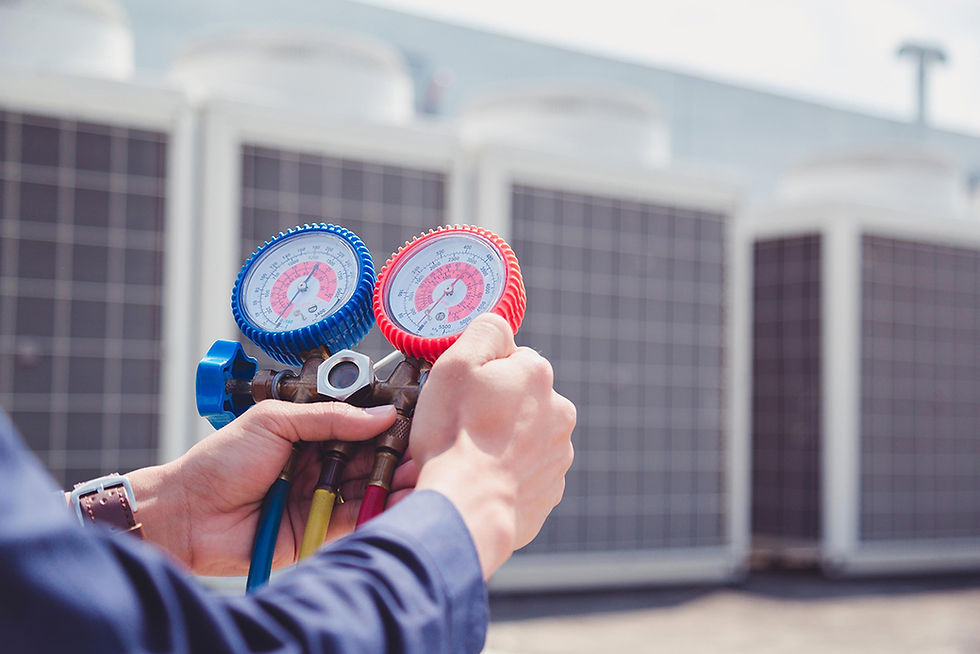
In Florida, IAQ challenges are amplified by high humidity, warm temperatures, frequent rainfall, and extended HVAC operation. Without proper HVAC design, maintenance, and air quality solutions, indoor environments can quickly develop issues such as excessive moisture, mold growth, airborne contaminants, and odors.
This comprehensive guide explains how commercial HVAC systems influence indoor air quality, the unique IAQ challenges Florida businesses face, and how Putnam Mechanical helps create healthier indoor environments through professional HVAC solutions.
1. Why Indoor Air Quality Matters for Commercial Buildings
Poor indoor air quality can result in:
Increased employee sick days
Reduced productivity
Customer discomfort
Compliance risks
Long-term health concerns
Healthy air supports both people and business performance.
2. Florida’s Climate and Its Impact on IAQ
Florida’s environment introduces specific IAQ challenges:
High ambient humidity
Mold and microbial growth risk
Outdoor pollutants entering buildings
Continuous HVAC operation
IAQ solutions must be designed for these conditions.
3. The Role of HVAC Systems in Indoor Air Quality
Commercial HVAC systems affect IAQ by controlling:
Air circulation
Filtration
Ventilation
Temperature
Humidity
HVAC systems are the backbone of indoor air quality management.
4. Common Indoor Air Quality Problems in Florida Buildings
Typical IAQ issues include:
Excess humidity
Mold and mildew
Poor ventilation
Dust and allergens
Odors
Inconsistent airflow
Identifying root causes is essential.
5. Humidity Control as the Foundation of IAQ
In Florida, humidity control is often the most critical IAQ factor.
High indoor humidity can:
Encourage mold growth
Damage building materials
Create musty odors
Reduce comfort
HVAC systems must actively manage moisture.
6. How Excess Humidity Develops Indoors
Humidity problems may stem from:
Oversized HVAC systems
Poor airflow
Inadequate dehumidification
Building envelope leaks
Addressing humidity requires a system-level approach.
7. Ventilation and Fresh Air Exchange
Proper ventilation:
Dilutes indoor contaminants
Improves oxygen levels
Supports occupant health
Ventilation must balance air quality and energy efficiency.
8. Outdoor Air Challenges in Florida
Florida’s outdoor air often contains:
High moisture levels
Pollutants
Allergens
HVAC systems must condition and filter incoming air effectively.
9. Filtration and Particle Control
Filtration removes:
Dust
Pollen
Bacteria
Other airborne particles
Filter selection and maintenance directly impact IAQ.
10. MERV Ratings Explained
Filters are rated using MERV (Minimum Efficiency Reporting Value).
Higher MERV ratings:
Capture smaller particles
Improve air cleanliness
Systems must be designed to handle higher-efficiency filters.
11. Advanced Filtration Options
Advanced filtration may include:
HEPA filtration
Electronic air cleaners
Media filters
These solutions are used in high-sensitivity environments.
12. Airflow Balance and Distribution
Proper airflow ensures:
Even air distribution
Effective contaminant removal
Consistent comfort
Poor airflow reduces IAQ effectiveness.
13. Mold Prevention Through HVAC Design and Maintenance
Mold prevention strategies include:
Effective humidity control
Proper drainage
Clean coils
Adequate airflow
Prevention is far easier than remediation.
14. HVAC Maintenance and IAQ Performance
Regular maintenance improves IAQ by:
Keeping coils clean
Preventing microbial growth
Maintaining filtration effectiveness
Neglected systems often become IAQ problems.
15. UV Germicidal Solutions
UV systems:
Reduce microbial growth on coils
Improve system cleanliness
Support odor control
UV technology complements filtration and ventilation.
16. Odor Control and Indoor Air Freshness
Odors may indicate:
Moisture problems
Poor ventilation
Biological growth
HVAC solutions address root causes rather than masking smells.
17. Carbon Dioxide (CO₂) Monitoring
CO₂ levels indicate ventilation effectiveness.
High CO₂ can cause:
Fatigue
Reduced concentration
Discomfort
Monitoring helps optimize ventilation rates.
18. IAQ Considerations by Industry
Different environments require different IAQ strategies:
Offices
Healthcare facilities
Restaurants
Retail spaces
Educational buildings
Customized solutions deliver better outcomes.
19. Energy Efficiency and IAQ Balance
Improving IAQ should not dramatically increase energy use.
Modern HVAC systems:
Balance ventilation with efficiency
Use energy recovery strategies
IAQ and efficiency can coexist.
20. Building Envelope and IAQ Interaction
IAQ is influenced by:
Building tightness
Insulation quality
Moisture intrusion
HVAC systems must work with the building envelope.
21. IAQ Monitoring and Performance Tracking
Monitoring allows:
Early problem detection
Data-driven adjustments
Continuous improvement
Data supports long-term IAQ management.
22. Compliance and Health Standards
IAQ solutions help meet:
OSHA guidelines
ASHRAE standards
Industry-specific regulations
Compliance protects businesses and occupants.
23. The Business Benefits of Good IAQ
Improved IAQ delivers:
Healthier employees
Higher productivity
Better customer experience
Reduced liability
Air quality directly impacts business outcomes.
24. IAQ Improvement Through HVAC Retrofits
Retrofits may include:
Filtration upgrades
Control improvements
Humidity management enhancements
IAQ upgrades often provide fast ROI.
25. How Putnam Mechanical Delivers IAQ Solutions
Putnam Mechanical supports Florida businesses with:
IAQ assessments
HVAC design and optimization
Filtration and humidity control solutions
Preventive maintenance programs
Ongoing performance support
Our approach addresses Florida-specific IAQ challenges.
26. Choosing the Right IAQ Partner
A qualified IAQ provider offers:
Commercial HVAC expertise
Knowledge of Florida climate challenges
Customized solutions
Long-term support
Expertise ensures effective results.
27. Long-Term IAQ Management Strategies
Effective IAQ management includes:
Regular system maintenance
Performance monitoring
Periodic reassessment
Continuous optimization
IAQ is an ongoing process.
Conclusion
Indoor air quality is a critical component of commercial building performance—especially in Florida’s humid climate. Without proper HVAC design, maintenance, and IAQ solutions, businesses risk comfort issues, health concerns, and operational challenges.
By focusing on humidity control, ventilation, filtration, and proactive HVAC maintenance, Florida businesses can create healthier indoor environments that support productivity, comfort, and compliance.
Putnam Mechanical helps Florida businesses protect indoor air quality through professional HVAC solutions designed for health, efficiency, and long-term reliability.


