
Scheduled Maintenance For Commercial Cooling Equipment, Rooftop Units, Walk-In Coolers, Freezers, Controls, And Refrigeration Systems Throughout Sarasota, Florida And Surrounding Areas.
Licensed Putnam Mechanical Technicians | Documented Service History | Priority Response For Maintenance Plan Members
Most commercial refrigeration and HVAC failures rarely occur without warning. A weak capacitor, loose electrical connection, dirty condenser coil, restricted airflow, failing fan motor, clogged drain line, or changing system pressure can often be detected before it becomes an emergency.
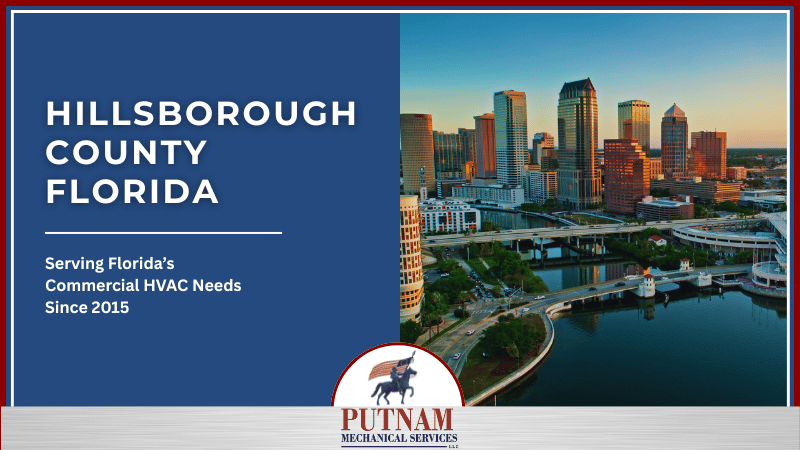
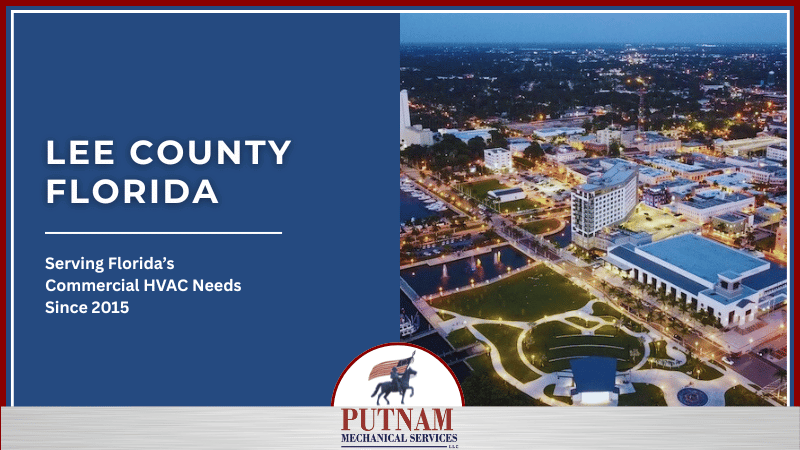
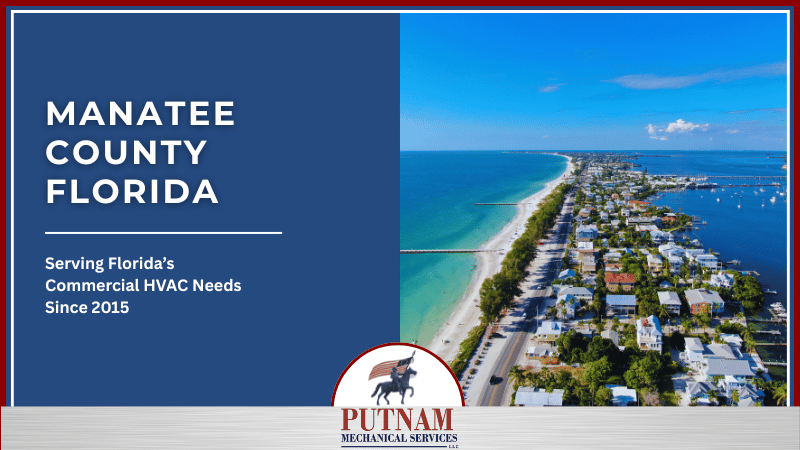
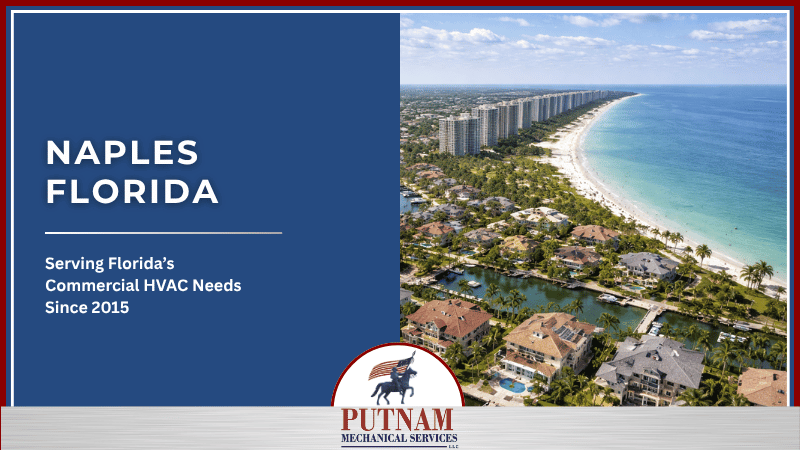
Putnam Mechanical, headquartered in Sarasota, provides preventative maintenance for commercial refrigeration and HVAC systems across Florida’s Gulf Coast, serving Collier County, Hillsborough County, Lee County, Manatee County, Pinellas County, Sarasota County and surrounding areas. Our maintenance plans are tailored to how hard equipment actually runs in Florida’s heat, humidity, coastal air, and long cooling season.
For restaurants, grocery stores, healthcare facilities, hotels, offices, retail spaces, and light industrial properties, planned maintenance helps reduce unexpected breakdowns, protect inventory, improve comfort, support food safety, and extend equipment life.
Florida’s commercial refrigeration and HVAC systems work harder than systems in milder climates. Long cooling seasons, high humidity, coastal corrosion, heavy compressor runtime, and constant customer traffic can all shorten equipment life when systems are not maintained.
A commercial maintenance plan from Putnam Mechanical, headquartered in Sarasota and serving Collier, Hillsborough, Lee, Manatee, Pinellas, Sarasota counties and surrounding areas, helps identify small issues before they become urgent failures. That matters when a walk-in cooler protects inventory, a freezer holds temperature-sensitive product, an ice machine supports daily service, or a rooftop unit keeps a building usable during business hours.
Maintenance does not eliminate every repair, but it gives business owners more control over equipment condition, service timing, and long-term operating costs.
A documented maintenance history gives business owners, property managers, and facility teams a clear record of equipment condition over time.
Each visit can document what was inspected, what readings were taken, what concerns were found, and what follow-up work may be needed. This supports repair-versus-replacement decisions, warranty questions, budgeting, property management records, and long-term system planning.
For commercial properties, documentation is not just paperwork. It gives decision-makers a better picture of how equipment is performing before a failure disrupts operations.
Commercial refrigeration equipment runs continuously and directly affects inventory, food safety, and daily operations.
Preventative maintenance from the commercial refrigeration experts at Putnam Mechanical can help identify issues with walk-in coolers, walk-in freezers, reach-in units, display cases, prep tables, ice machines, compressors, condensers, controls, sensors, and temperature stability.
For restaurants, grocery stores, convenience stores, healthcare facilities, and food-service businesses throughout Collier, Hillsborough, Lee, Manatee, Pinellas, Sarasota counties and surrounding communities, refrigeration maintenance helps reduce the risk of temperature loss, product loss, emergency repairs, and compliance problems.
Commercial HVAC systems support comfort, airflow, humidity control, and overall building performance.
Preventative maintenance can help identify issues with rooftop units, package systems, split systems, blower motors, belts, filters, electrical components, controls, drainage, airflow, and operating performance.
For Florida commercial properties in areas such as Sarasota, Tampa, St. Petersburg, Clearwater, Bradenton, Naples, Fort Myers, Cape Coral, Venice, and surrounding cities, HVAC maintenance is especially important because equipment often runs for long periods under high heat and humidity. Routine inspections help reduce avoidable breakdowns and keep systems operating more reliably during peak demand.
Putnam Mechanical, based in Sarasota and serving commercial clients across Collier, Hillsborough, Lee, Manatee, Pinellas, Sarasota counties and surrounding areas, supports both single-property and multi-location commercial maintenance needs.
We can structure maintenance around equipment type, property size, system age, operating hours, and business risk. A restaurant with walk-in coolers and ice machines may need a different schedule than a medical office, retail store, hotel, warehouse, or multi-tenant commercial building.
The goal is to build a maintenance schedule that matches the real equipment load instead of using a generic checklist.
Putnam Mechanical, headquartered in Sarasota, Florida, provides professional commercial refrigeration and HVAC services across Florida’s Gulf Coast, proudly serving Bonita Springs, Bradenton, Brandon, Cape Coral, Clearwater, Estero, Fort Myers, Lakewood Ranch, Largo, Naples, North Port, Riverview, Sarasota, St. Petersburg, Tampa, Venice, as well as Collier County, Hillsborough County, Lee County, Manatee County, Pinellas County, Sarasota County, and surrounding areas.
Our experienced team partners with business owners, property managers, facility teams, restaurants, grocery stores, healthcare facilities, hospitality properties, and retail operators to deliver essential repairs, replacements, system upgrades, and ongoing maintenance with minimal disruption to daily operations.
When refrigeration, HVAC, or ventilation equipment fails, the clock starts immediately. A walk-in cooler losing temperature, a freezer alarm going off, an ice machine failure, a rooftop unit shutting down, or a ventilation issue affecting airflow and building pressure can quickly impact inventory, comfort, safety, and revenue.
Putnam Mechanical provides 24-hour emergency commercial refrigeration, HVAC, and ventilation service with fast dispatch, on-site diagnostics, and clear repair recommendations.
Experiencing equipment failure right now? Call for priority dispatch.
Most commercial systems benefit from scheduled maintenance at least twice per year. Equipment with heavy runtime, older components, refrigeration loads, food-service use, or high business risk may need more frequent inspections.
A maintenance visit may include equipment inspection, electrical checks, filter inspection, condenser coil inspection, airflow checks, controls testing, operating performance checks, drain inspection, and documented recommendations.
No. Evaporator coil cleaning is not normally part of standard preventative maintenance. Evaporator coil condition may be inspected when accessible, but cleaning is usually a separate service if needed.
Yes. Maintenance plans can include walk-in coolers, walk-in freezers, reach-in units, display cases, prep tables, ice machines, compressors, condensers, controls, and other commercial refrigeration equipment.
Yes. Maintenance plan members can receive priority scheduling, which is especially useful during high-demand periods when emergency service calls increase.
From emergency walk-in cooler repair and refrigerant leak detection to rooftop unit service, compressor replacement, ductwork correction, ventilation support, preventative maintenance, and full system upgrades, our licensed Florida technicians are ready to respond.
COMMERCIAL REFRIGERATION AND HVAC MAINTENANCE PLANS SARASOTA | SCHEDULED INSPECTIONS | REDUCE UNPLANNED DOWNTIME

Putnam Mechanical has proudly served commercial clients with dependable refrigeration and HVAC solutions. Headquartered in Sarasota, Florida, our experienced technicians specialize in commercial HVAC repair, refrigeration system installation and design, ice machine maintenance, compressor repair and replacement, controls and monitoring systems, energy efficiency upgrades, food safety and temperature compliance services, and 24/7 emergency service throughout Collier, Hillsborough, Lee, Manatee, Pinellas, Sarasota counties, and surrounding areas.
License # CAC1819526